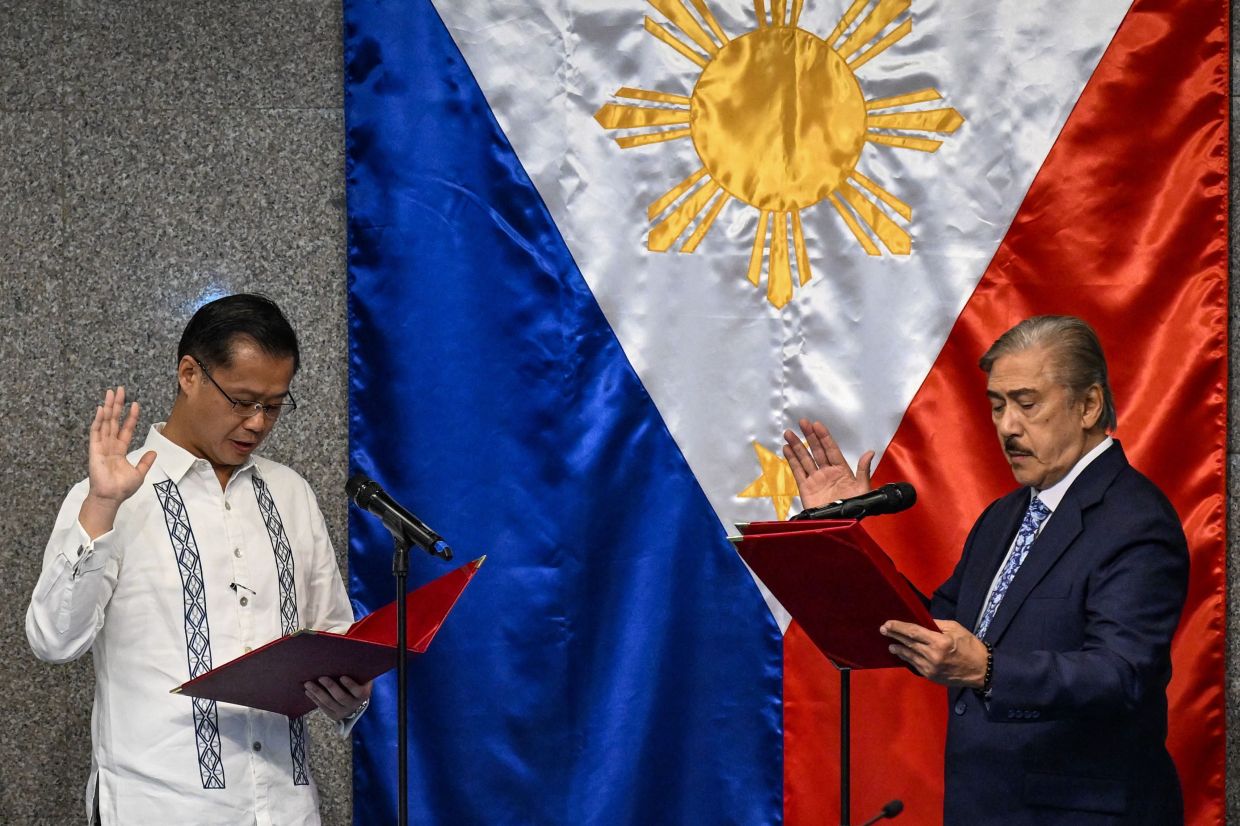
Senator Sherwin Gatchalian has been elected as the new president of the Philippine Senate, marking a significant shift in the chamber's leadership after weeks of political maneuvering and coalition-building. The election took place during a special session on Wednesday, June 17, with thirteen senators casting votes in favour of Gatchalian's installation. This represented the minimum threshold needed to elect a new Senate president, underscoring the narrow margins within which Philippine legislative leadership contests operate.
Gatchalian brings substantial political experience to the role, having previously served as Mayor of Valenzuela City in the capital region and as a House Representative. His career trajectory reflects the common practice among Philippine politicians of moving between local government, the lower house, and the Senate. His ascension to the Senate presidency represents a promotion within the upper chamber's hierarchy, where the president holds considerable procedural power and influence over the legislative agenda.
The path to Gatchalian's election was marked by tactical shifts in coalition support that ultimately determined the outcome. On June 3, a group of twelve senators had already moved to elect Gatchalian as Senate president pro tempore, simultaneously declaring that Alan Peter Cayetano, who had assumed the presidency on May 11, had vacated the position. Cayetano, however, contested this move, asserting that he remained in office and arguing that thirteen senators were required to conduct the business of electing or removing Senate officers. This dispute over numerical requirements and procedural legitimacy reflected deeper disagreements about how Senate leadership should be determined.
The turning point came when Senator Joel Villanueva, who had previously aligned himself with Cayetano's faction, shifted his support to Gatchalian's bloc. This strategic defection proved decisive in changing the parliamentary arithmetic. Recognizing that the numbers had turned against him following Villanueva's realignment, Cayetano indicated on Tuesday that he was prepared to step down from the Senate presidency after discussing the matter with Villanueva. This conversation apparently clarified for Cayetano that he no longer commanded sufficient support to retain the position, leading to his graceful exit from the role.
The political context surrounding this leadership change reveals the fragmented nature of Philippine Senate politics, where coalitions form and shift based on individual senators' calculations and priorities. Unlike parliamentary systems where party discipline is enforced more rigorously, the Philippine Senate operates with considerable fluidity in allegiances. Senators maintain considerable autonomy in choosing which causes and candidates to support, making leadership positions subject to negotiation and compromise rather than predetermined party arrangements.
The current composition of the Senate adds an additional layer of complexity to the chamber's operations. Although the Senate is constitutionally a 24-member body, only 22 senators are currently sitting. Senator Jinggoy Estrada surrendered to police earlier in June and faced suspension from office for ninety days following an order from the Sandiganbayan, the anti-graft court, in connection with a graft case. This suspension further reduces the effective membership available for legislative business. Senator Ronald Dela Rosa, meanwhile, has become a fugitive after the International Criminal Court issued charges against him, with his current whereabouts unknown. His absence removes another vote from the chamber.
These absences mean that Gatchalian now presides over a chamber that is operating significantly below its full constitutional strength. The practical effect of these vacant and suspended seats is that coalition-building becomes even more consequential, as smaller numbers of senators can exercise outsized influence over procedural and substantive matters. A Senate operating with only 22 active members cannot afford to lose votes on procedurally critical matters, which explains why the thirteen-senator threshold for electing officers represented the bare minimum needed to proceed.
Gatchalian's election signals potential shifts in how the Senate may prioritize legislative business and committee assignments in the months ahead. As Senate president, he will control which bills receive floor time, how committees are composed, and the overall rhythm of legislative debate. His priorities and strategic vision may differ from those of his predecessor, potentially reshaping the Senate's focus on key policy areas. For Malaysian and Southeast Asian observers, developments within the Philippine legislative branch merit attention, as the Philippines remains a significant regional player whose domestic political dynamics can influence broader regional cooperation and foreign policy orientations.
The stability of Gatchalian's presidency will depend partly on maintaining the coalition that elected him. In Philippine politics, such coalitions can prove fragile if individual senators conclude that their interests would be better served by switching allegiances. The experience of his predecessor demonstrates this vulnerability, as Cayetano discovered that even a recently obtained position is no guarantee of permanent tenure. Gatchalian must therefore remain attentive to the concerns of his key supporters, particularly senators like Villanueva who proved willing to shift their positions when circumstances warranted.
Looking forward, the Senate faces numerous substantive challenges that will test Gatchalian's leadership abilities. These include ongoing debates over governance, economic policy, and legislative oversight of the executive branch. How he manages competing interests while maintaining the coalition that elected him will determine his effectiveness in the role. His election represents not merely a personnel change but a potential recalibration of power dynamics within the Philippine Senate, with implications for how the chamber functions during what remains of the current congressional session.

