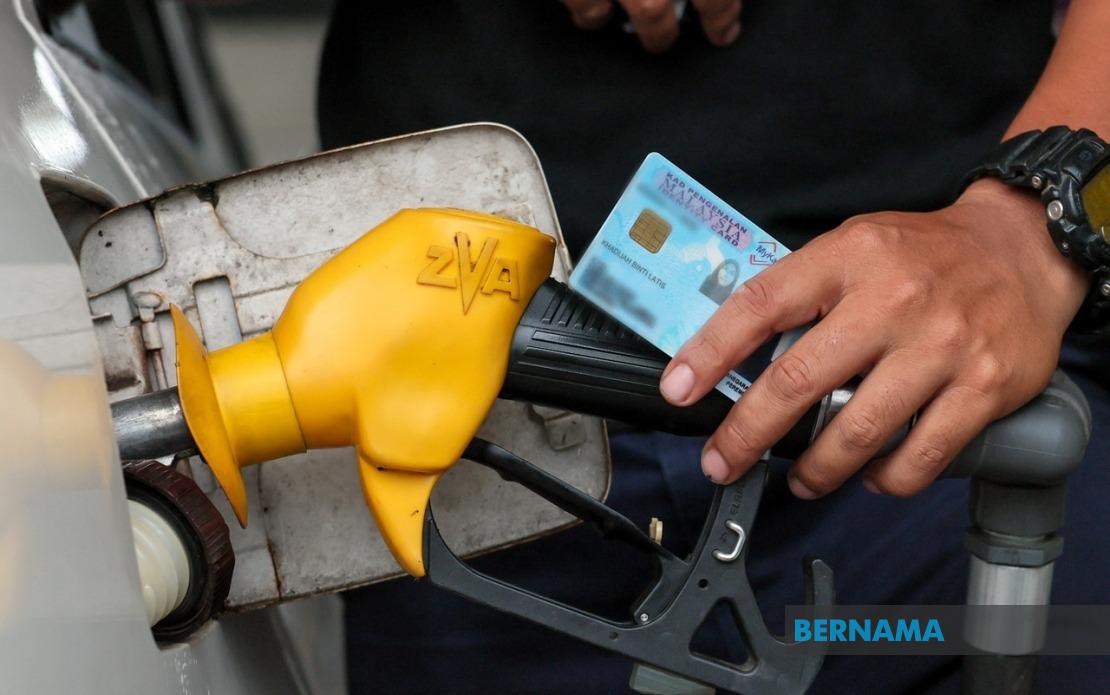
Prime Minister Datuk Seri Anwar Ibrahim announced on August 30 that the government has reinstated the monthly Budi MADANI RON95 subsidy quota to 300 litres, reversing a previous reduction to 200 litres and providing relief to more than 16 million beneficiaries nationwide. The announcement, made during the 2026 National Day address in Putrajaya, also extends support to over half a million owners of diesel-powered pickup trucks and jeeps, who will receive up to 400 litres of BUDI Diesel monthly, with both measures taking effect from September 1.
The policy reversal represents a significant shift in the government's approach to fuel subsidies and cost-of-living support at a time when household budgets remain under considerable strain. The restoration of the additional 100-litre quota acknowledges the persistent pressure that fuel costs place on Malaysian families and reflects recognition that the previous reduction was creating genuine hardship for transport-dependent households. This decision carries particular importance given Malaysia's geographic and economic diversity, where reliance on private vehicles varies dramatically across regions and income groups.
Economics lecturer Herniza Roxanne Marcus from Universiti Teknologi MARA's Sabah campus underscores how the quota increase will disproportionately benefit lower and middle-income households, classified as B40 and M40, for whom fuel expenditure represents a substantially larger proportion of disposable income compared to higher earners. In regions like Sabah, where travel distances are considerable and public transportation infrastructure remains limited, the expanded fuel allocation addresses a genuine accessibility challenge that affects employment, education access, and healthcare utilisation. The additional financial breathing room created by the higher quota could enable these households to redirect savings towards other essential necessities including food, education costs, and medical expenses.
Marcus cautions, however, that the quota restoration should be understood within realistic fiscal parameters rather than as evidence of dramatically improved government finances. She explains that while the measure will help moderate transportation cost pressures and potentially limit inflation spillover into other goods and services, the impact will remain moderate and cannot single-handedly reduce overall inflation rates. The government's decision reflects a careful calibration between its budgetary capacity and its responsibility to protect citizen purchasing power, particularly among economically vulnerable segments of society.
The earlier reduction of the quota, which occurred amid global geopolitical uncertainties and volatile energy market conditions, can now be reassessed as international circumstances evolve. Marcus notes that government subsidy levels warrant continuous evaluation based on shifting cost structures, actual consumption behaviour, and measurable household impact. The current policy adjustment represents a responsive recalibration rather than a signal of fundamentally altered fiscal health, suggesting that subsidy policy will continue adapting to real-world economic conditions and market dynamics.
The practical impact of quota restoration becomes apparent through the experiences of ordinary Malaysians. Rozainah Abdul Rahim, a 36-year-old journalist working in the Klang Valley region, exemplifies the situation facing commuters with demanding travel schedules. Her work requires daily vehicle use for assignment coverage, while her family commitments necessitate weekly travel between Port Dickson in Negeri Sembilan and Kuala Lumpur. Under the previous 200-litre monthly limit, she regularly exhausted her quota well before month's end, forcing expensive out-of-pocket fuel purchases at commercial rates that significantly exceeded subsidised pricing.
For working professionals like Rahim, the quota shortfall represented not merely an inconvenience but a genuine constraint on employment performance and family obligations. The inability to plan fuel consumption within an artificial quota limit created stress and unpredictable expenses, undermining the fundamental purpose of the subsidy scheme. Her relief at the restoration reflects the collective experience of millions of Malaysians whose work patterns and family circumstances make private vehicle use non-negotiable rather than discretionary.
The diesel component of the announcement addresses a distinct but equally important constituency. Over 500,000 registered owners of diesel-powered pickup trucks and jeeps will benefit from the expanded quota to 400 litres monthly. This segment encompasses commercial vehicle operators, agricultural workers, and rural business proprietors for whom diesel fuel represents a direct business input rather than purely personal transportation expense. The diesel allocation therefore carries economic multiplier effects by supporting small business viability across sectors dependent on commercial vehicles.
Geographic variations in public transport infrastructure underscore why fuel subsidies retain particular policy importance across Southeast Asia's most economically developed nation. While Kuala Lumpur and Selangor benefit from extensive rapid transit networks, smaller towns and rural areas remain heavily dependent on personal vehicle use for employment access and service delivery. The quota expansion acknowledges these structural realities rather than forcing uniform policy solutions across vastly different transportation landscapes.
The timing of the announcement carries political significance as well. The restoration demonstrates government responsiveness to accumulating cost-of-living complaints and signals commitment to protecting household finances during an economic period marked by persistent inflation concerns. While not a permanent solution to structural cost-of-living challenges, the measure offers immediate material relief and suggests policy flexibility toward citizens' genuine economic difficulties.
Looking forward, the sustainability of expanded fuel subsidies remains contingent on global energy market trajectories and government revenue performance. The policy operates within acknowledged fiscal constraints rather than unlimited commitment, suggesting that future adjustments may be necessary if market conditions change dramatically. Nevertheless, the current restoration provides meaningful near-term relief for transport-dependent households across Malaysia's socioeconomic spectrum.
The RON95 and diesel quota increase ultimately reflects pragmatic governance: balancing legitimate public welfare concerns against fiscal realities while maintaining subsidy policy as a responsive tool rather than a static entitlement. For millions of Malaysian households and small business operators, the additional fuel allocation provides essential flexibility that ripples across daily decision-making about work, family, and household budgeting priorities.

