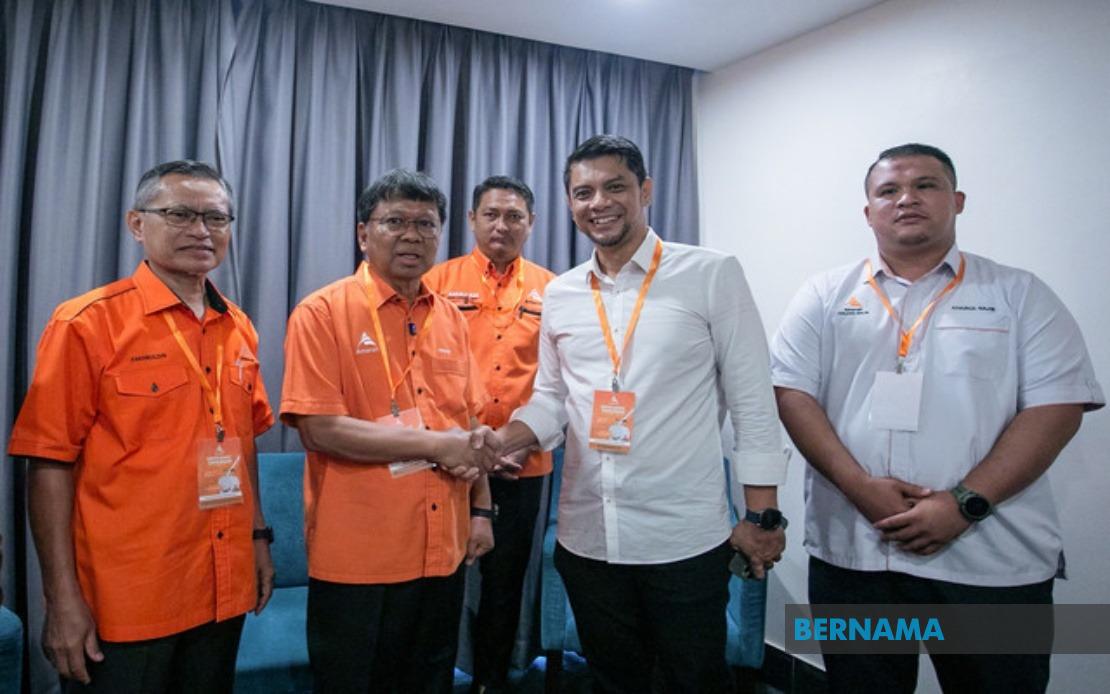
A former legislator from Perak has ended a six-year estrangement from Parti Amanah Negara, rejoining the party after his readmission was formally approved during recent leadership meetings. Hasnul Zulkarnain Abd Munaim, who previously represented Titi Serong in the state assembly and once led Amanah's youth wing, has now formally returned to the political fold he left in 2018. The decision to readmit him was ratified at the party's National Management Meeting and National Leadership Meeting held on June 18, according to Perak Amanah chairman Datuk Asmuni Awi.
The readmission represents a notable shift in Amanah's approach to membership policy. Asmuni explained that while Hasnul Zulkarnain had previously signalled his wish to rejoin the party, circumstances had not previously aligned to permit formal discussion and consideration of his application. The party leadership, however, now views conditions as sufficiently favourable to process requests from departing members seeking to return, a strategy that reflects approaches taken by several competing political parties within Malaysia's competitive electoral landscape.
For Amanah, the decision carries strategic implications beyond a single readmission. Asmuni articulated the party's calculation that welcoming back former members could bolster organisational strength, particularly among individuals whose ideological commitments and political values remain aligned with Amanah's platform despite their temporary departures. Many former members who previously quit the party are believed to retain fundamental sympathy for Amanah's political project and social vision, making them potential sources of renewed support and grassroots mobilisation.
Hasnul Zulkarnain's journey through Malaysia's fractious political system illustrates the volatility of state and national politics in the post-2018 era. In March 2020, he emerged as one of three state legislators who simultaneously abandoned their respective parties following the establishment of the Perikatan Nasional government in Perak. Alongside Yong Choo Kiong, the former Tronoh assemblyman representing Democratic Action Party interests, and A. Sivasubramaniam, who had represented Buntong under the DAP banner, Hasnul Zulkarnain renounced his party affiliation and declared himself an independent. The coordinated departure reflected broader political turbulence as lawmakers recalculated their positions following PN's sudden ascendancy at state level.
The independent status proved short-lived for Hasnul Zulkarnain. By July 2020, just months after leaving Amanah, he formally joined Parti Pribumi Bersatu Malaysia (Bersatu), indicating that his break with Amanah involved not merely tactical repositioning but a substantive shift toward a different political formation. His subsequent tenure within Bersatu and the circumstances that prompted his departure from that party remain relevant context for understanding his current reintegration into Amanah's structure.
For Malaysian observers, Hasnul Zulkarnain's reentry exemplifies a broader pattern of flux within the DAP-led opposition ecosystem and smaller coalition partners like Amanah. The period since the 2018 general election has witnessed significant personnel movements, with various legislators switching parties, joining or exiting coalitions, and repositioning themselves as political circumstances shifted. This fluidity reflects both genuine ideological recalibrations and pragmatic responses to changing electoral mathematics and power distributions.
Amanah's receptiveness to readmitting former members also signals confidence in its long-term political trajectory. By welcoming back individuals who had previously departed, the party projects an image of stability and institutional resilience, suggesting that it possesses sufficient organisational strength to absorb returning members without threatening internal cohesion. This posture contrasts with defensive positioning and may reflect calculations about Amanah's prospects heading toward the next general election cycle.
Hasnul Zulkarnain responded positively to his readmission, characterising the leadership's decision as a demonstration of confidence in his capacity to contribute meaningfully to the party's future direction and objectives. His gratitude, while ceremonially appropriate, underscores the significance he attaches to formal party membership and the platform it provides for political engagement at state and potentially national levels.
For Perak specifically, Hasnul Zulkarnain's return to Amanah could influence factional dynamics within the state assembly and opposition structure. As a former assemblyman with previous legislative experience and youth wing credentials, his reintegration provides Amanah with identifiable talent for future electoral positioning. Whether he will contest the next state or general election remains unclear, but his presence strengthens the party's bench of experienced legislators.
The broader context includes Amanah's role within opposition coalitions and its positioning vis-à-vis the DAP and other potential partners. As a moderately-sized component within opposition structures, Amanah has competed to maintain relevance and organisational viability. Readmitting experienced former members represents a cost-effective method of rebuilding capacity without investing heavily in new member recruitment and development cycles.
Looking ahead, Hasnul Zulkarnain's case may establish precedent for other former members considering return to Amanah. If additional readmissions follow, the cumulative effect could noticeably alter the party's internal composition and influence internal power balances. Party leadership will need to navigate these dynamics carefully to ensure that rapid readmission of former cadre does not generate friction among members who maintained continuity throughout the intervening period.
The six-year interval separating Hasnul Zulkarnain's departure and return also invites reflection on the broader trajectory of Malaysian politics since 2018. The political landscape has shifted substantially through general elections, state-level realignments, and coalition reformulations. That Amanah now welcomes back someone it parted with during an era of heightened political instability suggests the party views current conditions as sufficiently settled to permit such inclusive gestures.