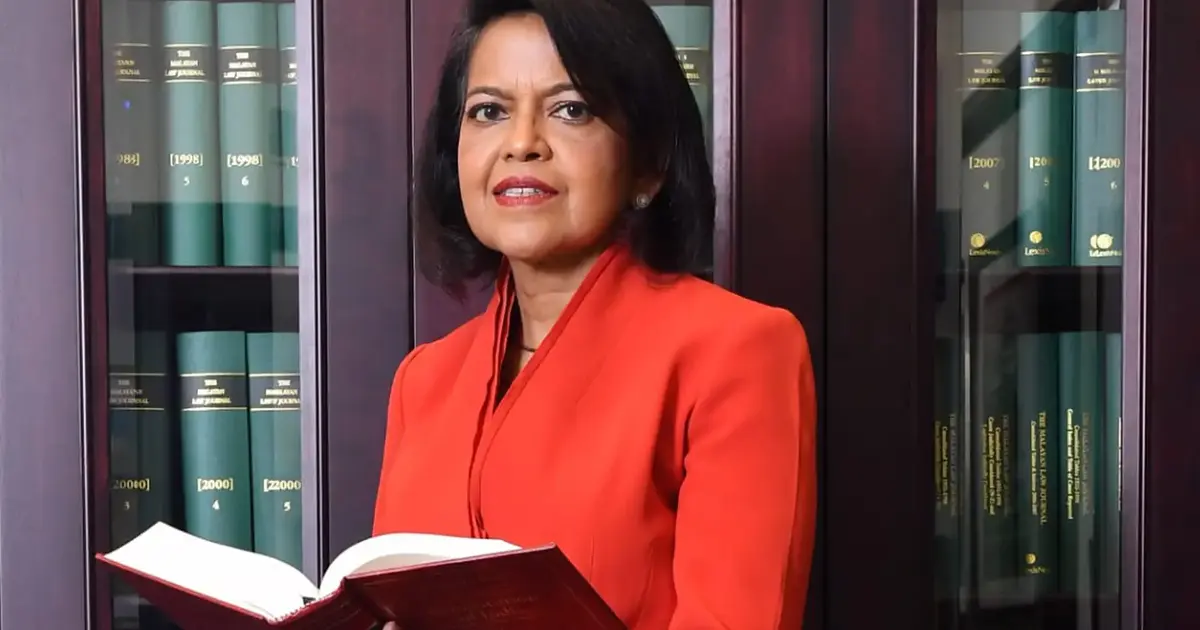
Nallini Pathmanathan, a former judge of Malaysia's highest court, has assumed the position of chairman at the Malaysian Media Council, marking a significant leadership transition for the regulatory body overseeing the nation's press landscape. The appointment reflects the council's strategy to strengthen governance during a period when Malaysia's media sector faces mounting pressures from technological disruption, evolving audience expectations, and complex regulatory demands.
Pathmanathan brings substantial judicial experience to the role, having served on the Federal Court bench where she developed expertise in constitutional matters and institutional frameworks. Her appointment signals the council's intention to leverage judicial insight and institutional credibility as it navigates the contemporary media environment. The combination of legal rigour and understanding of Malaysia's governance structures positions her to guide the council through forthcoming policy considerations and industry reforms.
The Malaysian media industry currently confronts a convergence of challenges that transcend traditional editorial and commercial pressures. Digital transformation has fundamentally altered news consumption patterns, reducing reliance on print and broadcast platforms while accelerating the fragmentation of audience attention across social media and online publishing ecosystems. Simultaneously, advertising revenue distribution has shifted dramatically as digital platforms capture increasing market share, creating financial strain for established media organisations dependent on traditional revenue models.
Fakeinformation and misinformation present additional complications for Malaysia's media environment. The rapid proliferation of unverified claims across social platforms, often exploiting political or social divisions, has eroded public confidence in information sources while creating reputational challenges for credible journalism. The council's role in addressing these phenomena requires nuanced understanding of media ethics, audience literacy, and the distinction between editorial oversight and content moderation—a distinction increasingly blurred in the digital age.
Regulatory clarity remains another persistent concern. Media practitioners often navigate ambiguous boundaries between press freedom protections and laws governing national security, defamation, and sedition. The council functions as an intermediary between the industry and government, requiring diplomatic skill and legal grounding to articulate the sector's interests while maintaining institutional legitimacy. Pathmanathan's background in constitutional jurisprudence may prove invaluable in these deliberations, as the council seeks to articulate principles that protect journalistic independence whilst addressing legitimate public interest concerns.
The appointment arrives as Southeast Asian media regulators grapple with questions about platform accountability and news media viability. Unlike some regional counterparts, Malaysia has resisted establishing explicit government control over media operations, yet the tension between press freedom and state interests remains evident in various legislative frameworks. The council's effectiveness in promoting industry standards and self-regulation partly determines whether statutory intervention becomes necessary—a dynamic that heightens the importance of respected, independent leadership.
Pathmanathan's judicial tenure likely equipped her with understanding of how media-related cases progress through courts, what judges prioritise in media-related disputes, and how legal principles interact with industry practices. This institutional knowledge proves valuable as the council mediates between media organisations and their critics, advising on editorial policies and complaint mechanisms. Her ability to interpret complex legal questions whilst maintaining credibility across diverse stakeholder groups—publishers, journalists, civil society, and government—will substantially influence the council's effectiveness.
The media council itself operates within Malaysia's broader governance architecture, where multiple entities—from the Malaysian Communications and Multimedia Authority to the Home Ministry—exercise influence over media operations. Pathmanathan's appointment may enhance the council's standing within these institutional networks, particularly if her previous judicial relationships and respect within government circles provide access to high-level policy discussions. Such positioning enables the council to participate meaningfully in emerging policy debates rather than simply responding reactively to industry complaints.
For Malaysia's journalism sector, leadership continuity and independence at the council level directly affect professional standards and institutional resilience. During periods of rapid change, regulatory bodies provide stabilising reference points for practitioners navigating complex decisions about sourcing, verification, and publication. A chairman commanding respect across professional, judicial, and government circles can reinforce industry standards through persuasion and institutional authority rather than coercive mechanisms—an approach more sustainable than prescriptive regulation in a democratic context.
The council's effectiveness also depends on its capacity to anticipate emerging challenges and develop frameworks responsive to technological change. Artificial intelligence-generated content, deepfakes, and algorithmic amplification present novel ethical questions that traditional media regulation did not contemplate. Pathmanathan's appointment suggests the council intends to develop sophisticated responses to these phenomena, leveraging her experience with novel legal questions to explore how established principles apply to unprecedented scenarios.
Regionally, Malaysia's approach to media governance holds significance for other Southeast Asian nations observing how democracies balance press freedom with legitimate regulatory interests. The council's credibility internationally—whether perceived as genuinely independent or as a government instrument—influences Malaysia's standing in discussions about media freedom and democratic governance. A respected, legally sophisticated leader can enhance such perceptions whilst strengthening the council's advocacy capacity within international forums.
As Malaysian media continues transforming, the council under Pathmanathan's leadership faces pressure to demonstrate that self-regulatory approaches serve public interests more effectively than statutory alternatives. This requires building consensus within a fragmented industry, earning public confidence through transparent operations, and articulating the case for press freedom in contemporary terms. Her judicial background and apparent commitment to institutional integrity suggest serious engagement with these responsibilities, though the magnitude of the challenges confronting Malaysia's media sector means that capable leadership alone cannot resolve all structural difficulties.

