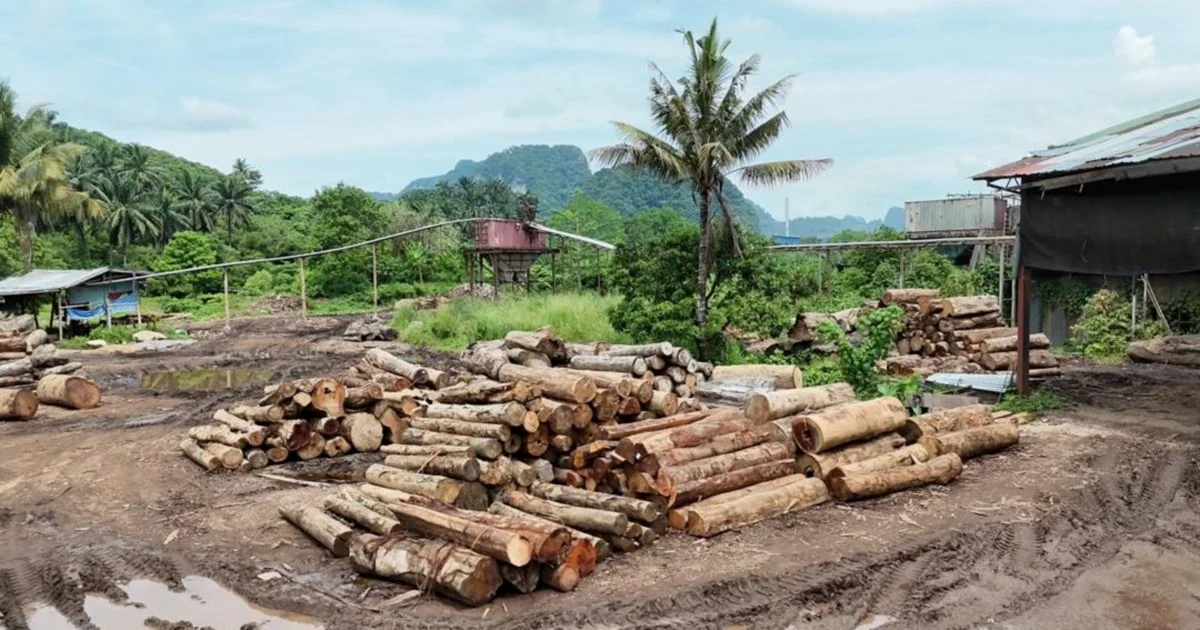
Malaysia's forest enforcement authorities have intensified their crackdown on timber smuggling and illegal logging operations along the east coast, detaining eleven suspects and confiscating approximately RM2.43 million worth of timber and logging machinery during coordinated raids across Kelantan and Terengganu today. The operation demonstrates the government's renewed commitment to combating resource crime in regions long plagued by organised timber trafficking networks.
Among those apprehended were four Indonesian nationals, highlighting the cross-border dimensions of illegal logging in Southeast Asia. The detention of foreign nationals in such operations typically signals law enforcement's growing awareness that timber trafficking often involves sophisticated international supply chains, with operatives moving seamlessly across maritime boundaries in the Sulu and Celebes Seas region. Indonesian workers are frequently employed in timber extraction operations precisely because of their expertise in forest felling and their willingness to work under dangerous conditions with minimal regulatory oversight.
The scale of the seized assets—encompassing both raw timber stocks and mechanical equipment—underscores how lucrative illegal logging remains despite decades of enforcement efforts. Logging machinery represents significant capital investment, suggesting these operations possessed considerable financial backing and organisational capacity. The seizure of such equipment typically disrupts activities for months, as acquiring replacement machinery on the black market involves substantial risk and expense. This strategic targeting of assets, rather than merely pursuing individual arrests, reflects evolving law enforcement strategies focused on economic disruption of criminal enterprises.
Kelantan and Terengganu occupy a strategically vulnerable position in Malaysia's timber security landscape. Bordering Thailand to the north and situated adjacent to major maritime smuggling routes, both states have historically served as transshipment points for illegally harvested logs destined for international markets. The porous nature of land and sea boundaries in this region has long created enforcement challenges, with smugglers exploiting gaps between national jurisdictions and the limited patrol capacity of maritime authorities. Raids in these areas typically generate the highest-value seizures relative to other Malaysian states.
The dual targeting of both Kelantan and Terengganu in a single operation suggests coordinated intelligence gathering across state boundaries—a relatively recent development in Malaysian forest law enforcement. Historically, operations were siloed within state-level forestry departments, reducing effectiveness against mobile criminal networks. The apparent coordination between authorities in neighbouring states indicates institutional learning from past failures and improved information sharing protocols, factors crucial for disrupting sophisticated supply chains that deliberately fragment operations across multiple jurisdictions.
Illegal logging extraction represents one of Southeast Asia's most persistent environmental and economic crimes. Conservative estimates place regional losses from timber trafficking at USD 3 billion annually, with Malaysia accounting for a disproportionate share. Beyond direct economic theft, illegal logging accelerates deforestation rates, destabilises ecosystems, and compromises the long-term sustainability of Malaysia's forest resources—critical both for biodiversity protection and climate change mitigation targets. The environmental damage often persists for decades after timber extraction ceases.
For Malaysian readers and policymakers, these operations carry particular significance given the nation's vulnerability to resource crime at a time of heightened global attention to deforestation. International buyers of Malaysian timber increasingly demand certification of legal origin; operations targeting suppliers who source illegally harvested logs can damage Malaysia's reputation as a responsible timber exporter. The enforcement actions serve partly to protect legitimate timber operators whose competitive position is undermined by smugglers operating without environmental or safety compliance costs.
The detention of both Malaysian and foreign nationals raises complex questions about culpability and organisational structure within timber trafficking networks. Typically, the actual harvesters and labourers—often including migrant workers—bear disproportionate legal consequences whilst the financiers and syndicate leaders remain insulated from prosecution. Understanding whether these eleven detainees included organisational leaders or represented lower-echelon operatives would clarify the operation's strategic impact. Frequently, removing field operatives temporarily disrupts activities but leaves the underlying demand and financial mechanisms intact, allowing networks to reorganise once initial heat dissipates.
The broader context of these raids involves Malaysia's timber industry navigating complex pressures from multiple directions. Domestic demand for wood products remains substantial, creating incentives for smuggling to bypass regulatory controls and tariffs. Simultaneously, international environmental certification schemes increasingly exclude suppliers linked to forest crime, pressuring legitimate operators to ensure supply chain integrity. The Government's enforcement operations ostensibly target criminals but simultaneously serve to signal compliance with international sustainability standards to overseas buyers and investors evaluating Malaysian enterprises.
For the forestry and law enforcement communities, today's operations represent tactical successes requiring translation into sustained strategic impact. The challenge lies in maintaining enforcement intensity across coming months—organised crime typically responds to crackdowns by temporarily suspending activity before resuming operations through modified routes and methods. Whether Malaysian authorities can translate these seizures into prosecutions resulting in meaningful custodial sentences remains crucial for genuine deterrence. Lenient penalties relative to profits generated encourage recidivism and reinvestment in smuggling operations.
Looking forward, these raids underscore the necessity for continued investment in maritime enforcement capacity, intelligence networks, and cross-border cooperation mechanisms. The east coast's vulnerability to timber trafficking will persist so long as enforcement resources remain inadequate relative to trafficking revenues. Regional cooperation mechanisms involving Thailand, Indonesia, and Philippines maritime authorities offer potential force multiplication, yet require diplomatic and logistical investment that Malaysian authorities have historically been slow to prioritise despite frequent verbal commitments.

