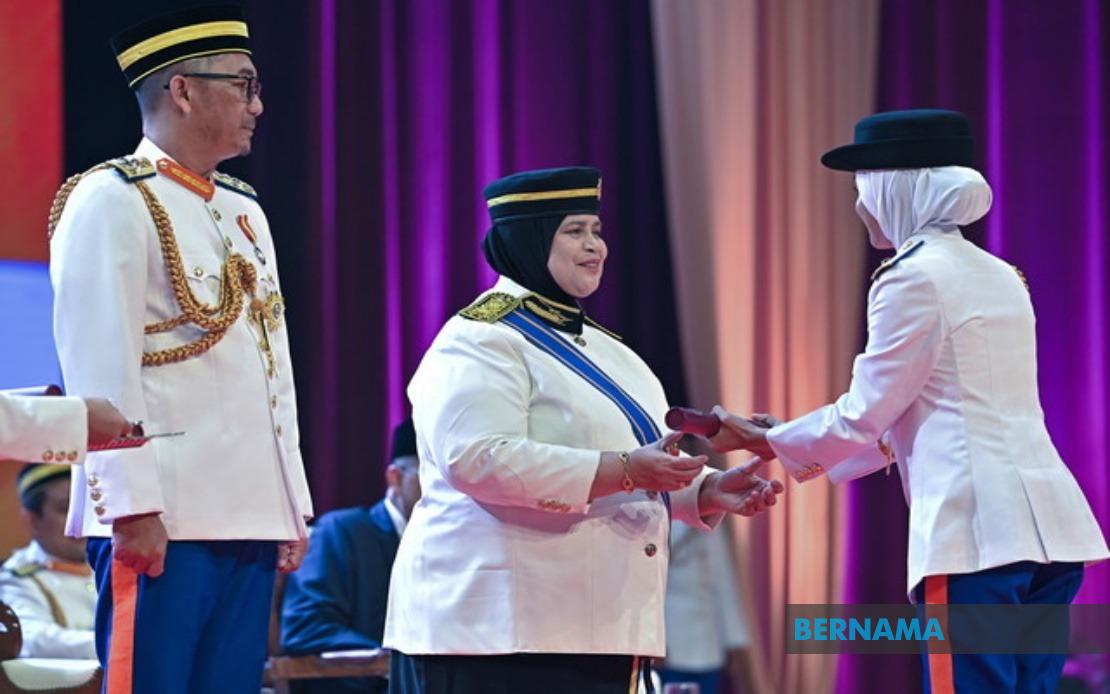
A milestone in student welfare has been reached with the introduction of a new allowance scheme for the Civil Defence Student Corps, locally known as Kor SISPA. The initial cohort of 1,107 cadets drawn from 36 higher learning institutions across Malaysia will begin receiving payments this month under the newly sanctioned programme, marking a significant shift from policy discussion to concrete implementation. The announcement came during the 17th National Kor SISPA Commissioning Ceremony held at Universiti Pendidikan Sultan Idris in Tanjong Malim, where Datuk Rubiah Wang, Deputy Minister of Rural and Regional Development and Civil Defence honorary commissioner, outlined details of the initiative on behalf of Deputy Prime Minister Datuk Seri Dr Ahmad Zahid Hamidi.
The allowance structure represents a carefully calibrated approach to recognising the contributions of student volunteers in civil defence work. Payments will be calculated on an hourly basis, with graduates holding bachelor's degrees receiving RM9.80 per hour, while diploma holders will receive RM8 per hour. The scheme carries an initial financial commitment of approximately RM500,000 for this opening phase, with the government signalling its intention to progressively expand the programme to encompass additional participants in subsequent phases. This phased implementation strategy allows the government to manage fiscal implications while demonstrating genuine commitment to improving cadet welfare.
Rubiah Wang emphasised that the transition from theoretical support to actual monetary compensation represents a watershed moment for Kor SISPA members. She characterised the allowance as validation of years of advocacy by cadets and their representatives, translating longstanding discussions about improving member welfare into tangible financial support. The deputy minister stressed that the government recognises the value of student participation in civil defence initiatives and views this allowance scheme as one component of a broader commitment to enhance conditions for these volunteers. Her comments suggested that additional benefits and support mechanisms may be forthcoming as the government continues to evaluate fiscal options for further expansion.
The rationale underlying the allowance programme extends beyond simple remuneration. Civil Defence officials frame the initiative as a mechanism to boost participation rates among university and tertiary education students in Kor SISPA activities. By providing monetary incentive, the government hopes to attract a larger pool of qualified candidates into the programme and strengthen the motivation for existing members to maintain their commitment. The allowance aims to offset opportunity costs for students who dedicate time to civil defence training and operations that might otherwise be directed towards employment or academic pursuits. This economic consideration reflects a pragmatic understanding of student decision-making and resource constraints.
The scope of Kor SISPA work encompasses considerably more than emergency response operations. Civil Defence personnel deployed through the student corps provide assistance throughout the year, participating in university-based activities, campus security operations, community events, and public safety initiatives beyond disaster-focused deployments. This comprehensive engagement with public safety infrastructure means that cadets accumulate significant experience across diverse scenarios and operational contexts. The allowance structure rewards this broad contribution to institutional and community safety, rather than limiting recognition to specific emergency deployments. Such recognition acknowledges that sustained, routine participation in civil defence work carries substantial value for maintaining societal preparedness and institutional security.
Since its establishment in 2010, Kor SISPA has evolved into a substantial programme encompassing universities, polytechnics, and teacher education institutes nationwide. The organisation has successfully produced 11,802 graduates to date, representing a considerable pool of trained personnel who have transitioned from student volunteer status into broader society. These graduates carry forward the discipline, training, and civic commitment instilled through their Kor SISPA participation, creating a distributed network of individuals with civil defence competency across professional and personal networks. The allowance scheme can be understood partly as recognition of this investment in human capital development and the nation-building contributions that Kor SISPA alumni continue to make.
From a policy perspective, the allowance programme reflects broader governmental recognition of the importance of formalising relationships with volunteer organisations. Rather than relying exclusively on civic altruism and institutional mandate, the government has chosen to introduce financial recognition for student participation in civil defence work. This shift acknowledges both the value of the service provided and the reality that university students face competing demands on their time and resources. The decision to implement an hourly rate structure ensures that compensation reflects actual time commitment, creating proportionality between effort invested and remuneration received.
The commissioning ceremony framework provides institutional visibility and legitimacy to the allowance announcement. By presenting the initiative during an official ceremony with government representation at the deputy ministerial level, the government signals that this is not a minor administrative adjustment but rather a significant policy development commanding high-level attention. The decision to hold the next commissioning ceremony at Universiti Sultan Zainal Abidin (UniSZA) in the following year suggests plans for continued expansion of the programme and ongoing institutional engagement with Kor SISPA development across the nation's tertiary education sector.
For Malaysian tertiary institutions, the allowance scheme carries implications for campus safety management and student engagement strategies. Universities may find that the allowance enhances the attractiveness of Kor SISPA membership, enabling institutions to maintain stronger civil defence capabilities on campus through increased cadet recruitment and retention. Enhanced student participation in organised civil defence activities potentially reduces reliance on external resources during emergencies while building institutional capacity for crisis management. For individual students, the allowance provides modest but meaningful supplementary income, particularly for those from lower-income backgrounds, while simultaneously recognising their contribution to public safety.
The programme's phased implementation suggests that government appetite for expanding the scheme exists, subject to budgetary considerations and operational parameters. As the initial RM500,000 outlay for the first phase demonstrates effectiveness and generates implementation experience, subsequent phases may encompass larger cadet populations or enhanced allowance rates. The government's stated commitment to exploring additional fiscal options indicates that this allowance scheme may evolve significantly over time, potentially incorporating benefits beyond hourly compensation or extending eligibility criteria to include cadets from additional institution types.

