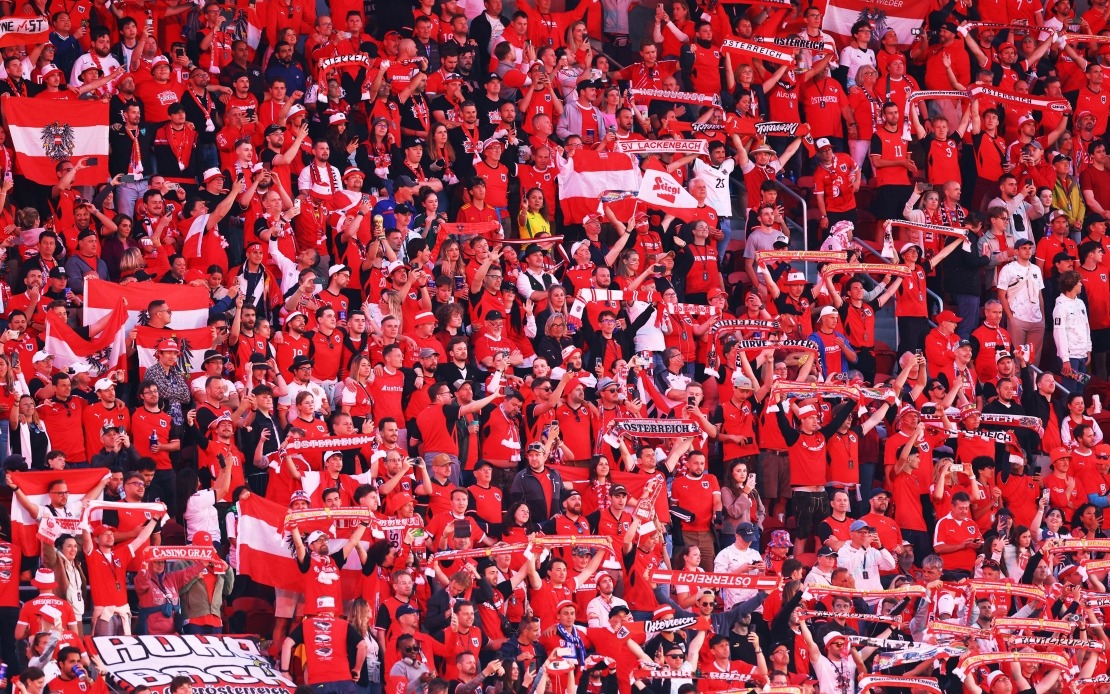
FIFA has declared the opening phase of the World Cup in North America a commercial and attendance success, with organisers revealing that 1,028,429 fans filled stadiums for the tournament's first 16 matches through to Monday. The figure represents a stadium occupancy rate of 99.34 per cent, providing reassurance to tournament officials who had faced mounting criticism in the weeks before kick-off over the cost of admission and fears that empty seats would undermine the spectacle.
The milestone was marked with considerable fanfare by FIFA president Gianni Infantino, who photographed himself alongside Aaron Bren, identified as the one millionth attendee, and posted the image on social media platforms. In his accompanying message, Infantino extended gratitude to supporters and framed the tournament as representing an inclusive vision of football. His characterisation of the World Cup as the "most inclusive FIFA World Cup" sought to position the event as a turning point in how the tournament engages with a broader and more diverse global audience.
Yet the headline attendance figures mask underlying anxieties about how tickets have been distributed and priced in the lead-up to the tournament. Pre-tournament concerns about affordability appeared validated when television coverage of specific matches revealed conspicuous gaps in the stands. The encounter between South Korea and the Czech Republic in Guadalajara, broadcast on the previous Thursday, and the match between Qatar and Switzerland staged in California's Bay Area on Saturday both exhibited visible stretches of unoccupied seating, raising questions about whether the advertised capacity figures told the complete story.
These visual discrepancies underscore a fundamental tension in modern World Cup ticketing: the push to maximise revenue through pricing often prices out casual and local supporters, while the secondary market and resale mechanisms FIFA has promoted can distort attendance patterns. Supporters who secure tickets through official channels may be unable to attend, leading to resales that funnel seats to wealthier international fans or leave them empty if resales fall through.
Furthermore, the tournament has surfaced serious security and operational concerns that extend beyond mere attendance data. Football Supporters Europe, an umbrella organisation representing fan groups across the continent, has flagged what it describes as abnormally high risks stemming from the absence of conventional crowd segregation measures at matches. Ronan Evain, the body's executive director, told BBC Sport that the lack of physical barriers separating rival supporters represents a departure from standard practice at major tournaments and creates genuine safety hazards.
Evain's critique zeroes in on a systemic problem: FIFA's ticket distribution architecture has become so complex and decentralised—with primary sales, resale platforms, and broker channels all operating in parallel—that the organisation lacks comprehensive knowledge of who holds tickets or where they are seated. This opacity creates situations where passionate supporters of opposing teams could find themselves in close proximity to one another without the traditional stewarding arrangements designed to prevent confrontations.
While FIFA has sought to reassure observers by noting that the most dedicated supporters from participating nations are grouped into reserved "participant member association" (PMA) allocations that keep them together, these ringfenced blocks represent only a portion of total attendance. The remaining capacity is distributed among general public sales, corporate packages, and secondary market transactions, where seat assignments and fan identity become considerably harder to track and manage.
For Malaysian and Southeast Asian observers, these dynamics carry particular significance. The tournament's operational model—combining aggressive commercialisation with lighter-touch crowd management—represents a broader shift in how mega-events are organised in the modern era. As regional football infrastructure develops and Malaysia itself considers hosting larger international competitions, the lessons from this World Cup are instructive. The tension between revenue maximisation and supporter experience, between technological ticketing systems and human safety oversight, between inclusive rhetoric and exclusive pricing, will shape tournament planning across Asia.
The reporting of near-complete stadium occupancy rates, while technically accurate according to FIFA's metrics, should be contextualised against the visual evidence of empty seats and the operational vulnerabilities that critics have highlighted. Attendance figures alone do not capture whether the tournament has successfully balanced commercial objectives with the creation of safe, accessible, and genuinely inclusive environments for fans from diverse nations and backgrounds. As the tournament progresses and more matches are played across multiple venues, the tension between these competing imperatives will likely intensify.

