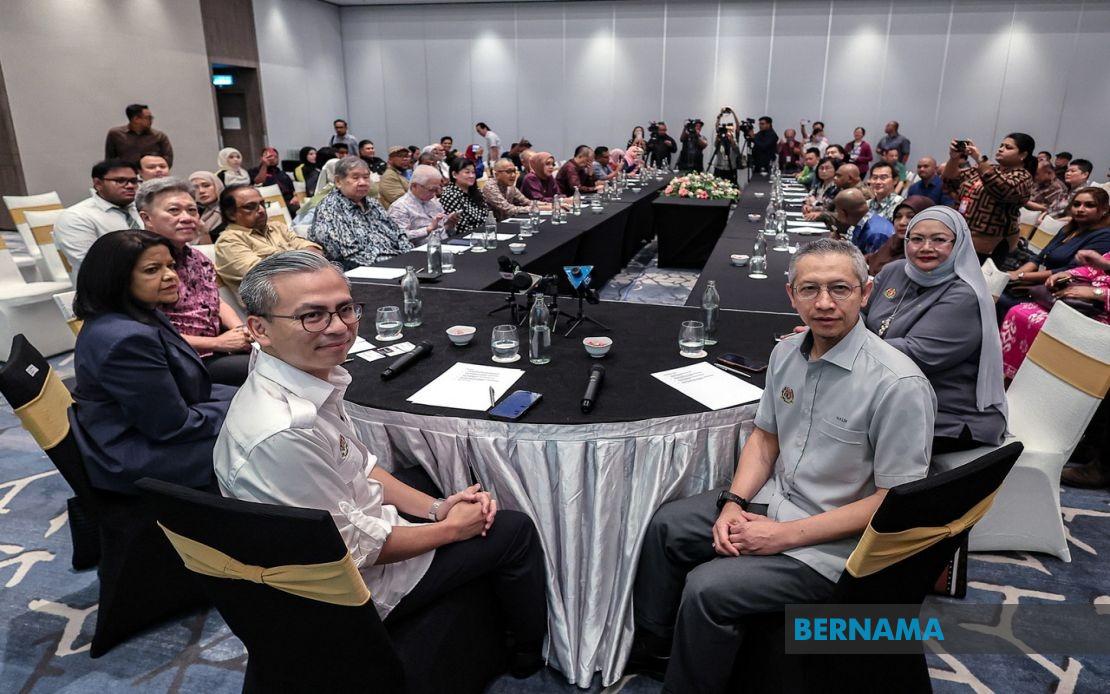
Communications Minister Datuk Fahmi Fadzil has floated the idea of embedding structured retreat sessions into every future iteration of the National Journalists' Day (HAWANA) celebration, positioning these gatherings as formal channels for two-way engagement between the government and Malaysia's media sector. Speaking in Butterworth following a lengthy dialogue with journalists during HAWANA 2026, Fahmi outlined a vision where such sessions would become permanent fixtures on the industry calendar, enabling systematic collection of perspectives and recommendations from newsrooms across the country.
The minister envisions the Malaysian Media Council (MMC) taking a coordinating role in organising these retreats, a responsibility that would formalise what has traditionally been ad-hoc interaction between government communications apparatus and media leadership. By anchoring these discussions to an annual event that already carries symbolic significance for the profession, the proposal aims to create predictable, structured opportunities for the industry to present grievances and suggestions directly to policymakers. The retreat framework would transcend ceremonial acknowledgment of journalists' contributions, instead functioning as a deliberate mechanism for extracting actionable intelligence from practitioners navigating the news landscape daily.
According to Fahmi, the scope of these retreat discussions would encompass both immediate operational concerns and longer-term strategic questions affecting the media's commercial viability. Topics under consideration range from potential legislative amendments and fresh policy initiatives to sectoral challenges requiring governmental intervention. This breadth suggests recognition that media sustainability in Malaysia cannot be addressed through narrow, technical fixes alone—instead requiring holistic consideration of regulatory, economic, and market factors that shape how news organisations operate and sustain themselves financially.
Among the most pressing issues dominating current industry discourse is the economic squeeze affecting mainstream media outlets contending with the migration of content consumption to digital platforms. Fahmi identified a particularly acute challenge: traditional news organisations generate significant content that circulates on social media channels, yet these platforms generate no direct revenue for the publishers who invested in gathering and producing that material. This asymmetry has become a structural crisis for newsrooms struggling to maintain editorial capacity while income streams shrink. The minister's acknowledgement of this predicament signals governmental awareness that without intervention addressing the economic model underlying digital media distribution, Malaysia risks further hollowing out of professional journalism capacity.
Responding to this challenge, Fahmi indicated the government's willingness to facilitate engagement between Malaysia's media industry and social media platforms, positioning itself as intermediary in negotiations where content creators currently lack meaningful leverage. Such facilitation could involve anything from formal dialogue frameworks to policy discussions about fair compensation mechanisms or revenue-sharing arrangements. This governmental role carries significance for regional press freedom discourse, as it suggests official recognition that allowing market dynamics alone to determine media economics produces outcomes detrimental to journalistic sustainability—a position aligned with international media development thinking but potentially contentious domestically where technology platforms wield substantial political and commercial influence.
The dialogue session itself drew significant participation from across Malaysia's media and government establishment. Communications Ministry secretary-general Datuk Abdul Halim Hamzah and deputy secretary-general Datuk Bahria Mohd Tamil attended, alongside Malaysian National News Agency (Bernama) leadership including chairman Datuk Seri Wong Chun Wai and chief executive Datin Paduka Nur-ul Afida Kamaludin. The presence of MMC chairman Tan Sri Nallini Pathmanathan and representatives from major local media organisations underscored the gathering's significance as rare high-level engagement between government and press leadership focused on systemic industry challenges rather than immediate controversies.
For Malaysian journalists and media organisations, the proposal carries both promise and interpretive complexity. Formalising regular retreat sessions could institutionalise advocacy mechanisms currently fragmented across various professional bodies and trade organisations. Rather than media concerns percolating through informal channels or erupting during crises, structured retreats would create designated spaces for systematic presentation of industry positions. This could enhance media sector coherence and increase probability that government considers press perspectives when formulating communications policy, media regulation, or digital economy initiatives affecting news distribution.
The economic dimension of Fahmi's remarks warrants particular attention for Southeast Asian media observers. Malaysia's experience with advertising revenue migration to digital platforms mirrors challenges across the region, where traditional news businesses struggle while tech companies capture value from content they do not produce. The government positioning itself as facilitator between local publishers and global platforms acknowledges that individual national governments possess limited leverage over Silicon Valley-based corporate entities—yet collective action through public dialogue and potential policy coordination might generate outcomes unavailable through market mechanisms alone.
However, observers accustomed to press freedom dynamics should note the institutional framework being proposed. By channelling media feedback through government-orchestrated sessions coordinate by entities like MMC, the mechanism potentially creates subtle incentive structures where media organisations tailor advocacy to government receptivity rather than pursuing independent industry positions. The voluntary participation model and absence of binding commitments regarding implementation of media recommendations leaves substantial discretion with government regarding which suggestions merit action. These structural features neither preclude nor guarantee outcomes beneficial to journalism independence, instead reflecting the fundamental challenge of sustaining professional media within political economies where government remains significant player in both regulation and market dynamics.
The timing of this proposal during HAWANA 2026 positions it as forward-looking gesture at moment when Malaysian media faces genuine economic pressures and structural uncertainties. Whether annual retreat sessions materialise as substantial dialogue forums or function primarily as relationship-building occasions between officials and media leaders will depend on implementation and government's demonstrated responsiveness to recommendations emerging from these sessions. For now, Fahmi's proposal represents official recognition that media sustainability requires active policy attention and that systematic engagement with journalism practitioners should become routine rather than exceptional practice.

