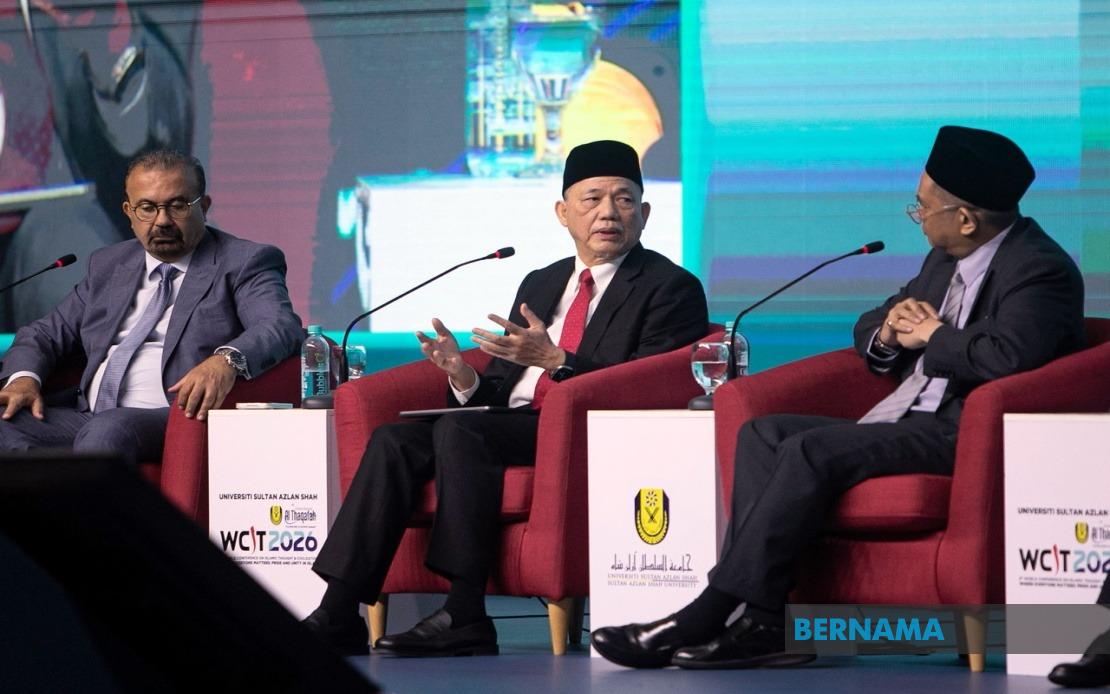
Recent escalations in US-Iran tensions have exposed a critical vulnerability in the modern global economy: energy security and maritime stability can no longer be treated as separate policy domains. Speaking at the 8th World Conference on Islamic Thought and Civilisation in Ipoh on July 21, Deputy Prime Minister Datuk Seri Fadillah Yusof, who also serves as Energy Transition and Water Transformation Minister, underscored how rapidly geopolitical shocks can ripple across continents to affect ordinary Malaysians at the petrol pump and in their electricity bills.
The interconnectedness of these challenges has become starkly apparent through recent developments in the Strait of Hormuz, one of the world's most critical chokepoints for energy transport. Fadillah stressed that disruptions occurring thousands of kilometres away in the Persian Gulf region now have immediate and measurable consequences for Malaysia's economy, supply chains and cost of living. When tensions escalate in that strategic waterway, the impacts cascade through multiple sectors simultaneously—not merely through energy markets, but through the entire logistics ecosystem that underpins modern commerce.
International shipping remains vulnerable to these regional disturbances, Fadillah explained, with vessel operators and trading companies forced to navigate heightened risks. Insurance premiums for maritime cargo have surged in response to these uncertainties, a cost that eventually filters down through supply chains to consumers. The price of energy itself becomes volatile as markets respond to perceived threats to supply, while the broader cost of transporting goods internationally rises proportionally. These layered expenses accumulate across every sector relying on maritime trade, fundamentally reshaping the economics of global commerce.
Malaysia's geographic position amplifies these vulnerabilities and opportunities in equal measure. Situated along the Strait of Melaka, one of the world's most strategically important shipping lanes, Malaysia stands at the intersection of global trade flows connecting the Indian Ocean to the Pacific. What occurs in the Strait of Hormuz inevitably reverberates through the Strait of Melaka, making Malaysian waters and ports integral to resolving regional stability challenges. Any disruption to shipping patterns or energy supplies globally thus acquires immediate local relevance for Malaysian policymakers and businesses.
Fadillah emphasised that Malaysia's historical prosperity has depended on maintaining an open, stable and rules-based international trading system stretching back more than a century. The nation has built its economic model on the foundation of reliable access to global markets and predictable shipping corridors. This long-term reliance on international commerce means that Malaysia cannot remain detached from geopolitical developments affecting maritime routes and energy supplies, regardless of geographic distance. Malaysian prosperity is intrinsically linked to global stability in ways that transcend traditional notions of national interest.
The government's response to these interconnected challenges reflects a deliberate strategic approach centring on diplomacy rather than confrontation. Fadillah stressed that Malaysia navigates recent global developments with measured calm and responsibility, avoiding inflammatory rhetoric or hasty military posturing. This diplomatic posture aligns with Malaysia's broader foreign policy principle of befriending all nations and avoiding entanglement in great power conflicts. Rather than choosing sides between the United States and Iran, Malaysia seeks to insulate its economy while advocating for de-escalation.
Understanding the depth of energy-maritime security linkages requires recognising how modern supply chains have become extraordinarily complex and fragile. A single disruption in a distant maritime passage can trigger cascading effects across multiple industries—from petrochemicals to manufacturing to agriculture. For Malaysia, which imports significant energy resources and depends heavily on maritime trade for both imports and exports, these vulnerabilities pose structural economic challenges. Policymakers must therefore monitor distant geopolitical developments with the same attention they give to domestic policy, because the boundary between foreign affairs and domestic economics has effectively dissolved.
The implications for Southeast Asia extend beyond Malaysia's borders. The region collectively faces heightened exposure to energy supply disruptions and maritime security threats, yet possesses limited capacity to influence the behaviour of distant powers. This vulnerability has prompted greater focus on regional cooperation mechanisms and energy diversification strategies. Southeast Asian nations increasingly recognise that collective approaches to maritime security and energy resilience offer superior outcomes compared to unilateral national efforts, a shift in thinking that reflects the reality of interconnected challenges.
Malaysia's commitment to rules-based international governance becomes more significant in this context. By advocating for adherence to international maritime law and peaceful dispute resolution mechanisms, Malaysia supports the frameworks that underpin the stable shipping environment upon which its economy depends. The nation's diplomatic approach emphasises that economic interdependence and shared interests in maritime stability transcend political differences, offering pathways toward accommodation rather than confrontation.
Looking forward, policymakers must integrate energy security planning with maritime strategy in ways previously considered unnecessary. Government and private sector entities alike must develop greater resilience to supply shocks through diversification, strategic stockpiling, and investment in alternative energy sources. The energy transition itself takes on additional strategic importance when viewed through a maritime security lens, as reducing dependence on oil transported through vulnerable shipping lanes enhances national economic security. Climate policy and geopolitical risk management thus converge, requiring coordinated approaches across multiple government agencies and private stakeholders.

