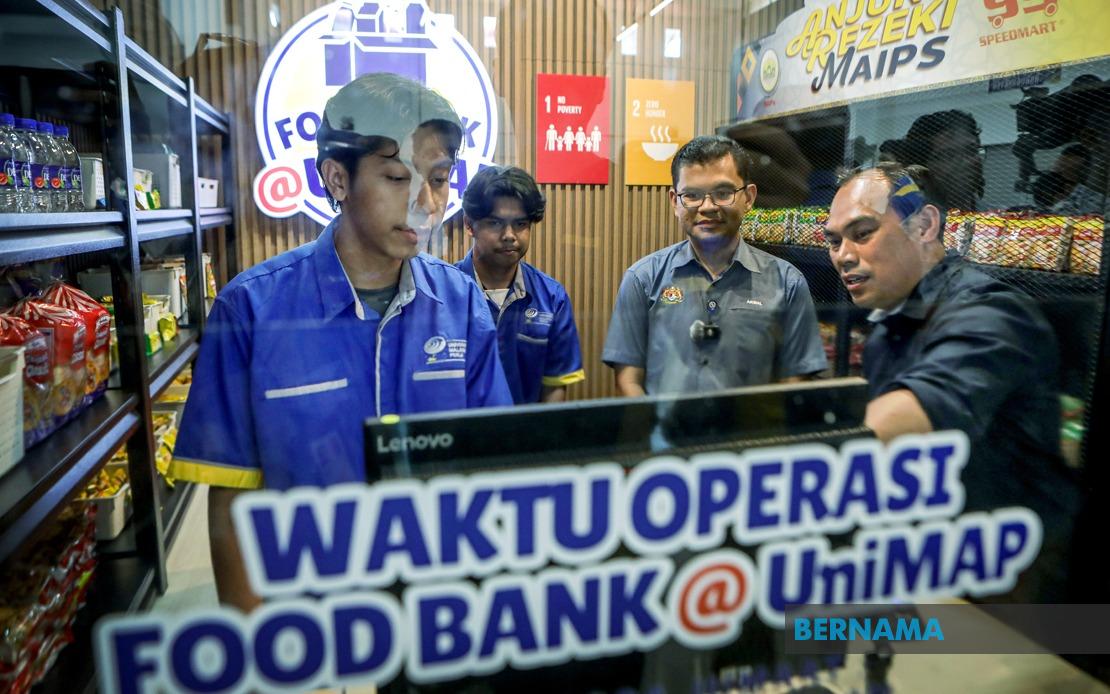
The Ministry of Economy is moving to secure an extension of the People's Income Initiative–Food Entrepreneur Initiative (IPR-INSAN) after observing significant positive outcomes across its operations nationwide. Economy Minister Akmal Nasrullah Mohd Nasir announced the decision following a visit to Universiti Malaysia Perlis (UniMAP) in Arau, where he inspected the programme's implementation firsthand through vending machine installations and related student welfare initiatives.
The programme represents a targeted intervention designed to uplift B40 household entrepreneurs—those earning below RM4,850 monthly—by providing them with accessible business platforms while simultaneously delivering affordable nutritious meals to university communities. By leveraging vending machine technology, the initiative removes traditional barriers that smaller entrepreneurs face when entering mainstream food retail, creating a symbiotic relationship where low-income sellers gain steady income opportunities and students obtain reasonably priced meals. This model has gained particular relevance in Malaysia's context, where youth food insecurity and underemployment among vulnerable populations remain persistent social concerns.
During his campus visit, Akmal Nasrullah examined two operational vending machine sites at UniMAP's residential colleges—the Tuanku Abdul Rahman Residential College and the Tuanku Tengku Fauziah Residential College—where local entrepreneurs operate homemade food businesses. The firsthand observation provided the minister with concrete evidence of the scheme's economic viability and social impact, information crucial to support the ministry's extension application before the Ministry of Finance. Such site visits carry strategic importance in Malaysia's governance, as they demonstrate commitment to ground-level programme monitoring and generate authentic testimonials for policy justification.
Data from the two campus locations reveal encouraging financial performance for participating entrepreneurs. Norleyana Nordin, operating at the Tuanku Abdul Rahman site, achieved average monthly sales of RM2,178.80, with peak earnings reaching RM4,905 in January. These figures, while modest compared to traditional businesses, represent significant income supplementation for B40 households where monthly earnings of RM2,000–RM3,000 constitute substantial household contributions. At the neighbouring college, Noor Hasfalela Mohd Noor demonstrated stronger performance, averaging RM4,595 monthly sales with January yields of RM10,012—figures that suggest scaling potential and market demand for affordable prepared meals within student populations.
The programme's relevance extends beyond individual entrepreneur success to address systemic issues within Malaysia's food security and youth welfare frameworks. Universities and residential colleges represent concentrated student populations where purchasing power constraints often force choices between meal affordability and nutritional adequacy. By creating platforms where small entrepreneurs can supply cost-effective food through modern vending infrastructure, IPR-INSAN simultaneously addresses entrepreneurial opportunity and student food access. This dual-benefit approach aligns with the government's MADANI framework, which emphasises inclusive prosperity and human capital development.
UniMAP's associated initiatives—the Food Bank and MADANI Dapur Siswa student kitchen—operate in complementary fashion with the IPR-INSAN vending machines. These broader campus welfare structures ensure that students facing acute food insecurity receive additional support beyond market-based solutions. The minister's acknowledgment of these complementary programmes reflects evolving policy recognition that sustainable poverty alleviation requires integrated approaches combining entrepreneurship development with safety-net systems. For students, this constellation of initiatives creates multiple pathways to affordable nutrition, reducing the likelihood that financial constraints undermine academic performance.
The ministry's decision to apply for programme extension signals confidence in IPR-INSAN's operational model and measurable outcomes. However, the extension application process itself reflects a structural vulnerability in Malaysian social programmes: time-limited funding mechanisms that require recurring justification rather than permanent institutional embedding. This cycle of extension applications, while potentially ensuring continued accountability scrutiny, also creates uncertainty for participating entrepreneurs who must operate under temporary policy frameworks. Successful extension could establish a precedent for converting proven pilot initiatives into standing programmes with stable, multi-year funding allocations.
For Southeast Asian context, Malaysia's IPR-INSAN model offers instructive lessons in technology-enabled social entrepreneurship. Regional economies facing similar challenges of urban youth unemployment and informal sector integration might adapt the vending machine platform concept to local contexts. The programme demonstrates how strategic deployment of relatively simple technology—automated vending machines—can democratise market access for low-income entrepreneurs while addressing consumer needs. This contrasts with some development approaches that emphasise capital-intensive infrastructure, showing instead how targeted but sustainable solutions can operate within modest fiscal envelopes.
The entrepreneurial earnings data also provides important signals about market pricing and consumer demand dynamics. That B40 entrepreneurs can generate RM4,000–RM10,000 monthly sales through vending machines suggests healthy demand for affordable prepared food and indicates that price sensitivity among university students and campus staff creates reliable customer bases. For policymakers, such data supports arguments for replicating the model across other university campuses and potentially extending it to other institutional settings like hospitals, government offices, and transport hubs where similar food access challenges exist.
Akmal Nasrullah's visit and subsequent extension application also reflect broader ministerial focus on translating development rhetoric into observable impact. The Economy Ministry's emphasis on monitoring ground-level implementation and collecting concrete performance metrics demonstrates an evidence-informed approach to programme management. For Malaysian public administration, such practices represent progressive deviation from purely anecdotal policy evaluation toward data-driven decision-making, a methodology increasingly expected by accountability constituencies including parliament, civil society, and taxpayers.
Looking forward, the extension decision will likely hinge on Ministry of Finance assessment of programme cost-efficiency and comparative advantages against alternative poverty-alleviation mechanisms. Budget considerations will determine whether extension funding expands the scheme to additional campuses or maintains current operations while exploring related applications. For participating entrepreneurs and student beneficiaries, the minister's commitment to seeking extension provides interim assurance of programme continuity, though formal extension approval remains pending. The broader significance lies in establishing that targeted, technology-enabled entrepreneurship support combined with institutional partnerships can generate measurable welfare improvements for both low-income sellers and consumer communities, a model that could inform future social policy development across Malaysia and the region.

