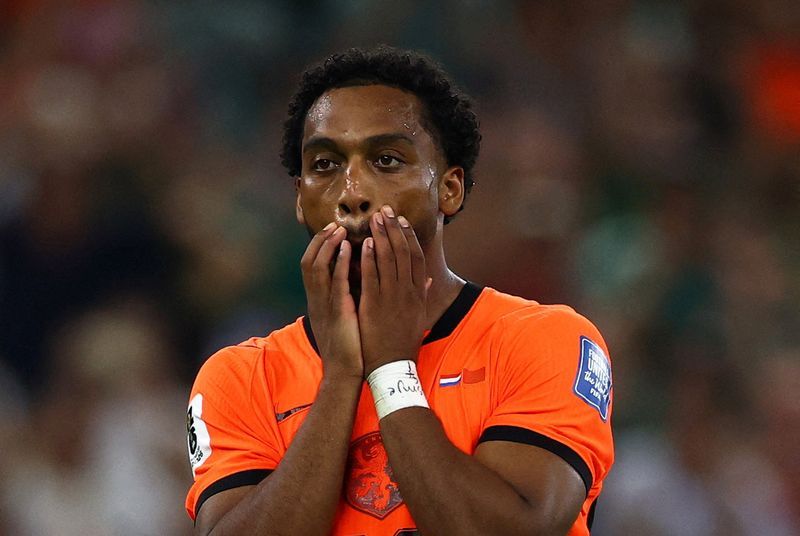
The Netherlands football association has condemned a wave of racist abuse directed at three national team players following their country's elimination from the World Cup at the hands of Morocco in a penalty shootout. Justin Kluivert, Quinten Timber and Crysencio Summerville, all of whom failed to convert their spot kicks during Monday's last-32 encounter in Monterrey, became targets of discriminatory and hateful messages across social media platforms in the aftermath of the 3-2 penalty defeat that came after the teams drew 1-1 following extra time.
The KNVB's response to these incidents demonstrates a formal commitment to accountability. The association has announced plans to file a complaint with Meld Online Discriminatie, the Dutch body responsible for documenting and investigating online discrimination cases. The process involves their legal team reviewing whether the offensive statements meet the threshold for criminal prosecution, after which a formal complaint can be escalated to the Public Prosecution Service to determine whether a criminal investigation should be initiated. This procedural approach reflects growing international recognition that online racial abuse cannot be treated as a mere digital annoyance but rather as a serious matter requiring institutional intervention.
Such episodes are unfortunately becoming a recurring phenomenon in global football whenever high-pressure situations result in missed opportunities by players from minority backgrounds. The pattern emerged dramatically at the 2020 European Championship final when England's loss to Italy in a penalty shootout sparked a barrage of racist vitriol targeting Marcus Rashford, Bukayo Saka and Jadon Sancho. That incident led to substantial legal consequences, with two perpetrators receiving custodial sentences and another handed a suspended sentence. The British authorities responded with widespread investigations that resulted in multiple arrests as part of a coordinated effort to tackle online hate speech.
For Southeast Asian readers and observers, the persistence of online racist abuse in football carries particular resonance given the region's own experience with online harassment and hate speech across multiple platforms. The mechanisms being deployed by European football associations and law enforcement offer potential models for how regional governing bodies and platforms might address similar phenomena when they occur locally. The Netherlands' decision to pursue formal legal channels rather than dismissing such abuse as inevitable collateral damage of competition signals an institutional shift in how elite sports bodies are treating digital discrimination.
The KNVB's statement articulating opposition to discrimination resonates beyond the immediate incident. The association framed its position by emphasizing that football's unifying capacity depends on creating spaces where people from diverse backgrounds feel welcomed and respected. This framing—that discrimination fundamentally contradicts sport's inclusive mission—represents an important ideological stance from a major football nation. The Netherlands has historically positioned itself as a progressive football culture, and these sentiments align with that self-image while also setting expectations for the behaviour of supporters and the broader online community.
The World Cup penalty shootout itself became a microcosm of a broader shift in global football dynamics. Morocco's advancement represented a historic achievement for African football, marking only the second time a team from the continent had reached the last eight at the World Cup. However, the racist abuse directed at the opposing players who failed to convert penalties threatens to overshadow what should have been a celebratory moment for African football and its supporters. This dynamic—where one nation's sporting triumph becomes entangled with racist abuse from segments of the other nation's fan base—damages the reputational capital that major tournaments are meant to generate.
The escalation pathway established through formal complaint mechanisms also raises questions about the effectiveness of social media platforms themselves in preventing such abuse. Both Twitter, now X, and Instagram have repeatedly faced criticism from football associations and human rights organisations regarding their inadequate enforcement of hate speech policies. The decision by the KNVB to pursue legal remedies through government agencies rather than relying primarily on platform self-regulation suggests a judgment that existing platform policies are insufficient. This approach may also reflect frustration with the inconsistency and opacity of how major platforms apply their community standards.
For Malaysian football authorities and supporters, the Netherlands case provides an instructive example of how institutional responses to online abuse can establish precedents and expectations. As Malaysian football develops its global profile and as Malaysian players increasingly compete at elite European clubs where they may face similar online harassment, understanding these enforcement mechanisms becomes practically relevant. The KNVB's example demonstrates that pursuing formal legal consequences is possible and that doing so sends a clear message that racist abuse carries real consequences beyond temporary account suspensions.
The broader context of this incident also touches on how sports represent national identity and pride in ways that can intensify emotional responses when outcomes disappoint. Penalty shootouts in particular carry heightened psychological stakes, and the players who miss face immediate scapegoating. When that scapegoating becomes racially inflected, it reveals underlying tensions within fan bases and online communities that extend far beyond football. The fact that Summerville, Timber and Kluivert became particular targets—rather than the goalkeeper or defenders who might have prevented Morocco's goals—underscores how racist abuse often follows predictable patterns tied to player visibility and demographic characteristics.
The international football community's increasing attention to these incidents suggests that repeated occurrences are gradually reshaping norms around acceptable fan behaviour. Where similar abuse might once have been dismissed as an inevitable unfortunate element of competitive sport, it is now being treated as a matter for formal investigation and legal response. This normalisation of enforcement may eventually deter potential perpetrators, though the scale of online abuse remains substantial. The Netherlands' filing of a formal complaint with authorities represents one data point in this broader cultural shift, though sustained effort will be required to produce meaningful changes in online behaviour.

