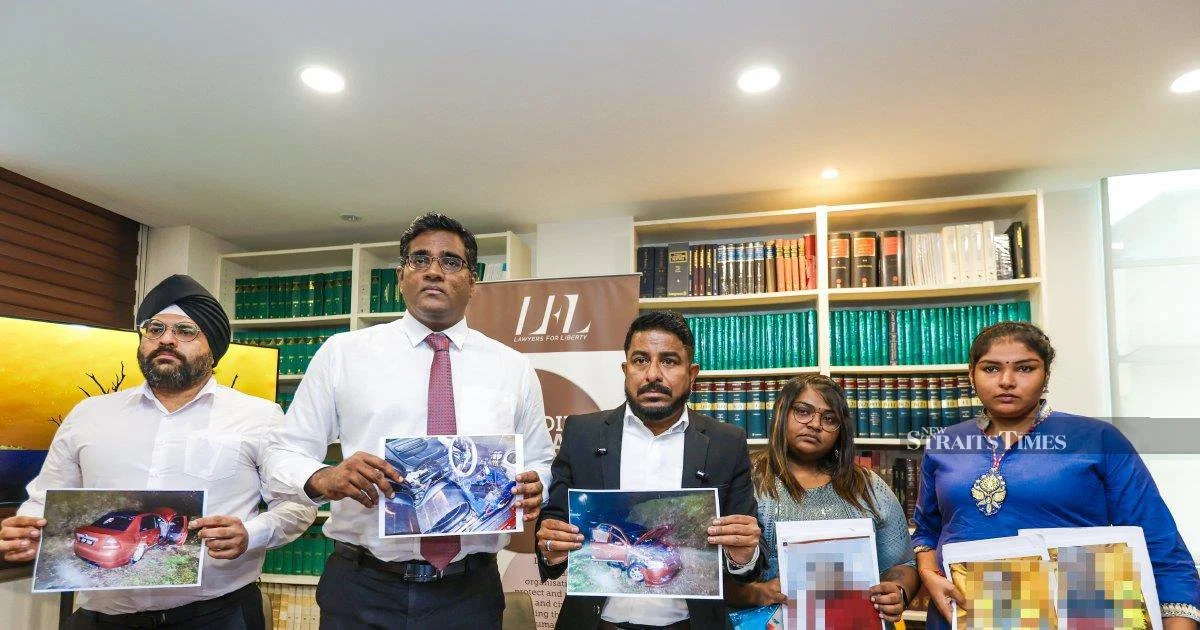
The families of three men killed in a police shooting in Durian Tunggal, Melaka, have escalated their demands for accountability by calling on the Malaysian Anti-Corruption Commission to launch a formal investigation into what they characterise as a deliberate concealment of facts surrounding the deaths. The grieving relatives have grown increasingly frustrated with the official narrative and are now seeking intervention from the corruption watchdog to examine how the case has been handled by authorities.
The incident, which resulted in three fatalities, has sparked significant public concern about police conduct and the adequacy of investigations into officer-involved shootings. Families of the deceased have questioned the transparency and thoroughness of the official inquiry, suggesting that crucial evidence may have been obscured or misrepresented. Their decision to escalate the matter to MACC signals deepening distrust in conventional oversight mechanisms and a determination to pursue an alternative avenue for justice.
In Malaysia's context, where public confidence in law enforcement accountability remains a persistent concern, cases involving police use of lethal force attract intense scrutiny. The Durian Tunggal incident exemplifies the broader tensions between demands for officer safety and the necessity of thorough, independent investigations when civilians are killed. The involvement of MACC, an institution with prosecutorial powers and investigative reach, could potentially reshape how such matters are examined and whether misconduct at higher administrative levels can be uncovered.
Families have emphasised that their grievances extend beyond the circumstances of the shooting itself to encompass what they view as institutional failures in the aftermath. They allege that the investigation process may have been compromised by conflicts of interest, inadequate independent oversight, or pressure to reach predetermined conclusions that shield officers from accountability. These allegations, if substantiated, would raise uncomfortable questions about the integrity of Malaysia's police complaints and investigation frameworks.
The decision to petition MACC rather than rely solely on police internal affairs mechanisms reflects a calculated shift in strategy by the families. It acknowledges both the limitations of existing internal review processes and the perception that corruption—understood broadly to include abuse of authority and institutional misconduct—may be implicated. MACC's statutory independence and broader mandate to investigate misconduct in the public sector make it a potentially more credible investigating body in the eyes of the bereaved families.
From a regional perspective, Malaysia's handling of police accountability cases has become increasingly significant as Southeast Asian societies grapple with questions of governance and rule of law. Neighbouring countries face similar challenges, and the precedent set by how Malaysia responds to cases like Durian Tunggal may influence approaches across the region. International human rights organisations have long flagged concerns about police use of force in Malaysia, making transparent investigations essential to the country's standing and credibility.
The involvement of families in pressing for MACC investigation also underscores the critical role of civil society and grieving relatives in demanding institutional accountability when official channels appear insufficient. This grassroots pressure, when coupled with media attention and public interest, can catalyse systemic change. However, it also reveals gaps in Malaysia's formal mechanisms for addressing police misconduct, suggesting that victims must resort to extraordinary measures to achieve even basic investigation standards.
For the broader Malaysian public, the case raises fundamental questions about access to justice, equality before the law, and whether those wielding state authority face genuine consequences for potentially unlawful acts. Public perception of fairness in such investigations—whether warranted or not—directly affects social cohesion and trust in institutions. The willingness or reluctance of MACC to accept and pursue such referrals will signal the extent to which Malaysia's anti-corruption apparatus is willing to venture into the sensitive terrain of police accountability.
The families' persistence suggests that conventional assurances and statements from police authorities have failed to satisfy their demands for a credible inquiry. This breakdown in trust between victims' kin and law enforcement illustrates how individual cases can accumulate into broader institutional crises if not handled with transparency and genuine accountability. The manner in which MACC responds to any formal request will reveal whether Malaysia's corruption-fighting institutions possess both the willingness and the political space to investigate alleged misconduct at the highest levels of law enforcement.
Moving forward, the case may prompt broader discussions about reforming police accountability mechanisms in Malaysia, including clearer protocols for independent investigation of officer-involved deaths, stronger civilian oversight, and more robust whistleblower protections. If MACC ultimately engages with the families' concerns, it could establish an important precedent for how institutional failures and alleged cover-ups in sensitive matters are examined, potentially creating a template for future cases.

