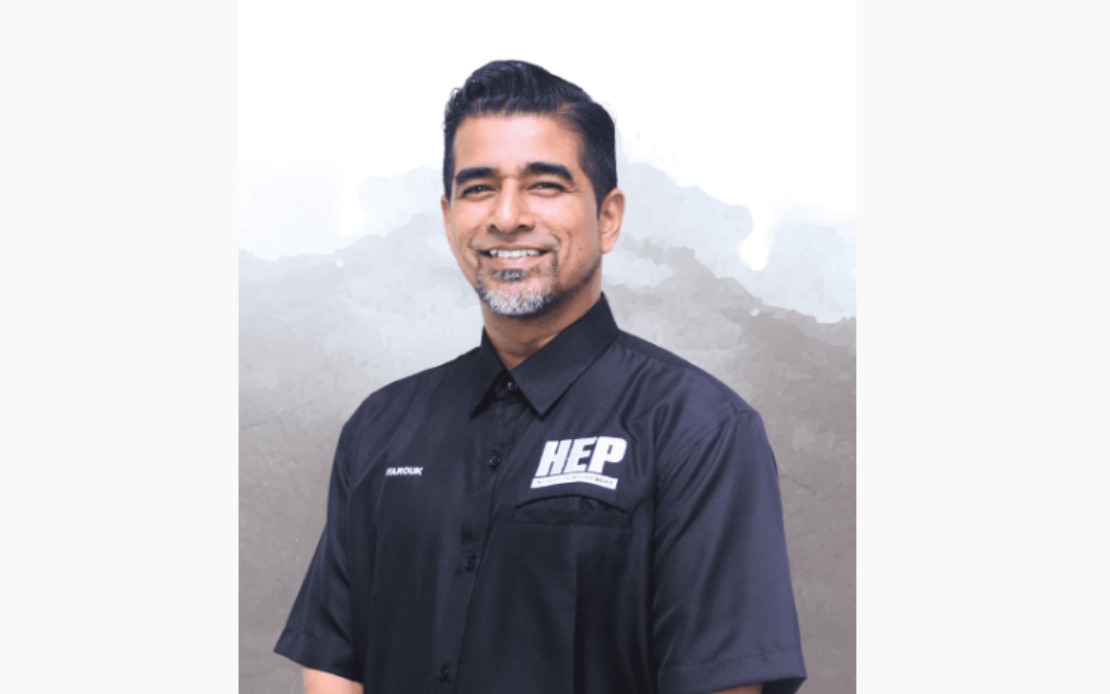
Universiti Teknologi MARA's Kelantan branch is actively discouraging capable but economically vulnerable students from rejecting admission offers, instead directing them toward an expanding portfolio of financial safety nets designed to eliminate cost barriers to degree completion. Deputy Rector for Student Affairs Meer Zhar Farouk Amir Razli delivered this message during the UiTM Kelantan Branch Rector's Cakna Programme, a community outreach initiative aimed at supporting newly enrolled students facing financial hardship. The university recognises that many qualified applicants from low-income families default to rejecting offers despite earning places, believing their circumstances make university unaffordable—a pattern UiTM seeks to interrupt through improved communication about available assistance.
Beyond the widely known National Higher Education Fund Corporation (PTPTN) student loans, which have long served as the primary financing mechanism for Malaysian undergraduates, UiTM Kelantan now emphasises complementary funding streams that specifically target economically marginalised cohorts. These include zakat-based assistance, which leverages Islamic charitable obligations to support Muslim students, general welfare allocations administered by the institution, and the Dapur MADANI initiative operated within residential colleges. This multi-layered approach acknowledges that loans alone place significant repayment burdens on graduates from low-income backgrounds, whose earning potential may be constrained by family obligations to contribute household income immediately upon completing studies.
The Dapur MADANI programme represents a particularly innovative intervention, operating at the residential college level to help students manage day-to-day living expenses throughout their academic journey. By addressing food security, basic necessities, and routine costs outside tuition, this initiative tackles a significant gap in traditional financing, which prioritises academic fees but leaves students vulnerable to dropout if unable to cover accommodation and sustenance. For students from families dependent on irregular or unstable income, such targeted support can prove decisive in determining whether they persist through degree completion or abandon studies prematurely.
Competition for places in Malaysia's public higher education system has intensified considerably in recent years, driven by demographic pressure and rising tertiary education aspirations among younger Malaysians. This environment makes it wasteful from both individual and national perspectives when qualified candidates forfeit opportunities due to incomplete information about financial assistance. Meer Zhar emphasised this competitive context to reinforce the message that students cannot afford to reflexively decline offers without fully investigating support mechanisms. The scarcity of places means that rejected spots may not become available to applicants in subsequent intake cycles, effectively closing doors for those who hesitate.
The Rector's Cakna Programme itself exemplifies this institutional commitment, operating collaboratively with local non-governmental organisations to deliver targeted assistance directly to newly admitted students identified as needing support. Rather than relying solely on centralised bureaucratic processes, this localised approach allows UiTM Kelantan to identify and engage vulnerable students in their communities, removing barriers to accessing information and building personal relationships that encourage acceptance of offers. The programme's presence in residential areas, as evidenced by the presentation of a laptop to student Norzarra Dhania Amir Abdullah at her home on Jalan Kebun Sultan, signals that institutional support extends beyond campus boundaries into family contexts.
Norzarra Dhania's personal trajectory illuminates why such messaging and support matter acutely in Malaysian contexts. As the eldest of seven siblings, she carries responsibilities that extend far beyond her own education, with her mother serving as the household's sole income earner following her father's diabetes-related illness four years prior. When offered admission to UiTM Sarawak the previous year, the financial realities of relocating to an unfamiliar state, combined with transport costs and geographic distance from her struggling family, made accepting that place feel impossible despite her educational aspirations. These are not unusual circumstances among Malaysian students from lower-income households; rather, they reflect widespread patterns where educational opportunity collides with family economic vulnerability and filial obligation.
The availability of UiTM Kelantan as an alternative represents a game-changing alternative for Norzarra Dhania precisely because it reduces the financial friction that made pursuing higher education seem unattainable. Proximity to her home means lower transport and accommodation costs, enabling her to potentially maintain some household contribution while studying. Her decision to pursue a Diploma in Management demonstrates that even shortened degree pathways, when financially accessible, provide genuine value for students whose economic constraints might otherwise entirely foreclose tertiary education. For Malaysia's development trajectory, converting such cases from educational exclusion to inclusion generates both individual economic mobility and broader human capital enhancement.
The experiences that deter students from accepting offers reveal broader systemic gaps in financial aid communication and access. Many Malaysian families lack the knowledge networks to navigate higher education financing options, instead assuming that university study requires upfront resources they simply do not possess. Information asymmetries compound economic disadvantage—students from affluent backgrounds routinely receive sophisticated guidance from parents, school counsellors, and community contacts about available funding, while economically marginalised students often operate with incomplete or distorted information. UiTM Kelantan's proactive outreach directly counteracts this pattern by making assistance visible and accessible in communities where economic need is concentrated.
The institutional messaging also reflects evolving understanding of higher education's social contract within Malaysia. Public universities increasingly recognise that their admission offers carry implicit promises of financial accessibility for qualified candidates regardless of economic background. When students reject offers due to cost barriers, this represents an institutional failure to fulfil that promise, not simply an individual student's inability. By expanding and actively promoting financial support mechanisms, UiTM Kelantan effectively internalises responsibility for removing cost as an obstacle between qualified applicants and degree completion. This approach aligns with broader public policy recognition that tertiary education represents critical infrastructure for social mobility and skills development in an increasingly knowledge-intensive economy.
The focus on economically disadvantaged students also addresses particular vulnerabilities within Malaysia's education system. Students from low-income backgrounds experience higher dropout rates, longer time-to-completion, and lower degree-class outcomes compared to more affluent peers, partly because financial stress creates competing pressures that distract from academic engagement. By securing their admission and providing wraparound support through facilities like Dapur MADANI, UiTM Kelantan invests not merely in access but in the conditions enabling successful completion. This distinction matters because incomplete tertiary education provides minimal labour market advantage while accumulating student debt, whereas degree completion facilitates genuine economic transition.
Moving forward, the sustainability of such initiatives depends on maintaining funding levels and ensuring that students understand the support landscape sufficiently early to factor assistance into decision-making. UiTM Kelantan's Rector's Cakna Programme and related interventions represent encouraging institutional proactivity, yet scaling these approaches across Malaysia's diverse student population requires coordination with other public universities and continued government commitment to student welfare funding. The success of cases like Norzarra Dhania—qualified students who nearly rejected opportunities due to incomplete information—validates continued investment in outreach and support infrastructure, particularly in communities where economic barriers historically discourage educational advancement.