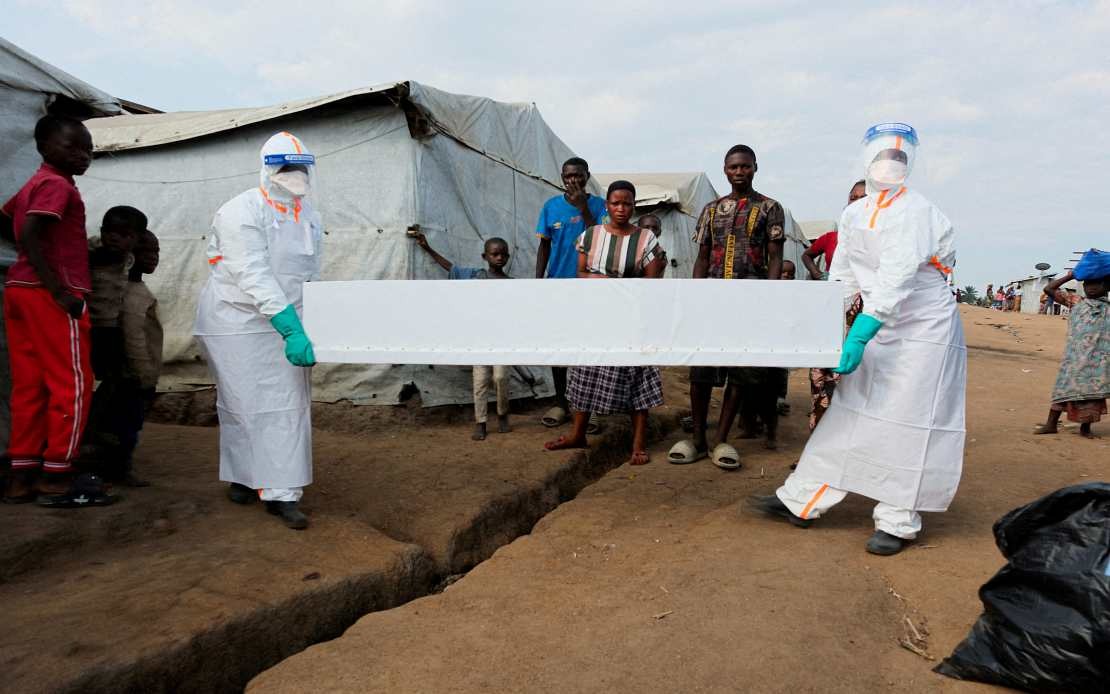
The Democratic Republic of Congo's battle against Ebola has entered a critical phase, with confirmed cases now surpassing 1,000 as the outbreak continues its rapid spread across multiple provinces. As of June 22, health authorities documented 1,003 confirmed infections and 254 fatalities, translating to a mortality rate of 25.3 per cent since the declaration of the outbreak on May 15. The figures represent a significant escalation within a relatively short timeframe, raising alarm bells among regional and international health agencies monitoring the situation closely.
The geographical scope of the epidemic spans three distinct provinces—Ituri, North Kivu, and South Kivu—presenting considerable logistical and operational challenges for response teams attempting to contain transmission. Health Minister Roger Kamba acknowledged the spreading nature of the crisis while highlighting mixed progress on the ground. While recovery figures offer some encouragement, with at least 100 patients having survived the infection, the trajectory of new cases continues to outpace positive developments. Currently, 365 patients remain under medical care in isolation or hospital facilities, straining already-limited healthcare infrastructure in one of Africa's most conflict-affected regions.
The Africa Centres for Disease Control and Prevention has issued a sobering assessment of the outbreak's potential trajectory. Experts warned that without immediate and sustained containment measures, the current epidemic could surpass the devastating 2014-2016 West African Ebola crisis, which claimed more than 11,000 lives across Guinea, Liberia, and Sierra Leone. That historical reference point underscores the gravity of the situation and the stakes involved in the coming weeks and months of the response effort.
A particularly troubling finding emerged from collaborative scientific investigation conducted by researchers from the Ugandan Health Ministry's Department of National Health Laboratory and Diagnostic Services and Congo's Institute of National Biomedical Research. The team identified the circulating strain as Ebola Bundibugyo, a variant attributed to a new spillover event from wildlife sources rather than reactivation of a dormant or cryptically spreading previous outbreak. This distinction carries important epidemiological implications, suggesting that containment strategies must account for continued animal-to-human transmission pathways that remain active in the region.
The identification of a fresh zoonotic spillover presents a different operational challenge than would a situation involving persistent human-to-human transmission chains from earlier cases. Wildlife spillover events indicate that reservoir species continue shedding virus into communities where human contact occurs, potentially complicating long-term control efforts. The Democratic Republic of Congo's dense forests and wildlife trade networks create structural conditions favourable to repeated spillover events, a reality that health planners must address alongside immediate outbreak response.
Minister Kamba outlined the multifaceted approach being deployed to curtail transmission and manage confirmed cases. Community engagement and targeted communication campaigns aim to build trust and encourage residents to report symptoms and seek treatment promptly. Laboratory diagnostics and case identification continue being reinforced to ensure that suspected cases receive confirmation and appropriate isolation. Clinical case management protocols focus on supportive care and palliative measures to maximize survival rates among hospitalized patients, particularly given that no specific curative treatment exists for Ebola.
However, response teams have encountered operational difficulties in maintaining the contact-follow-up rate at previous levels, according to ministerial reports. Contact tracing represents a cornerstone of outbreak containment, as identifying and monitoring individuals exposed to confirmed cases allows authorities to detect secondary infections before they spread further into the community. The reported decline in this critical surveillance metric suggests either mounting logistical strain or deteriorating security conditions that restrict field worker movement in active conflict zones.
For Southeast Asian nations and the broader Indo-Pacific region, this outbreak carries indirect but tangible implications. The Democratic Republic of Congo sits within global health networks and disease surveillance systems that ultimately affect all countries. The precedent of rapid Ebola spread in a poorly resourced, conflict-affected setting demonstrates vulnerabilities in global pandemic preparedness. Malaysia and its neighbours participate in regional health cooperation frameworks and international disease monitoring mechanisms that rely on early warning signals from African outbreaks. Investment in supporting capacity-building and surveillance in Africa ultimately strengthens regional security against transboundary health threats.
The convergence of multiple risk factors—limited healthcare infrastructure, ongoing armed conflict, forest spillover reservoirs, and population mobility—creates a particularly volatile epidemiological situation. International assistance and technical cooperation from global health agencies remain essential for bolstering the Democratic Republic of Congo's response capacity. The coming weeks will prove critical in determining whether containment measures can bend the trajectory of new cases or whether the outbreak continues its exponential growth.
%22%2F%3E%3C%2Fpattern%3E%3C%2Fdefs%3E%3Crect%20width%3D%22100%25%22%20height%3D%22100%25%22%20fill%3D%22url(%23ph19gl2g)%22%2F%3E%3Crect%20width%3D%22100%25%22%20height%3D%22100%25%22%20fill%3D%22url(%23ph19gl2p)%22%2F%3E%3Ctext%20x%3D%2250%25%22%20y%3D%2250%25%22%20text-anchor%3D%22middle%22%20dominant-baseline%3D%22central%22%20fill%3D%22rgba(255%2C255%2C255%2C0.95)%22%20font-family%3D%22Georgia%2C%20'Times%20New%20Roman'%2C%20serif%22%20font-weight%3D%22700%22%20font-size%3D%22151%22%20letter-spacing%3D%22-0.02em%22%3EMuhyiddin%3C%2Ftext%3E%3C%2Fsvg%3E)
%22%2F%3E%3C%2Fpattern%3E%3C%2Fdefs%3E%3Crect%20width%3D%22100%25%22%20height%3D%22100%25%22%20fill%3D%22url(%23ph1zf89g)%22%2F%3E%3Crect%20width%3D%22100%25%22%20height%3D%22100%25%22%20fill%3D%22url(%23ph1zf89p)%22%2F%3E%3Ctext%20x%3D%2250%25%22%20y%3D%2250%25%22%20text-anchor%3D%22middle%22%20dominant-baseline%3D%22central%22%20fill%3D%22rgba(255%2C255%2C255%2C0.95)%22%20font-family%3D%22Georgia%2C%20'Times%20New%20Roman'%2C%20serif%22%20font-weight%3D%22700%22%20font-size%3D%22320%22%20letter-spacing%3D%22-0.02em%22%3EKing%3C%2Ftext%3E%3C%2Fsvg%3E)