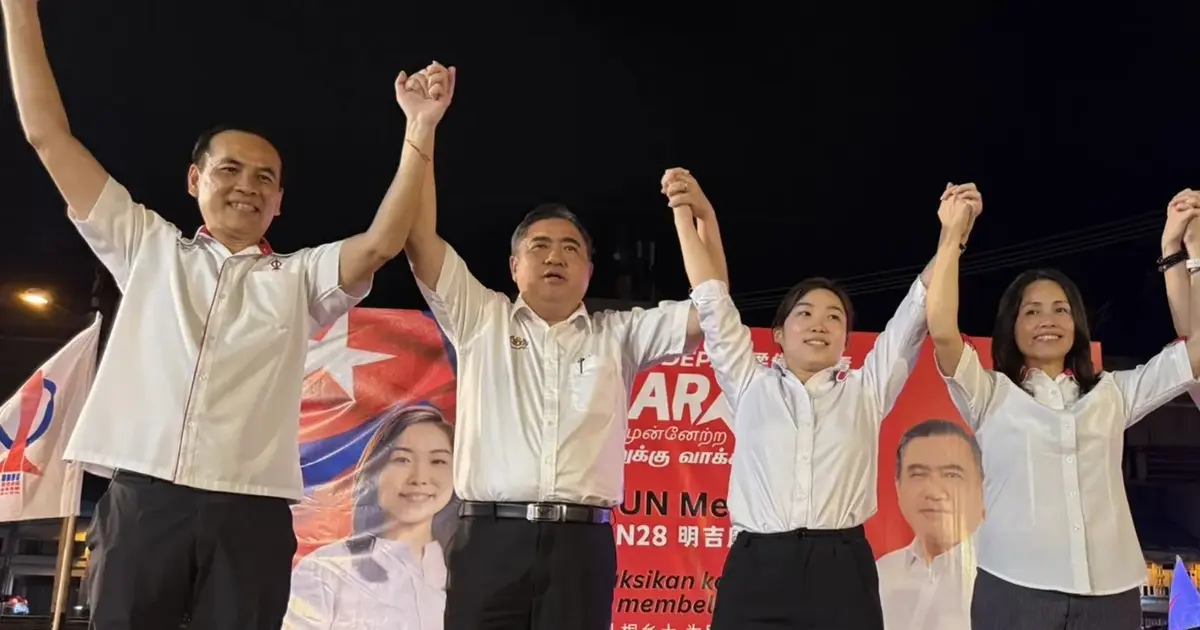
The Democratic Action Party has reaffirmed its confidence in its incumbent representative for Mengkibol, announcing that it will field a candidate with two terms of parliamentary experience in the upcoming general election. Party secretary-general Loke Siew Fook made the formal declaration of the candidacy, elevating lawyer Chu Poh Yee as the party's choice to contest the seat once again.
The decision to retain an experienced MP reflects DAP's strategy of prioritising continuity and established track records in strategically important constituencies. Mengkibol has emerged as a significant battleground in Malaysian politics, and the party's choice to nominate someone with previous parliamentary experience suggests confidence in the incumbent's ability to retain the seat against potential opposition challenges. The selection process within DAP, typically involving party grassroots consultation and leadership deliberation, has culminated in this reaffirmation of support for Chu Poh Yee.
Chu Poh Yee's background as a lawyer brings a particular professional dimension to the representation of Mengkibol. Legal expertise has increasingly become an asset in Malaysian parliamentary politics, particularly when addressing constitutional matters, legal amendments, and complex policy frameworks. As a two-term incumbent, Chu would have accumulated institutional knowledge of parliamentary procedures, constituency issues, and relationship networks that facilitate effective legislating and constituent service.
The timing of this announcement carries significance within the broader context of Malaysian electoral politics. General elections in Malaysia typically occur every five years, and each cycle involves strategic recalibration of candidate selections. By declaring candidates early, political parties can consolidate internal support, mobilise grassroots networks, and begin campaign preparations. DAP's move suggests that the party leadership has assessed current political conditions and determined that maintaining incumbent representation in Mengkibol aligns with its electoral strategy.
Mengkibol's electoral significance extends beyond its individual seat value. As part of the overall parliamentary landscape, the constituency reflects broader voting patterns and demographic shifts that influence national political outcomes. DAP's emphasis on retaining this seat indicates the party views the constituency as integral to its overall parliamentary strength and influence in formulating government policy at the federal level.
Loke Siew Fook's role as party secretary-general adds institutional weight to this announcement. The secretary-general typically serves as custodian of party procedures and decision-making processes, meaning his public pronouncement carries formal authority within DAP's structure. This institutional endorsement signals that Chu Poh Yee's candidacy represents the settled will of the party apparatus, not merely one faction's preference.
The use of the phrase "instead" in the original announcement context suggests that alternative configurations were previously under consideration. This hints at internal discussions within DAP about whether to introduce new candidates or retain existing ones. The ultimate decision to stick with an experienced incumbent over potentially fresher faces underscores the party's pragmatic approach to electoral competition, prioritising proven performance over generational renewal in this particular constituency.
For Malaysian voters in Mengkibol, this decision means continued representation by someone already familiar with their local issues and national legislative processes. Two terms of service provide a foundation for understanding long-standing constituency concerns, from infrastructure development to economic opportunities and social services. Constituents benefit from a representative who needs less time to become familiar with their needs and can immediately advocate for solutions.
The announcement also reflects DAP's broader positioning within Malaysian politics. The party, as the largest opposition party and a component of various coalition arrangements, must balance between maintaining stable representation and demonstrating openness to new voices and talent. Retaining experienced MPs while presumably introducing new candidates elsewhere represents a middle path through this tension.
From a Southeast Asian perspective, DAP's approach mirrors strategies employed by opposition parties across the region. In countries like Thailand, Indonesia, and the Philippines, established opposition parties frequently weigh the benefits of incumbency and experience against the electoral appeal of fresh candidates. The Malaysian context, with its particular constitutional framework and electoral system, creates incentives for parties to value sustained parliamentary relationships and legislative experience.
Looking toward the general election campaign itself, Chu Poh Yee's candidacy will likely be presented to voters as evidence of DAP's commitment to effective governance and continuity. Campaign messaging can emphasise legislative achievements, constituency development projects, and policy advocacy from the previous parliamentary term. This narrative differs substantially from campaigns introducing first-time candidates, who must establish their credentials and vision from the outset.
The broader implications of this decision extend to coalition dynamics in Malaysian politics. If Chu Poh Yee successfully retains Mengkibol, DAP's parliamentary bloc maintains a seat that contributes to opposition or government formation calculations. Conversely, losing an incumbent seat traditionally considered safe would trigger reassessment of party strategy and candidate selection processes. These considerations inform the seriousness with which DAP approaches candidate nomination decisions.

