Carlo Ancelotti has not yet resolved all the structural issues plaguing Brazil's Copa América campaign, but the Italian coach's tactical adjustments against Haiti revealed a pathway forward after the concerning 1-1 stalemate with Morocco opened their Group C challenge. The 3-0 victory over an outmatched Haitian side offered more than a comfortable scoreline—it demonstrated a clearer operational blueprint for a squad desperate to rediscover the fluent, rhythmic football that once defined the Seleção. While Haiti's defensive naïveté, characterised by aggressive forward movement that sacrificed tactical shape, made Brazil's task considerably easier, the substitutions Ancelotti introduced provided the first substantive evidence of his diamond midfield system functioning with purpose and connectivity.
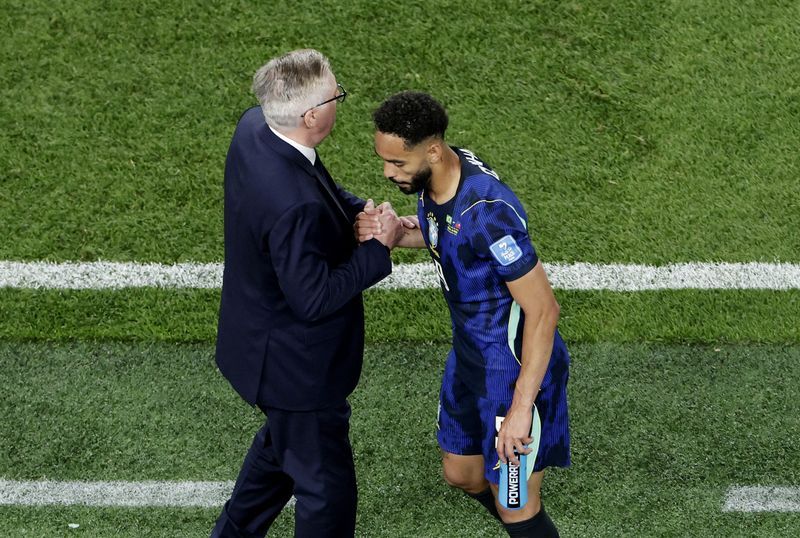
The most consequential change involved Matheus Cunha replacing Igor Thiago in the attacking unit, a decision that fundamentally altered how Brazil transitioned from midfield into their final third. Cunha's introduction restored a dimension of balance that has been conspicuously absent—the natural link between deeper midfield operations and forward play. His tireless movement and intelligent positioning created passing angles that simply did not exist in the opening match, particularly along the left flank where Vinicius Junior had laboured in isolation. This shift represented far more than a simple personnel change; it signalled Ancelotti's willingness to adapt his formation's functionality rather than stubbornly adhering to a system that had misfired against Morocco.
Lucas Paqueta emerged as the primary beneficiary of this tactical realignment. After a genuinely difficult opening performance against Morocco where he struggled to influence proceedings, Paqueta found considerably greater comfort operating as the left-sided midfielder within the diamond structure. His positioning became more purposeful, his involvement more consistent, and his combinations with both Vinicius and Cunha developed a natural rhythm that recalled Brazil's traditional left-wing dominance. The synergy between these three players generated immediate attacking momentum, with multiple scoring opportunities flowing from coordinated movement on that side of the pitch. Paqueta's improved showing suggests that his earlier struggles may have been symptomatic of systemic issues rather than individual deficiency—a meaningful distinction for a player whose confidence would be fragile after a poor World Cup exit.
Vinicius Junior's performance illustrated how significantly the structural improvements benefited Brazil's most dangerous attacking asset. The Real Madrid winger had appeared isolated and overburdened in the Morocco encounter, forced to generate attacking momentum without meaningful support from deeper positions. Against Haiti, he operated with notably greater security, knowing that both Paqueta and Cunha were actively involved in creating space and providing passing options. This liberation proved immediately productive, with multiple goals originating from combinations involving the left flank where Vinicius could operate with support rather than constant defensive responsibility. For a player of his calibre, such structural support should be fundamental rather than exceptional, yet it had been absent throughout the tournament's opening phases.
Cunha's specific positioning and movement patterns offered the clearest illustration of Ancelotti's diamond concept. Rather than hugging the left touchline in traditional winger fashion, Cunha drifted inward, functioning as a connector between midfield and attack while maintaining sufficient width to create passing angles. This approach differs substantially from Cunha's club role at Atlético Madrid but mirrors how players like Paqueta can operate within Ancelotti's preferred system. His tireless running and intelligent movement created numerical advantages in congested areas, permitting Brazil to maintain possession and gradually suffocate Haiti's limited resistance. The chemistry developing between Cunha, Paqueta, and Vinicius harked back to the attacking cohesion Brazil had enjoyed when Neymar's presence commanded attention—a psychological boost for supporters and players alike.
Yet the victory exposed significant vulnerabilities that stronger opponents will certainly exploit. Raphinha's continued underperformance represents a troubling pattern, with the Barcelona winger failing to register meaningful impact against either Morocco or Haiti. A physical issue, reportedly involving blisters sustained during a missed training session, appeared to affect his sharpness and decision-making. More problematically, his positioning on the right wing—pinned wide and asked to deliver from traditional flank positions—diverges substantially from his club role where he operates with greater positional freedom. His timing was consistently off, his ball control laboured, and his pass completion suffered visibly. Whether attributable to injury, tactical misalignment, or simple loss of form, Raphinha's struggles represent a critical imbalance that must be resolved before Brazil faces more determined opponents.
The right flank remains Ancelotti's most pressing concern as the tournament progresses. Raphinha's continued difficulties suggest that alternative personnel or tactical adjustments become increasingly necessary. Luiz Henrique emerged as the most credible replacement option following uninspiring performances from both Raphinha and his substitute Rayan. The positioning dilemma on the right—whether to accommodate Raphinha's preferred role or maintain the diamond's structural integrity—presents a challenge that could determine Brazil's effectiveness against tougher defensive units. Scotland's approaching fixture will provide an early indication of whether Raphinha's condition improves or whether alternatives must be permanently embraced.
Defensive stability in midfield also invites scrutiny as Brazil contemplates opposition of genuine quality. Casemiro's age and energy levels, particularly against opponents willing to press aggressively and exploit spaces in transition, represent a genuine vulnerability. Bruno Guimaraes' flexibility offers potential solutions—repositioning the Newcastle midfielder as a right-sided midfielder while adding defensive cover could enhance Brazil's structural solidity without abandoning attacking ambition. Such adjustments suggest that Ancelotti's diamond, while showing promise in its offensive dimensions, requires continued refinement to withstand the sustained pressure characteristic of knockout-stage football.
Although Haiti's limitations render this victory insufficient as a comprehensive statement of progress, the tactical improvements evident throughout the match provide genuine encouragement for Brazil's tournament trajectory. Ancelotti's willingness to modify his approach rather than rigidly maintain ineffective systems demonstrates coaching adaptability. The emerging partnership between Cunha, Paqueta, and Vinicius offers a foundation upon which more sustained attacking sequences can be constructed. However, addressing the right-flank deficiency and bolstering defensive midfield coverage remain prerequisites for competing against opponents possessing both tactical sophistication and technical superiority. Brazil's journey through this Copa América remains very much in formation, with Ancelotti's diamond requiring continued refinement before it achieves the consistency and balance necessary for tournament success.