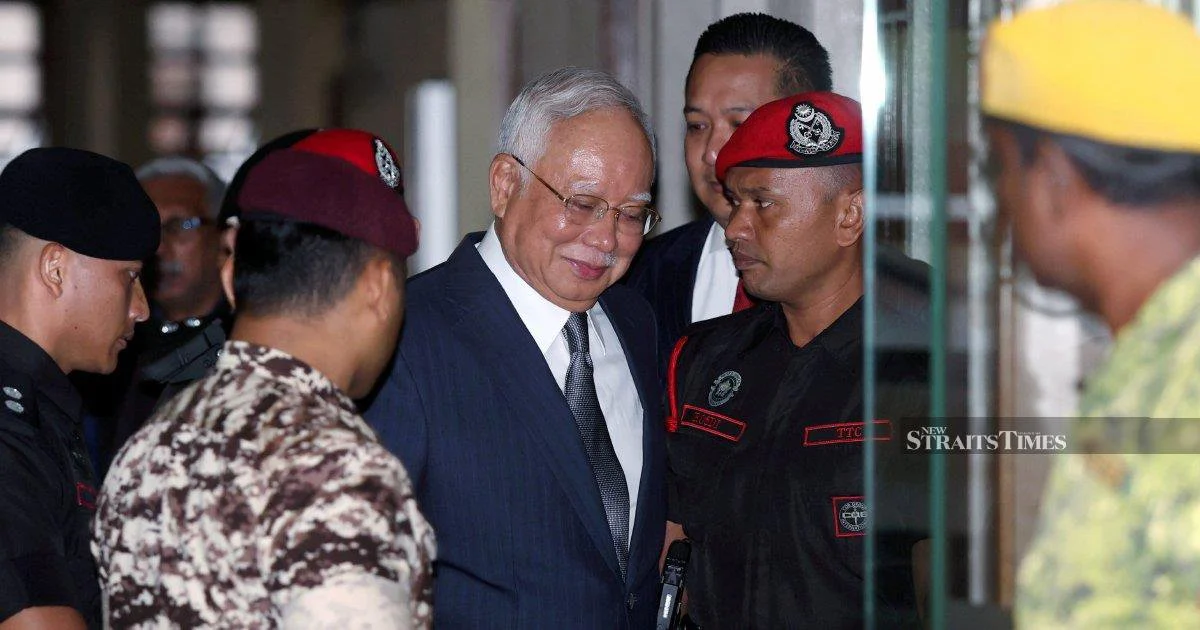
A high court judgment in Kuala Lumpur has established that Datuk Seri Najib Razak maintained an active partnership with fugitive businessman Low Taek Jho in executing a systematic scheme to redirect massive sums from 1Malaysia Development Bhd, the troubled sovereign wealth fund that became synonymous with Malaysia's largest financial scandal.
The court's determination marks a significant moment in the ongoing legal reckoning surrounding 1MDB, a fund established under Najib's premiership in 2009 that ultimately haemorrhaged approximately USD14.6 billion—an amount that shook confidence in Malaysia's financial governance and attracted international scrutiny from authorities in the United States, Singapore, and Switzerland. The judicial finding provides formal documentation of the tight operational relationship between the former Prime Minister and Low, whose escape from Malaysia before facing charges transformed him into an international fugitive whose current whereabouts remain unknown.
The mechanics of their collaboration, according to the court's assessment, involved sophisticated coordination to channel funds through multiple intermediaries and offshore entities. This arrangement allowed both men to maintain layers of separation between themselves and the actual movement of money, a structure that complicated initial investigations and delayed full accountability for years. The intricate web of transfers crossed international borders, utilising banking systems in jurisdictions ranging from the Middle East to Asia-Pacific, making it challenging for authorities to trace the complete flow of diverted capital.
Najib's legal defence has consistently challenged accusations of direct involvement in embezzlement, though he has faced multiple convictions in separate cases related to receiving funds into his personal bank accounts. The former leader maintained that he was deceived regarding 1MDB's true operations and that his subordinates, particularly those close to Low, concealed the fund's actual activities from him. However, the court's finding of collaborative "hand-in-hand" operations substantially undermines this narrative of wilful ignorance, establishing instead a framework of deliberate coordination between the two figures.
The broader implications for Malaysia's political and institutional landscape remain substantial. The 1MDB scandal contributed significantly to public disillusionment with governance standards and played a decisive role in the 2018 general election that ousted Najib's government after nearly 13 years in power. Subsequent administrations have grappled with the twin challenges of recovering misappropriated assets while simultaneously managing the reputational damage inflicted on Malaysian institutions internationally.
Low's continued evasion of Malaysian justice represents an ongoing complication in achieving comprehensive accountability. Despite international arrest warrants and cooperation agreements between Malaysia and multiple countries, the businessman has eluded capture. His fugitive status raises questions about the adequacy of global mechanisms for apprehending individuals accused of large-scale financial crimes, particularly when they possess resources to evade detection across multiple jurisdictions.
The court's ruling carries implications extending beyond the individuals directly implicated. It reinforces the importance of institutional checks on executive authority and resource management, lessons particularly resonant for a nation that subsequently experienced significant political volatility and institutional stress. Malaysian governance advocates have pointed to the 1MDB episode as validating arguments for stronger parliamentary oversight, independent fund management protocols, and transparent auditing mechanisms that might prevent similar episodes in future.
From a regional perspective, the case has influenced how other Southeast Asian nations approach sovereignty fund governance and executive accountability. Several countries in the region have undertaken reviews of their own investment fund structures, seeking to identify vulnerabilities that might enable comparable schemes. The Malaysian experience provided a cautionary template regarding the concentration of discretionary authority over substantial capital reserves without corresponding transparency requirements or genuine parliamentary scrutiny.
The recovery of misappropriated funds has proceeded through parallel civil actions, with Malaysian authorities, sometimes in coordination with foreign governments, securing settlements from various entities that either directly held or benefited from diverted money. However, complete restoration of all stolen assets remains incomplete, representing an ongoing drain on national resources that could otherwise address social needs.
Legal observers note that the court's characterisation of Najib and Low's relationship as deliberately collaborative strengthens the prosecution's overall case narrative while creating complications for any future efforts at negotiated resolution or reduced culpability claims. The judgment essentially forecloses certain defensive arguments by establishing as judicial fact the substantive coordination between the two figures rather than permitting continued disputes about the degree of Najib's knowledge or involvement.
As Malaysian institutions continue processing accountability mechanisms related to 1MDB, this judgment represents both conclusion and continuation—formalising findings about past misconduct while leaving unresolved the questions of comprehensive asset recovery and the pursuit of individuals who remain beyond Malaysia's immediate reach. The decision underscores the enduring consequences of institutional failures and the complex, protracted nature of addressing sophisticated financial crimes in an interconnected global system.

