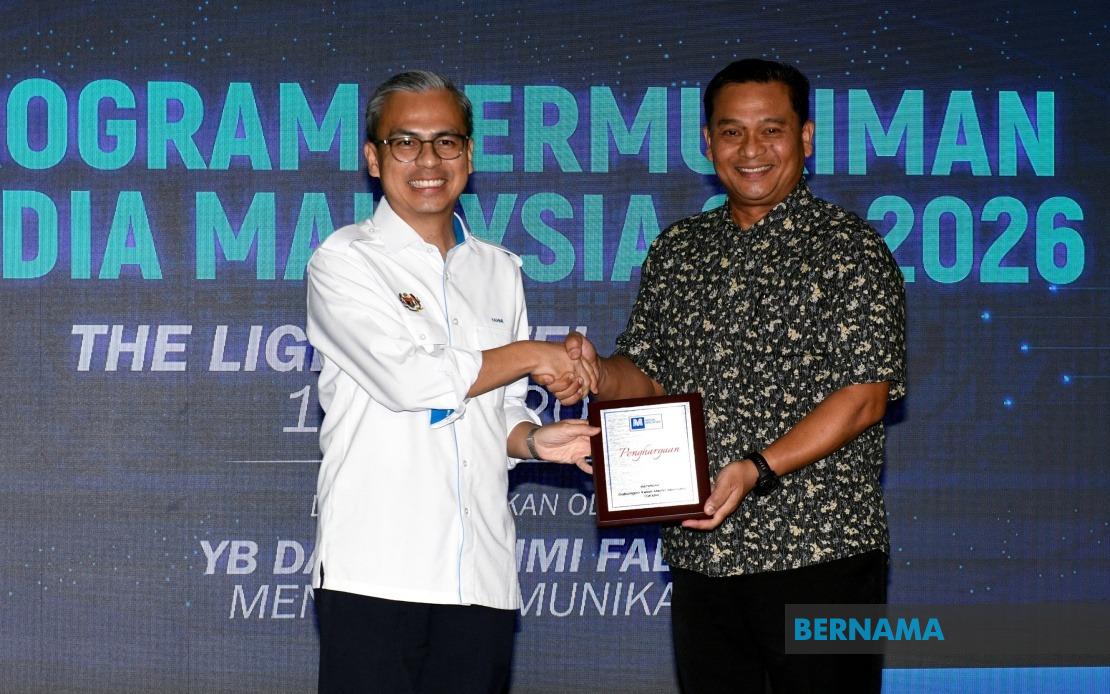
The Ministry of Communications has unveiled a funding initiative to strengthen Malaysia's media sector, directing RM10,000 to each state media club affiliated with the Malaysian Media Clubs Association (GKMM) and RM30,000 to the umbrella organisation itself. Communications Minister Datuk Fahmi Fadzil disclosed the allocation during the Malaysia Media Retreat Programme 2.0 in Butterworth on June 19, emphasising the government's commitment to supporting journalism professionals across the country.
The financial support is intended to underpin activities and welfare programmes that directly benefit journalists, who form the backbone of Malaysia's media landscape. Fahmi stressed the importance of utilising these resources effectively, reflecting a broader government objective to sustain and strengthen the profession. The announcement arrives amid growing concerns globally about the viability of journalism careers and the pressures facing newsrooms navigating digital transformation and economic headwinds.
The minister articulated a vision of journalism that remains fundamentally irreplaceable in the contemporary media environment. He acknowledged that while artificial intelligence and automated systems have transformed content production and distribution, the human elements of investigative reporting, source-building, and contextual analysis cannot be replicated by algorithms alone. This framing addresses persistent anxieties within the industry about technological displacement, offering reassurance that government policy recognises journalism's enduring societal value.
Fahmi positioned GKMM as a critical channel for conveying the concerns and aspirations of media practitioners to policymakers. Although the organisation functions as an association rather than a formal trade union, it serves an essential advocacy role, aggregating professional concerns and transmitting industry voices into government deliberations. The minister indicated that this funding enables GKMM to amplify these concerns and facilitate dialogue between the sector and public authorities on matters ranging from employment conditions to industry standards.
The government's approach reflects evolving frameworks for media sector engagement. Rather than treating journalism solely as a commercial enterprise subject to market forces, the Communications Ministry has adopted a position acknowledging journalism's public interest dimension and the government's stake in maintaining a viable, professional media ecosystem. This stance has practical implications: it signals willingness to invest financial resources in supporting institutional structures that sustain professional journalism.
Fahmi highlighted journalists' irreplaceable function as eyewitnesses to events and processors of information from primary sources. In this conception, journalism represents a disciplined, skills-intensive profession requiring experience and methodological rigour—characteristics that distinguish professional reporting from citizen journalism or unmediated commentary. The minister's emphasis on these dimensions reflects recognition that journalism's credibility and social utility depend on professional standards and institutional legitimacy.
The minister signalled that government consultation with media practitioners has become embedded in policymaking processes. He cited the drafting of the Malaysian Media Council Act as an exemplar, noting that industry feedback and suggestions substantially shaped the legislation. This collaborative approach suggests a shift toward more inclusive policy formulation, wherein government solicits media sector input before implementing regulations affecting the industry. Such consultation mechanisms, if sustained consistently, could foster stronger alignment between regulatory frameworks and industry realities.
The funding announcement occurs within a context of evolving media regulation and government communication strategy. Malaysia has experienced significant policy developments regarding media governance, including moves toward establishing media councils and revising broadcasting frameworks. State media clubs, as membership-based organisations, often serve networking, professional development, and advocacy functions within their respective jurisdictions. The allocation of dedicated funding recognises their role in these domains and seeks to enhance their capacity to serve members effectively.
For state media clubs, the RM10,000 allocation represents material support for organising training workshops, facilitating professional networking, and supporting members facing occupational challenges. The aggregate value of these grants—distributed across all member states—underscores the government's intention to create a nationwide support architecture for journalism. This decentralised approach acknowledges that media practitioners operate in distinct regional contexts with specific challenges and needs that centralised policy cannot address comprehensively.
The broader context for this initiative includes global trends affecting journalism sustainability. Newsrooms across Southeast Asia and beyond have experienced staff reductions, declining advertising revenues, and business model uncertainties. Malaysia's media industry navigates similar pressures, complicated by the competitive landscape between commercial and state-affiliated outlets. Government financial support directed toward professional welfare and association activities offers a counterweight to purely market-driven dynamics, though it simultaneously raises questions about the independence and autonomy of journalism institutions receiving state funding.
The presence at the event of Communications Ministry secretary-general Datuk Abdul Halim Hamzah, Malaysian National News Agency (Bernama) chief executive officer Datin Paduka Nur-ul Afida Kamaludin, and Bernama editor-in-chief Arul Rajoo Durar Raj reflected the formal institutional backing for these initiatives. Bernama's involvement underscores the government's integration of national news infrastructure with broader media sector support strategies. For Malaysian and regional observers, this alignment signals consistency in government messaging regarding media sector priorities.
Going forward, how these funds are deployed will reveal important details about government-media relations and the sector's capacity to maintain professional standards. GKMM's utilisation of the RM30,000 allocation, alongside individual state clubs' management of their grants, will demonstrate whether financial support translates into tangible improvements in journalist welfare and professional development opportunities. The initiative sets a baseline for government investment in journalism infrastructure, with implications for future policy discussions regarding media sustainability and the role of state support in maintaining viable news institutions.