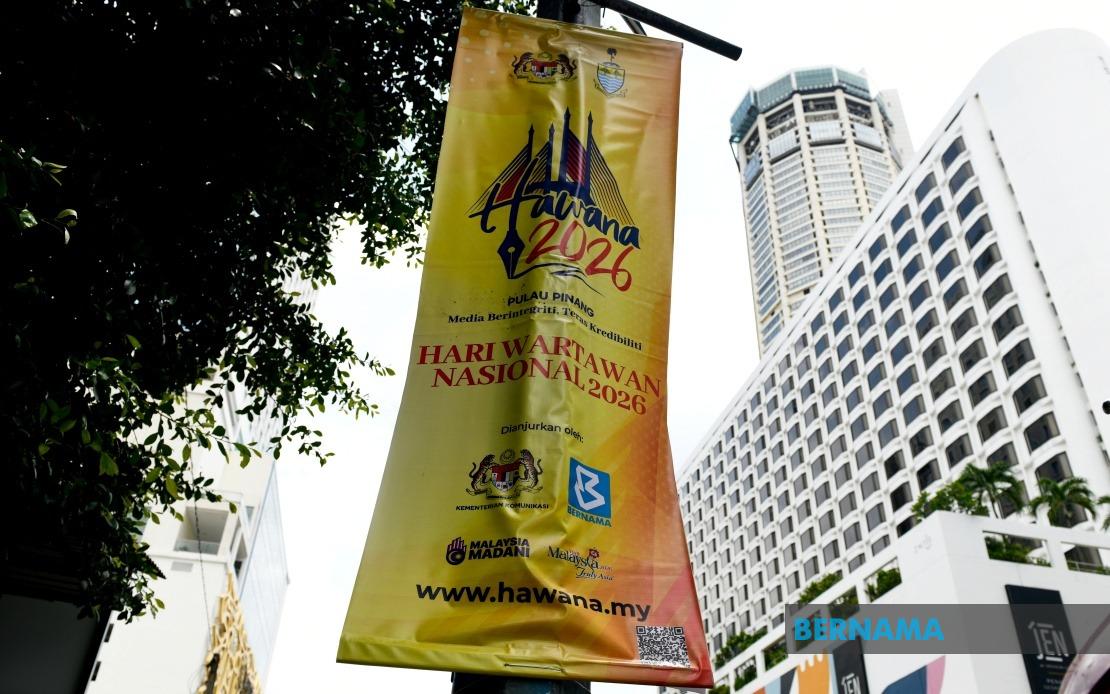
Communications Minister Datuk Fahmi Fadzil has arrived in Penang for a two-day working visit that puts the spotlight on the profession of journalism and the media industry's pivotal role in nation-building. The visit, beginning on June 19, is timed to coincide with the grand finale of HAWANA 2026, the annual celebration of Malaysia's National Journalists' Day, which carries particular significance this year as it underscores the government's commitment to championing media freedom and professional standards at a time when information integrity faces mounting challenges globally.
Fahmi's itinerary reflects the breadth of activities organised around this year's HAWANA observance, which extends well beyond ceremonial functions to embrace the creative industries and broader community engagement. His first engagement involves attending the Malaysia Media Retreat Programme 2.0 in Seberang Jaya on the opening afternoon, an initiative designed to bring together editors, senior management from domestic and international news organisations, and other media professionals in an environment conducive to professional development and networking. This retreat format underscores a shift towards treating journalism not merely as a reporting function but as a discipline requiring continuous learning and cross-sectoral dialogue.
The evening agenda showcases the ceremonial dimensions of the visit, with Fahmi joining Penang Yang Dipertua Negeri Tun Ramli Ngah Talib for a state government dinner that honours the media's contributions to development initiatives across the nation. Such formal gatherings serve dual purposes: they acknowledge the profession's standing in democratic governance while providing platforms for government officials and media leaders to address emerging issues in journalism and public communication.
A notable component of Fahmi's schedule involves his attendance at the RIUH Pi HAWANA Carnival at PICCA Convention Centre in the Butterworth Arena, an event that signals a deliberate broadening of HAWANA beyond journalism circles to encompass the creative economy more expansively. The three-day carnival, which runs concurrently with the formal proceedings, bridges cultural and economic dimensions by hosting workshops in traditional and contemporary artistic techniques including cyanotype printmaking, albumen printing, and stone carving. By integrating more than two dozen local creative product brands with stage performances by artists such as Sakura Band, Kaka Azraff, Budak Nakal Hujung Simpang, and Chelsea Ng, the carnival positions journalism within the wider ecosystem of Malaysia's creative industries, reflecting recognition that storytelling and content creation extend across multiple media formats and platforms.
The carnival's free-admission model and inclusion of food and beverage vendors alongside its performance schedule emphasises accessibility, attempting to bring media and creative sector awareness to the broader Penang community rather than confining celebrations to industry professionals alone. This approach aligns with contemporary trends in public diplomacy where cultural celebrations serve to reinforce national narratives and institutional pride.
Fahmi's second day of activities maintains momentum with an early morning appearance at the Jiwa@Sembang Santai Special World Cup Edition programme at the Seberang Jaya Public Market Food Court, an informal setting that contrasts with the formality of government dinners and demonstrates the breadth of platforms through which the communications minister engages with citizens and practitioners. This casual venue choice, in a public market setting, represents an attempt to demystify government-media relations and showcase accessibility.
The centrepiece of the two-day visit arrives with the HAWANA 2026 Grand Finale at the PICCA Convention Centre in Butterworth, scheduled for 3 pm on the second day. Themed "Media Integrity Strengthens Credibility," the event will be officiated by Prime Minister Datuk Seri Anwar Ibrahim, elevating its profile and signalling the highest levels of government endorsement for media professionalism. The anticipated attendance of approximately 1,000 media practitioners from within Malaysia and internationally reflects HAWANA's evolution into a major regional gathering for the journalism profession.
The grand finale's thematic focus on media integrity carries particular resonance for Southeast Asia, where digital disruption, misinformation, and economic pressures on news organisations have created a complex operating environment for professional journalism. By emphasising the relationship between integrity and credibility, the organisers are positioning professional standards as foundational to the media's social contract with audiences—a message especially pertinent given declining trust in institutions across the region.
The Ministry of Communications, with Bernama (Malaysian National News Agency) serving as the implementing agency, has positioned HAWANA as the preeminent platform in Malaysia for recognising the profession's contributions and professionalism. This institutional architecture reflects the government's view of journalism as a profession deserving systematic recognition and support, even as media organisations navigate significant structural and technological transitions. The involvement of both domestic and international practitioners at the grand finale suggests that organisers view HAWANA as an opportunity for Malaysia to project its standards and approaches to journalism within regional and global contexts.
Fahmi's preceding Media Dialogue with the Communications Minister in Butterworth at 9.30 am on the second day provides a structured forum for direct engagement between government and media leadership, allowing for candid discussion of policy matters, regulatory developments, and industry challenges. Such dialogues, when effectively facilitated, can address tensions that inevitably arise between government information objectives and editorial independence, establishing mutual understanding even where disagreements persist.
The overarching significance of this two-day visit extends beyond ceremonial functions to reflect Malaysia's commitment to nurturing a professional media ecosystem at a juncture when media sustainability faces serious threats globally. By hosting such comprehensive activities—ranging from professional retreats and policy dialogues to creative industry integration and community-level engagement—Malaysia signals that media development ranks among its national priorities. For the broader Southeast Asian context, where media freedom indices show mixed results and press sustainability remains contested, Malaysia's deliberate investment in celebrating and professionalising journalism offers both example and cautionary lessons about the relationship between government support and editorial autonomy.

