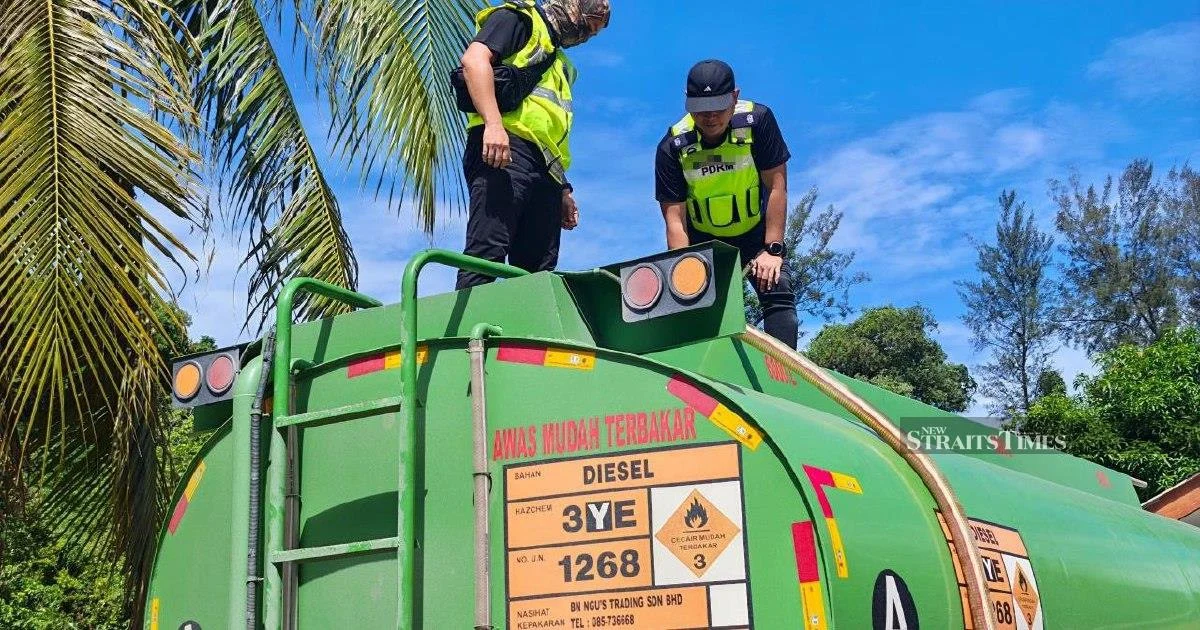
Law enforcement agencies in Sarawak have successfully disrupted what investigators describe as a coordinated scheme to intercept and redistribute subsidised diesel intended for legitimate consumers. The operation, centred in the Tanjung Lobang area of Miri, represents the latest enforcement action targeting the persistent problem of fuel smuggling networks that continue to drain Malaysia's energy subsidies and distort market competition in the region.
The breakthrough came when authorities conducted a targeted raid on a private residential property that had been converted into an undisclosed depot for storing contraband diesel. Operating from within what appeared to be an ordinary bungalow, the syndicate had accumulated approximately 15,000 litres of subsidised fuel—a substantial quantity indicating the operation had likely been functioning for a considerable period without detection. The sheer volume recovered suggests the network may have had access to multiple supply lines and maintained ongoing distribution channels to customers willing to purchase fuel below official market rates.
Four individuals were taken into custody following the discovery, though authorities have not yet disclosed their identities or specific roles within the hierarchical structure of the smuggling operation. Investigations are continuing to establish whether these detainees operated independently or formed part of a larger criminal network extending beyond Miri. The arrested men face charges related to fuel diversion and may also be questioned regarding the acquisition methods, storage protocols, and distribution arrangements that enabled the clandestine operation to function.
Subsidised fuel smuggling represents a significant economic challenge throughout Southeast Asia, with Malaysia particularly vulnerable given the government's commitment to maintaining fuel price controls as a social welfare measure. The Tanjung Lobang discovery underscores how such price differentials create lucrative incentives for criminal enterprises to intercept supplies meant for domestic consumption and redirect them into black markets where they command premium prices. This dynamic has fostered sophisticated networks capable of bypassing official monitoring systems and concealing large quantities within residential and commercial infrastructure.
The bungalow location raises particular investigative questions about the sophistication of storage and handling protocols. Storing 15,000 litres of diesel in a residential area presents inherent safety and environmental risks, including potential contamination of groundwater and explosion hazards. The fact that such operations can function in populated neighbourhoods suggests either inadequate community surveillance or deliberate site selection in areas with lower enforcement visibility—a common tactic employed by smuggling syndicates seeking to minimise detection probability.
Miri, situated in northern Sarawak near the Brunei border, occupies a strategically significant position within Malaysia's energy infrastructure network. The region serves as a hub for oil and gas operations, making it a natural flashpoint for fuel-related crime. Previous enforcement operations in the area have also targeted illegal fuel distribution, indicating this represents a recurring problem rather than an isolated incident. The proximity to Brunei and the cross-border nature of the regional economy create additional complications for authorities attempting to track fuel movements and prevent diversion.
The seizure of 15,000 litres carries substantial implications for consumer markets and government fiscal planning. At current subsidised rates, this quantity represents considerable foregone revenue that would normally accrue to the state petroleum fund. Beyond immediate financial losses, such operations distort legitimate fuel retailers' competitive positioning and reduce their market share, ultimately creating incentives for them to engage in similar illicit activities or exit the market entirely. This cascading effect can gradually erode the formal economy's structural integrity.
Investigators will likely examine financial transaction records, mobile communications, and supply chain documentation to determine how the syndicate procured fuel and maintained customer relationships. Understanding whether this operation exploited weaknesses in official distribution networks or relied on corrupt officials to facilitate diversion represents a critical investigative priority. Such intelligence can inform future enforcement strategies and identify potential vulnerabilities within the fuel supply management system requiring additional oversight.
The arrest and seizure underscore Sarawak law enforcement's ongoing commitment to combating fuel-related crimes, though the prevalence of such discoveries suggests these efforts face substantial headwinds. Regional cooperation mechanisms and enhanced border monitoring arrangements may prove necessary to address the transnational dimensions of fuel smuggling effectively. For Malaysian consumers and policymakers, the incident reinforces the complex relationship between subsidised pricing policies and the criminal networks they inadvertently incentivise, raising questions about the sustainability of current fuel subsidy frameworks.

