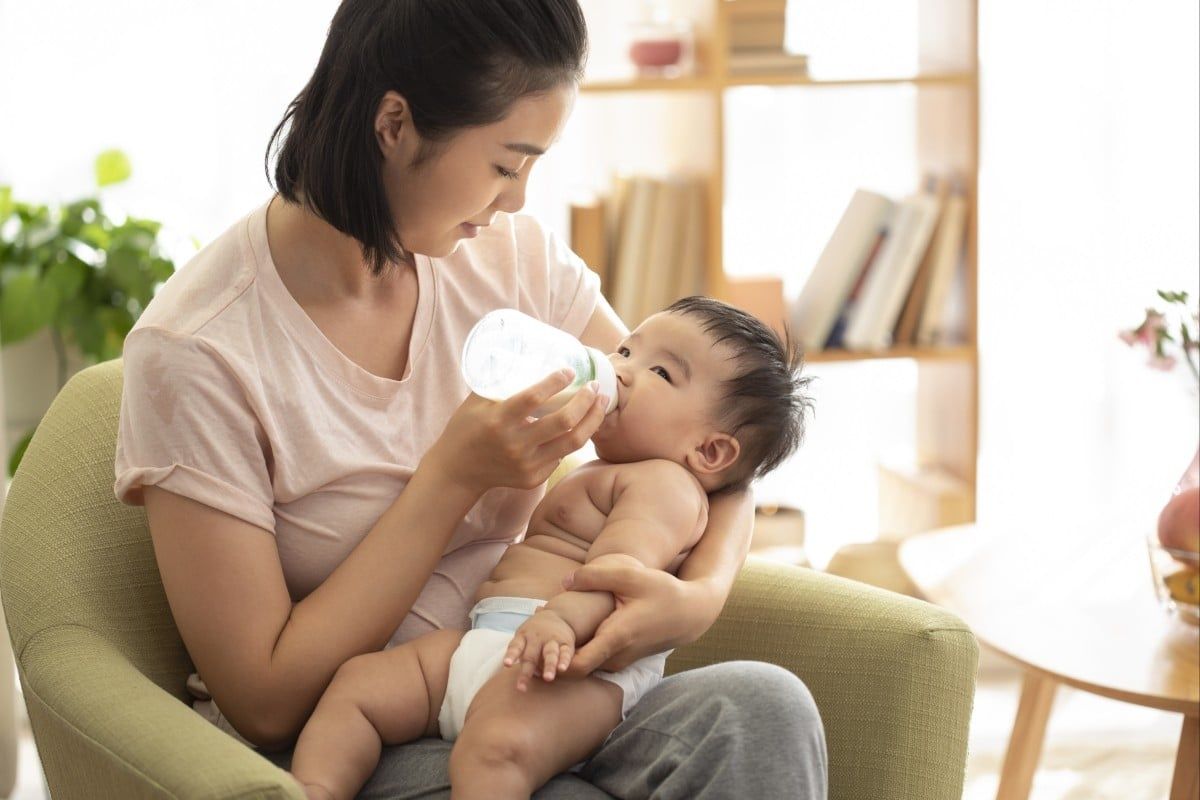
A three-month-old boy in Guangdong province, China, required intensive care treatment after his parents unknowingly poisoned him by preparing his milk formula with vegetable juice instead of water. The infant was rushed to Zhongshan Women and Children's Hospital when his skin and mouth turned purple and he struggled to breathe shortly after consuming the tainted formula. Hospital diagnostics confirmed the child had suffered acute nitrite poisoning, a condition that proves particularly dangerous for infants whose bodily systems are still developing.
The parents' decision to use vegetable juice stemmed from a well-intentioned but ultimately misguided belief that the juice would provide superior nutrition compared to plain water. This case underscores a troubling pattern observed across China where families adopt unconventional feeding methods based on perceived health benefits without understanding the chemical and biological consequences. After two days of medical intervention, the baby was eventually discharged in mid-June, though he came perilously close to a fatal outcome.
Medical experts at the hospital explained the mechanism behind the poisoning to highlight why vegetable juice poses such a serious threat to infants. When vegetables are boiled for extended periods—a common cooking practice in many Asian households—the resulting liquid accumulates substantial concentrations of nitrites, chemicals that are naturally present in vegetables but become concentrated and dangerous through prolonged heating. These nitrites fundamentally disrupt how the blood carries oxygen throughout the body, which explains the characteristic purpling of the infant's skin, mouth, and fingernails observed during his medical crisis.
The vulnerability of three-month-old infants lies in their incomplete physical development. At this age, the digestive and kidney systems remain immature and lack the capacity to process or filter high nitrate and nitrite levels effectively. An adult's more developed kidneys and digestive tract can handle what an infant cannot, making young babies exponentially more susceptible to poisoning from substances that might otherwise seem harmless. This developmental reality fundamentally constrains what can safely be introduced into an infant's diet during the critical early months of life.
The physiological impact of nitrites in the bloodstream carries life-threatening implications that parents must understand. These compounds reduce the blood's oxygen-carrying capacity by interfering with hemoglobin function, essentially suffocating the infant from within by preventing adequate oxygen distribution to vital organs. The dramatic color changes—purple skin and lips—represent visible markers of this internal oxygen deprivation, serving as warning signs that demand immediate medical attention.
Paediatrician Cao Qi from Nanning No 1 People's Hospital in Guangxi emphasized the critical importance of recognizing nitrite poisoning symptoms and responding with urgency. According to Cao's social media advisory, even brief delays in seeking hospital treatment can prove fatal, as the condition progresses rapidly and can quickly overwhelm an infant's fragile physiology. His warning reflects the genuine life-or-death stakes involved in these poisoning cases, where minutes can determine survival.
Cao's broader guidance to parents directly challenged the tendency to substitute conventional feeding methods with alternatives based on personal intuition or trending health claims. He stressed that natural foods, despite their generally beneficial properties for healthy adults, are not automatically suitable or safe for young infants whose bodies function under entirely different biological constraints. This distinction between what is healthy for older children and adults versus what is appropriate for infants represents a crucial gap in parental understanding that continues to result in preventable hospitalizations.
The incident reflects a recurring problem within Chinese households where families experiment with feeding practices without adequate medical consultation. News stories about infants suffering from unusual poisoning cases regularly circulate on Chinese social media, often generating significant public attention precisely because they represent cautionary tales about well-meaning parents making dangerous decisions. These cases have become sufficiently common that they constitute a recognizable social media category, suggesting systemic gaps in parental education about infant nutrition and safety.
This particular case represents one in a series of recent incidents. The previous year saw a 52-day-old infant admitted to a Henan province hospital after his grandmother added honey to his drinking water, inadvertently exposing him to Clostridium botulinum bacteria that causes botulism. That incident, like the current vegetable juice poisoning, stemmed from the belief that adding natural substances would enhance nutritional value or provide health benefits. The repeated pattern demonstrates that educational outreach from medical professionals remains insufficient to counteract deeply held beliefs about natural foods and health.
For Malaysian parents and caregivers, this case carries important cross-cultural relevance. Similar beliefs about natural ingredients and their perceived health benefits exist throughout Southeast Asia, including Malaysia, where traditional practices sometimes encourage adding various juices, broths, or herbal preparations to infant formulas. The medical principles that make such practices dangerous—the immaturity of infant digestive and kidney systems, the concentration of harmful compounds through cooking, and the vulnerability to chemical poisoning—apply universally regardless of cultural context or ingredient type.
Medical authorities across the region have established clear guidelines that formula powder should be mixed exclusively with warm water, never with vegetable juice, rice water, fruit juice, broths, or any other liquid substitutes. These guidelines exist not from arbitrary restriction but from documented cases of harm and from understanding infant physiology. The specificity of this guidance reflects decades of medical evidence about what infants can and cannot safely consume during their critical early development period.
The case also highlights gaps in public health communication regarding infant nutrition. While doctors and hospitals respond to poisoning emergencies, fewer resources appear directed toward preventing these incidents through comprehensive parent education before harm occurs. Expanding access to reliable information about safe infant feeding practices through maternal health clinics, pediatric offices, and public health campaigns could reduce the incidence of these preventable poisonings across the region.
Ultimately, this incident and others like it demonstrate that good intentions cannot substitute for medical knowledge when it comes to infant care. Parents naturally want to provide their children with optimal nutrition, yet without proper guidance, this desire can lead to dangerous practices. The survival of this particular infant, while fortunate, should not diminish the urgency of ensuring that all parents—whether in China, Malaysia, or elsewhere in Southeast Asia—understand the specific, non-negotiable requirements for safe infant formula preparation.

