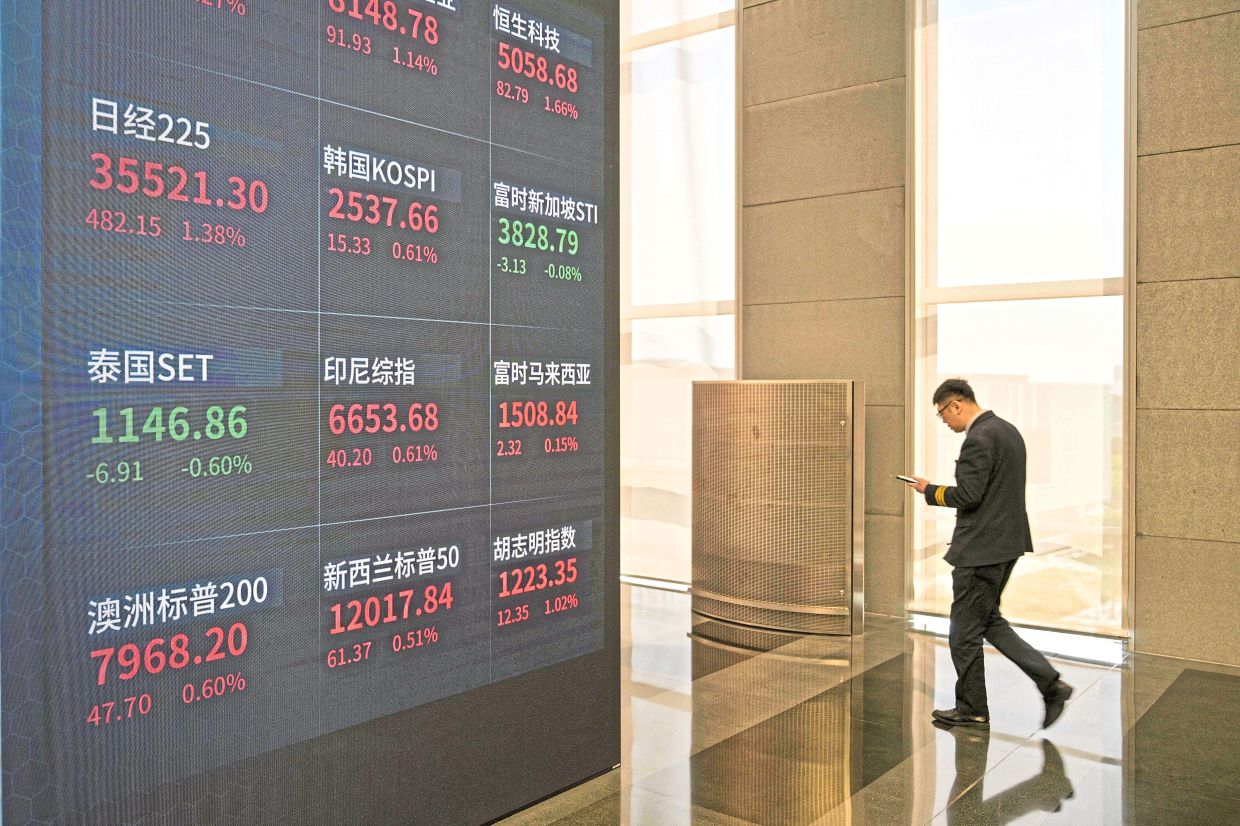
Chinese property developers saw their share prices collapse on Monday following the announcement of sweeping regulatory changes that fundamentally alter how the country's real estate sector finances new construction. The CSI300 Real Estate Index suffered a 4.6% decline by mid-afternoon trading, while Hong Kong-listed Chinese developers fell even more sharply at 6.5%. The Hang Seng's Hong Kong developers index also retreated nearly 5%, reflecting growing investor concerns about the immediate and long-term implications of Beijing's policy shift.
The new rules, unveiled by China's central bank and financial regulator on Friday, represent a significant departure from decades of established industry practice. Under the revised framework, mortgages will only be issued after residential projects reach completion, fundamentally changing the timing of cash inflows that developers have historically depended upon. Alongside these mortgage restrictions, local governments have been directed to actively promote sales of already-completed units to reduce the risk of delivery delays—a chronic problem that has plagued Chinese real estate in recent years and eroded consumer confidence dramatically.
For Malaysian investors and regional readers seeking to understand this development, the magnitude of the disruption cannot be overstated. Presales have historically accounted for approximately 68% of new home sales by floor space in China throughout 2025, making this shift truly transformative. Developers have long operated on a model where funds collected from buyers before construction even begins serve as the primary engine funding ongoing construction work. Under the new regime, developers must increasingly rely on their own capital reserves or secure conventional development loans—a far more constrained and expensive approach that immediately tightens liquidity across the entire sector.
Research analysts at Nomura have estimated that presales and mortgages collectively constitute roughly 40% of development capital in China's property market. The implications are stark: developers could face an effective 40% reduction in readily available cash flow for business operations in the near term, according to unnamed company executives who spoke to international media on condition of anonymity. This reduction directly constrains capital available for acquiring new land parcels, funding construction of additional projects, and making strategic investments in a market already struggling with sluggish new home sales.
The differential impact across the developer landscape promises to be particularly severe. While state-backed developers like China Jinmao, Yuexiu Property, and Greentown China experienced losses exceeding 14% on the day of the announcement, larger state-owned enterprises such as China Resources Land and China Overseas Land & Investment declined by more than 9%. Even financially sound private-sector operators like Longfor Group and Seazen, typically viewed by investors as relatively secure, shed 7.2% and 5.5% of their values respectively. This near-universal decline signals that no developer can escape the consequences of the structural shift, though the pain will be distributed unevenly.
State-backed developers currently dominate China's property landscape following years of defaults by private competitors, yet even these better-capitalised players face mounting challenges. Industry insiders acknowledge that state-backed companies retain superior access to bank lending at preferential rates ranging from 2% to 3%, compared with the 5% to 6% rates available to private rivals. However, this advantage provides only partial mitigation; these firms will still face meaningful constraints on cash available for purchasing additional land or financing new development, precisely when they are struggling to move existing inventory.
The macroeconomic context reveals why Beijing felt compelled to act despite knowing the near-term disruption it would cause. China's property sector, which has been contracting for nearly six years, continues to function as a significant economic drag on the world's second-largest economy. The collapse has decimated household wealth for millions of Chinese families who hold substantial real estate portfolios, while simultaneously disrupting construction and related supply chains critical to export-dependent growth. Real estate development investment has contracted by 19.2% year-over-year to 4.3 trillion yuan through the first seven months of 2026, while government land sales revenue plummeted 30.8% to 1.1731 trillion yuan, equivalent to approximately $174.56 billion—figures that underline the sector's profound weakness.
Price dynamics across different market tiers expose the stubbornness of the underlying crisis. While prices for new homes in the largest cities including Beijing and Shanghai have stabilised, this represents merely a pause rather than a genuine recovery. Meanwhile, second-hand home prices in smaller inland cities have compressed by nearly 25% since 2020 levels, indicating that confidence remains severely impaired outside the wealthiest metropolitan centres. This bifurcated market suggests that presale restrictions will likely have asymmetrical effects, potentially accelerating the shift of demand toward completed properties in lower-tier cities where price declines have been most pronounced.
Beijing's decision to extend the maximum mortgage term from 30 years to 40 years attempts to address the demand side of the equation by reducing monthly mortgage payments and freeing household cash for consumer spending. The government calculates that lower housing-related expenses could prompt greater consumption across the broader economy, a particular priority given China's need to rebalance toward domestic consumption. However, analysts widely expect this measure to prove insufficient in meaningfully stimulating housing demand, particularly given the persistent erosion of buyer confidence following years of delivery failures and project abandonment.
The regulatory shift promises to dramatically accelerate consolidation within China's fragmented property industry. Smaller developers, already operating with minimal margins and constrained access to finance, will face impossible choices between dramatically reducing activity or exiting markets entirely. Research firm Everbright Securities noted that the new measures have substantially elevated the financing and management competencies required for developers to remain viable. The competitive advantage will accrue exclusively to larger players with diversified funding sources, accumulated capital reserves, and access to institutional lending—precisely the state-backed entities and largest private firms.
For regional observers, particularly those in Southeast Asia, China's property restructuring carries important implications for cross-border investment flows and commodity demand. Chinese developers have historically been significant investors across the region, particularly in infrastructure, hospitality, and residential projects. A prolonged period of reduced cash flow and tightened balance sheets will likely constrain such outbound investment. Additionally, reduced Chinese construction activity will dampen regional demand for cement, steel, and other commodities that countries like Malaysia supply, creating indirect economic headwinds across the broader region.
The uncertainty surrounding implementation timelines and potential regulatory modifications adds another layer of complexity for investors assessing exposure to Chinese property. While the announcement represents genuine policy intent, the Chinese government has frequently demonstrated willingness to adjust regulations when economic data warrants intervention. Developers and investors alike are now grappling with questions about whether these constraints will be permanently embedded into the sector's operating model or whether they might be partially relaxed if property market weakness accelerates to unacceptable levels. This ambiguity will likely persist until sufficient operational evidence emerges regarding the actual impact on construction timelines and housing supply.

