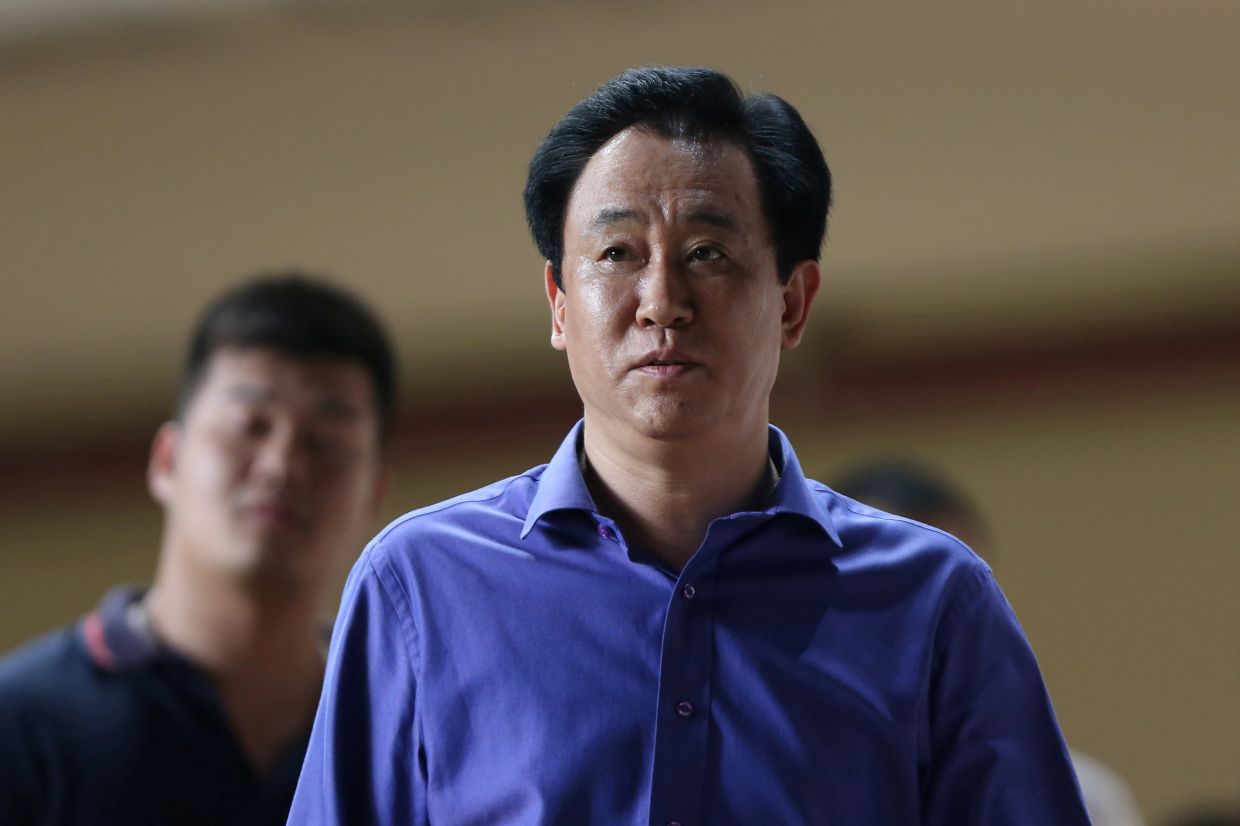
The Shenzhen Intermediate People's Court delivered a decisive blow to China's property sector on Thursday, sentencing Evergrande Group founder Xu Jiayin to life imprisonment and imposing combined financial penalties of 15.82 billion yuan (US$2.4 billion) on the company and its real estate affiliate. The judgment marks a watershed moment in China's ongoing crackdown on corporate misconduct within an industry that once drove the nation's economic growth but has since become a cautionary tale of unchecked leverage and regulatory failure.
Xu, also known as Hui Ka Yan in Cantonese, faced multiple convictions including large-scale financial fraud, embezzlement, and bribery. The court's decision stripped him of political rights for life and ordered the complete confiscation of his personal assets. Five additional senior executives from Evergrande received prison sentences ranging from six to eighteen years, signalling that the judiciary intends to hold senior management accountable across the organization's leadership structure.
The downfall of Evergrande represents one of the most dramatic corporate collapses in recent Chinese history. For decades, the company epitomised the country's property boom, successfully marketing homeownership aspirations to hundreds of millions of Chinese consumers while expanding rapidly across dozens of cities. During its peak, Evergrande ranked among the world's most valuable developers, commanding substantial market influence and creditor confidence that seemed unshakeable.
This confidence proved fragile once the Chinese government tightened credit conditions starting in 2020. Beijing implemented strict borrowing curbs on property developers, targeting what policymakers viewed as excessive leverage and speculative behaviour that had become endemic to the sector. These regulatory constraints fundamentally altered Evergrande's financial position, cutting off the steady stream of refinancing that had sustained years of aggressive expansion and debt accumulation.
The company's inability to service its obligations became apparent in 2021 when Evergrande defaulted on international bond payments, triggering widespread concern about contagion effects throughout the financial system. The default reverberated through supply chains, left millions of homebuyers with unfinished apartments, and exposed weaknesses in China's debt supervision mechanisms that had allowed such extreme leverage to accumulate within a single corporate entity.
Court documents revealed that between 2016 and 2021, Evergrande and Xu systematically engaged in continuous financial fraud and deceptive accounting practices designed to artificially inflate asset valuations while concealing liabilities from creditors and investors. The schemes employed multiple mechanisms including asset inflation, debt concealment, and bribes paid to officials at unspecified financial institutions to gain control or preferential treatment. This coordinated pattern of misconduct suggests systematic rather than incidental corporate governance failures.
The bribery dimension of the charges carries particular significance, indicating that Xu's strategy involved not merely accounting manipulation but active corruption of oversight mechanisms. By channelling funds to officials at financial institutions, Evergrande apparently sought to ensure continued access to credit markets and regulatory forbearance despite deteriorating fundamentals. This corrupt approach underscores how deeply the company's misconduct penetrated institutional relationships.
Xu's guilty plea in April to all charges streamlined the trial process, effectively acknowledging the court's findings without contesting the prosecution's case. His acceptance of responsibility, while potentially influencing sentence severity, did not prevent the imposition of life imprisonment—suggesting that Chinese authorities viewed the scale and duration of the fraud as warranting the most severe penalty available.
For Malaysian and Southeast Asian observers, the Evergrande saga offers instructive lessons about property sector dynamics and regulatory risk in East Asian markets. The case demonstrates how rapidly a dominant developer can lose market access when government policy shifts, and how accounting opacity combined with overleveraging can mask fundamental financial distress until sudden default exposes years of accumulated problems. Regional property firms with similar debt profiles warrant investor scrutiny.
China's willingness to pursue life sentences against a major corporate founder also signals determination to enforce accountability in an industry that has consumed enormous quantities of household wealth and government resources. The comprehensive nature of the prosecution—targeting financial fraud, embezzlement, and bribery across multiple executives—indicates that Beijing intends to reshape the sector through severe consequences for corporate leadership rather than merely adjusting regulatory requirements.
The broader implication extends to governance standards across Asia's property markets. Evergrande's collapse and subsequent prosecution underscore the importance of transparent accounting, conservative leverage policies, and robust oversight mechanisms. Developers relying on continuous refinancing in uncertain credit environments face acute vulnerability, particularly when demand softens or policy tightens. The company's trajectory from market dominance to criminal prosecution occurred remarkably quickly, within a single business cycle.
Evergrande's fate also reflects evolving attitudes toward corporate accountability in China. Rather than orchestrating a managed restructuring or bail-out that might shield executives from criminal consequences, authorities chose to pursue comprehensive prosecution. This approach signals that even politically connected business leaders cannot expect immunity from justice when fraudulent conduct reaches sufficient scale.
As Evergrande enters liquidation and creditors attempt recovery, the company's story will likely influence how other large developers approach leverage, disclosure practices, and regulatory compliance. The life sentence imposed on Xu represents perhaps the ultimate cost of the decade-long property speculation boom that transformed Chinese cities but left behind financial fragility and corporate misconduct now being addressed through the courts.

