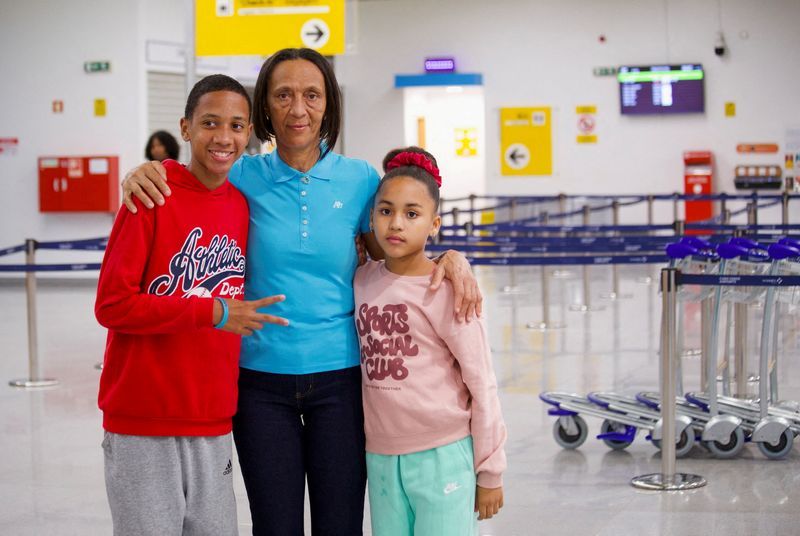
Cape Verde's 40-year-old goalkeeper Vozinha will finally have his mother in the stands when his nation faces Uruguay in the World Cup's second group stage match in Miami on Sunday, after the US State Department intervened to resolve a visa crisis that had kept Ana Candida Evora from witnessing one of the tournament's most remarkable defensive performances.
The emotional backstory began when Vozinha delivered a commanding display between the posts in Cape Verde's opening fixture against European champions Spain in Atlanta, making seven crucial saves to earn his team an improbable 0-0 draw. His performance was widely recognized as decisive in securing the result, with the goalkeeper earning player-of-the-match honours despite the goalless scoreline. However, rather than celebrating purely on achievement, Vozinha's public revelation that his mother had been unable to attend due to visa complications struck a chord with observers worldwide, turning a sporting story into a human interest narrative.
Evora faced a significant administrative barrier when attempting to obtain permission to enter the United States. The challenges surrounding her travel application stemmed partly from sweeping immigration restrictions implemented during President Donald Trump's tenure, which had created substantial obstacles for citizens of numerous nations seeking entry to America. Many visitors from affected countries had been informed they would need to post bonds reaching as high as $15,000 to satisfy entry requirements, a financial hurdle that placed international travel effectively beyond reach for many ordinary families.
For Evora, the financial implications were determinative. Rather than exhaust resources attempting to navigate the visa process while facing potential rejection, she made the difficult decision to forgo attending her son's opening match. The hardship of missing such a significant moment in her child's career—a World Cup appearance representing the pinnacle of an athlete's professional trajectory—was compounded by the knowledge that his performance had been exceptional, making her absence more acutely felt.
The situation changed dramatically after Vozinha publicly discussed the disappointment in interviews that quickly gained traction across media platforms. His candid emotional response to being unable to share the moment with his mother resonated widely, transforming a private family frustration into a matter of public attention. The narrative of a dedicated athlete separated from his family by bureaucratic constraints proved compelling enough to reach the attention of US State Department officials responsible for visa administration.
Recognizing both the diplomatic and humanitarian dimensions of the case, the State Department moved swiftly to resolve the matter. Officials stationed in Praia, the capital of Cape Verde, established direct contact with Evora and worked to expedite her application through channels typically reserved for circumstances requiring urgent resolution. A State Department representative subsequently confirmed to journalists that the necessary approvals had been granted, declaring that Evora would proceed with her travel plans without further impediment.
It is worth noting that the initial restrictions affecting World Cup attendees had already begun to ease somewhat. The bonding requirement that had initially applied broadly across dozens of nations was eventually waived specifically for individuals holding World Cup tickets, a decision that acknowledged the unique circumstances surrounding the tournament and the importance of international participation. However, Evora's case had already developed complications by that point, suggesting her situation involved additional factors beyond the standard bonding requirement.
The resolution of Evora's visa situation carries implications beyond one family's reunion. For Southeast Asian readers, the case illustrates how immigration policies, even those designed for security purposes, can create unintended consequences affecting ordinary citizens and their aspirations to participate in global events. The relative ease with which diplomatic intervention ultimately resolved the matter also highlights how official attention can shift when issues gain sufficient public visibility and emotional resonance.
Cape Verde's World Cup participation itself represents a significant achievement for the small island nation, with the team's defensive solidity evident from their opening performance. The defensive prowess displayed against Spain suggests they may prove competitive in subsequent fixtures, though facing Uruguay—a nation with considerably more World Cup experience and established playing infrastructure—will present a substantially different challenge.
Vozinha's emotional investment in having his mother present has broader resonance within the context of professional athletics. Family support, often expressed through physical presence at major competitions, remains psychologically significant for many athletes despite the availability of remote viewing options. The goalkeeper's willingness to publicly acknowledge his mother's absence and the disappointment it caused demonstrates an authenticity increasingly valued in an era where athletes face expectations to maintain carefully curated public personas.
The pathway from crisis to resolution in this instance depended fundamentally on media amplification of a human story within a sporting context. Without the viral circulation of Vozinha's emotional disclosure, it remains uncertain whether the visa denial would have received the official attention necessary to reverse the initial determination. This dynamic underscores how in contemporary media environments, emotional narratives can sometimes achieve policy outcomes that standard applications might not secure.
As Evora prepares to travel to Miami to watch her son defend against Uruguay's attacking prowess, the broader significance of her visa approval extends beyond the immediate family satisfaction. The resolution affirms, at least in this instance, that human considerations and emotional circumstances can influence implementation of immigration policy when sufficient attention is directed toward specific cases, offering a counterpoint to narratives of purely rigid bureaucratic processes.

