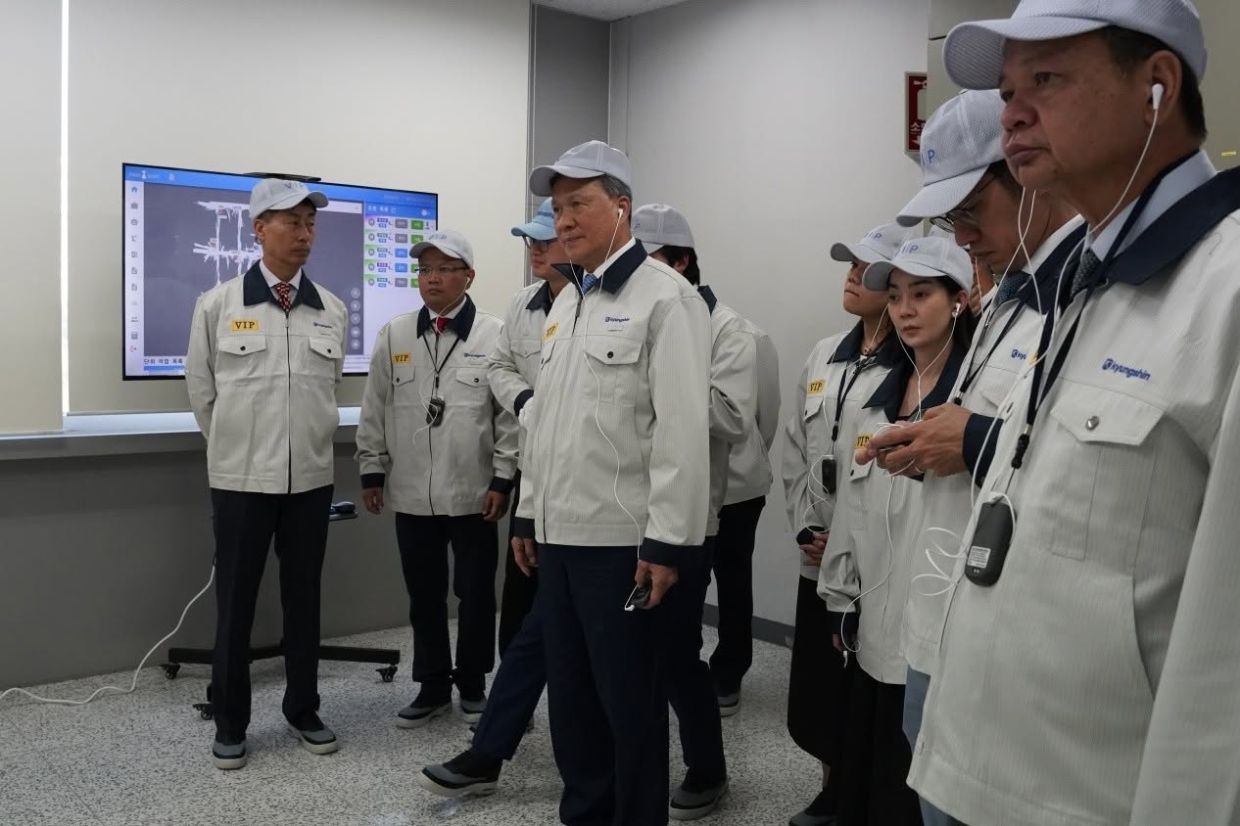
Cambodia is making a strategic pivot away from its traditional dependence on garment production by aggressively courting South Korean investors in advanced manufacturing and technology sectors. The shift crystallised during a high-profile investment promotion mission to South Korea led by Deputy Prime Minister Sun Chanthol, who travelled to Incheon in mid-June representing the Council for the Development of Cambodia. The visit underscored the government's determination to reshape the kingdom's industrial base by attracting capital and expertise in automotive components, electric vehicle systems, digital healthcare and allied sectors that promise higher wages, stronger technology transfer and deeper integration into regional supply chains.
Chanthol's delegation engaged directly with major South Korean manufacturers already embedded in Cambodia's economy, signalling that the government wants to expand these companies' footprint into new domains. The approach differs markedly from traditional investment promotion, which often casts a wide net. Instead, Cambodia is executing what officials describe as a "door-knock mission"—targeting specific firms with proven operational capacity in the kingdom and encouraging them to diversify their Cambodian operations. This tactic reflects a more sophisticated understanding of how industrial ecosystems develop. Companies with established factories, workforce relationships and local knowledge are better positioned to launch new ventures than entirely new entrants navigating unfamiliar regulatory terrain.
A centrepiece of the mission was Chanthol's engagement with Daejoo KC Group, a diversified South Korean conglomerate with significant stakes in metallurgy, chemicals, logistics, construction, automotive components and energy. Through two established subsidiaries—Camko Motor and Camko Infracore—Daejoo KC already employs nearly 500 Cambodians in vehicle assembly and automotive wire harness manufacturing. Camko Motor assembles Hyundai vehicles for the domestic market and exports specialised wire harnesses, while Camko Infracore handles vehicle imports and after-sales services. By meeting with Daejoo KC's senior management, Chanthol presented a specific invitation: expand beyond automotive assembly into the other sectors where Daejoo KC holds expertise and operational capacity in South Korea.
The strategic logic beneath this approach becomes apparent when examining Cambodia's position in global automotive supply chains. As manufacturers worldwide shift toward electric vehicles and advanced mobility technologies, countries that can supply sophisticated components—especially electrical systems, battery management electronics and precision wiring harnesses—gain competitive advantage. Cambodia currently occupies a position of relative weakness in this transition. The kingdom manufactures basic automotive components and assembles finished vehicles, but lacks the engineering depth and technology infrastructure to produce the complex electronics that define next-generation vehicles. By recruiting existing South Korean operators to deepen their investments in these areas, Cambodia aims to leapfrog several stages of industrial development.
Kyungshin Co., Ltd., a specialist in automotive electronic components and wire harnesses, exemplifies this strategy. Founded in 1974, Kyungshin has supplied leading vehicle manufacturers with wiring systems, connectors, junction blocks and electrical components. The company has operated in Cambodia since 2012, maintaining a factory in Kandal province with about US$20 million in capital investment and 1,467 employees. Chanthol's inspection of Kyungshin's Cambodian operations and subsequent meetings with company leadership aimed to encourage expansion into electric vehicle-specific products, where Kyungshin maintains advanced capabilities. The existence of a functioning Kyungshin factory provides practical proof that Cambodia can sustain complex manufacturing operations, removing a key objection foreign investors typically raise about locating advanced production in developing countries.
Beyond automotive manufacturing, the investment mission broadened to encompass healthcare technology and digital systems. Chanthol's visit to Incheon Baek Hospital signalled that Cambodia seeks not merely factory capacity but knowledge transfer, training partnerships and technology imports that strengthen the kingdom's healthcare sector. The government has identified healthcare as a priority area, recognising that a educated, healthy workforce underpins industrial competitiveness. Meetings with hospital management focused on digital healthcare management systems, advanced medical technology and training programmes that could establish international-standard facilities within Cambodia. This dimension of the mission reveals that Cambodia understands modern economic development requires simultaneous investment in both productive capacity and human capital.
The broader Incheon-Cambodia Investment Roadshow, organised by the Council for the Development of Cambodia in cooperation with the Incheon Chamber of Commerce and Industry, provided a structured platform for presenting investment opportunities to South Korean companies and chambers of commerce. Chanthol emphasised Cambodia's newly reformed investment law, which offers incentive packages, fiscal benefits, macroeconomic stability and investment protection mechanisms designed to appeal to foreign manufacturers. The assembled delegation—including the Cambodian ambassador to South Korea, Ministry of Commerce officials, and representatives of business chambers—reflected a whole-of-government approach to investment promotion. By coordinating diplomacy, regulatory frameworks and private-sector engagement, Cambodia attempts to remove friction from investment decisions and demonstrate institutional commitment to Korean business interests.
The timing of this mission reflects broader economic imperatives. Garment manufacturing, which has anchored Cambodia's industrial growth for decades, faces structural headwinds. Wage pressures, supply-chain diversification by major retailers, and the eventual phase-out of preferential trade arrangements create urgency around economic diversification. Cambodia cannot simply expand garment capacity indefinitely. Instead, policymakers have correctly identified that higher-value sectors offer a path toward sustainable wage growth and employment stability. The automotive and healthcare technology sectors targeted in the Korea mission align with global trends: vehicle electrification is accelerating, demand for sophisticated electronic components continues rising, and healthcare technology represents a growth frontier in Asia as incomes increase.
For Malaysia and other Southeast Asian economies, Cambodia's strategy carries instructive implications. The region's manufacturing landscape is in flux, with established competitors like Thailand and Vietnam facing pressure from wage inflation and labour shortages. Cambodia's aggressive pursuit of South Korean automotive and technology investment suggests the kingdom intends to position itself as a secondary hub within regional supply chains—absorbing labour-intensive assembly and components work while gradually building capability in more sophisticated domains. This could either complement or compete with Malaysian manufacturers depending on the specific sectors targeted. Malaysian companies operating in automotive components, wire harnesses and medical technology may find themselves bidding against South Korean firms for supply contracts, even as both compete for regional market share.
The success of Cambodia's diversification strategy remains uncertain. Building advanced manufacturing capacity requires not only capital investment but sustained commitment to workforce development, infrastructure improvement and regulatory predictability. South Korean companies will need assurance that Cambodia maintains political stability, currency convertibility, intellectual property protection and reliable electrical grids capable of supporting modern factories. However, the mission's focus on companies with existing Cambodian operations suggests a pragmatic approach. Rather than pursuing blue-sky projects with unproven investors, Cambodia is working to deepen relationships with firms that have already absorbed the costs and risks of entry. This incrementalist strategy, while less dramatic than landing major new manufacturers, may prove more durable over time as existing operations expand and spawn ancillary industries.
Longer term, Cambodia's industrial strategy hinges on successfully attracting what economists term "global value chain participation." By positioning itself as a reliable location for automotive components and medical technology assembly, Cambodia can integrate into multinational production networks where components flow across borders multiple times before reaching final consumers. Such integration typically brings higher wages than garment manufacturing, generates spin-off services and creates incentives for sustained infrastructure investment. The Korea mission represents an early phase of this transition—leadership from Phnom Penh signalling to Seoul-based industrialists that Cambodia is serious about hosting their next generation of investments. Whether this signal translates into actual capital flows and job creation will depend on execution: maintaining political stability, following through on investment law reforms, and ensuring that South Korean subsidiaries enjoy competitive advantages in Cambodia relative to alternative locations in Vietnam, Thailand or Bangladesh.

