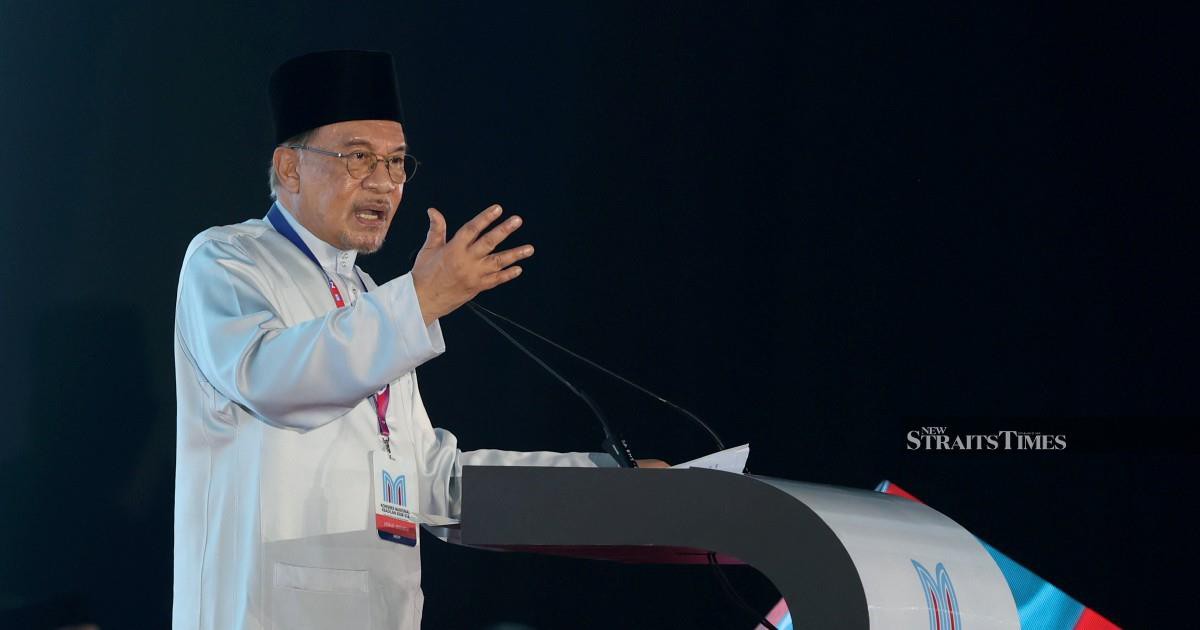
Prime Minister Datuk Seri Anwar Ibrahim has confirmed that the government will formally present its proposal to abolish the Universities and University Colleges Act 1971, commonly known as AUKU, to the Cabinet this Wednesday. The announcement, made in Ayer Keroh, signals momentum behind one of the most significant education policy reforms being pursued by the current administration.
The Universities and University Colleges Act 1971 has governed academic conduct and student affairs at Malaysia's public universities for more than half a century. Originally designed to maintain institutional discipline and order, the legislation has become increasingly controversial, particularly among students, academic freedom advocates, and younger citizens who view several of its provisions as restrictive and outdated. The law currently restricts student political activity, protest rights, and union formation, provisions that have drawn sustained criticism from human rights organisations and civil society groups over the decades.
AUKU's most contentious elements include restrictions on campus political engagement, prohibitions on student-led demonstrations, and limitations on the establishment of student unions. Supporters of reform argue these constraints were appropriate during the law's creation in the early 1970s but are fundamentally misaligned with contemporary understandings of democracy and individual freedoms. Student activists particularly have highlighted how AUKU provisions inhibit their ability to advocate for university-related concerns or participate in broader democratic processes that younger citizens in most comparable nations take for granted.
The government's move to table the abolition proposal at Cabinet represents a formal step in a longer deliberative process. Should Cabinet approve the measure in principle, it would still require parliamentary approval before becoming law. The legislative pathway means the proposal will face scrutiny from various stakeholders, including members of Parliament, university administrators, student organisations, and legal experts who will likely submit recommendations during any consultation period preceding the parliamentary debate.
University administrators across Malaysia have expressed mixed reactions to potential AUKU repeal. Some institutional leaders worry about maintaining discipline and order on campuses should the law be dismantled without clear replacement mechanisms. Others support the move, viewing it as an opportunity to modernise governance frameworks and bring Malaysian universities into closer alignment with international academic standards that emphasise institutional autonomy and student participation in campus decision-making. The challenge lies in crafting successor regulations that protect legitimate institutional interests while expanding student voice and democratic participation.
For Malaysia's student population and young citizens generally, AUKU reform has become symbolically significant beyond its specific legal provisions. The law has come to represent generational concerns about participation rights and the pace of democratic reform. Student groups have campaigned persistently for AUKU's removal, framing the issue as central to their ability to exercise democratic freedoms on par with peers in other democracies. The proposed abolition has therefore attracted considerable attention within youth-focused civil society organisations and among university-based activists.
International observers and comparative higher education specialists have noted that Malaysia's restrictions on campus political activity are unusual among countries at similar development levels. Many regional neighbours and comparable nations have progressively liberalised their higher education regulatory frameworks, allowing greater student autonomy in campus affairs and political expression. AUKU repeal would bring Malaysia into closer alignment with these international norms, potentially enhancing the country's attractiveness as a destination for international students who expect certain freedoms within campus environments.
The proposed abolition also intersects with Malaysia's broader educational competitiveness agenda. Universities worldwide increasingly market themselves as spaces that develop critical thinking, civic engagement, and democratic participation skills. Current AUKU provisions may discourage some international students and academics from considering Malaysian institutions, given the perceived restrictions on campus freedom. Reforming these regulatory constraints could subtly improve institutional recruitment prospects, though this remains secondary to the primary drivers of change focused on democratic principles and student rights.
Implementing AUKU abolition will require developing transitional arrangements and replacement governance mechanisms. Universities will need new codes of conduct, discipline procedures, and student engagement frameworks that maintain institutional stability while respecting expanded freedoms. The Cabinet deliberation on Wednesday will likely address not only whether to proceed with abolition but also preliminary questions about replacement regulatory structures and implementation timelines. Ministry of Higher Education officials are presumably preparing detailed proposals addressing these complexities.
The Wednesday Cabinet meeting comes at a moment when broader questions about governance reform and democratic expansion feature prominently in Malaysian public discourse. Higher education reform occupies symbolic importance in these discussions, as universities are viewed as spaces where future leaders develop their civic understanding and political consciousness. Decisions made about campus governance today may influence how coming generations of Malaysian citizens engage with democratic participation and institutional accountability.
Successful passage of AUKU abolition would represent a significant institutional change, though its practical effects will depend substantially on replacement regulations and how universities adapt their governance models. The Cabinet's formal consideration this week moves the proposal from announcement and consultation phases into the actual government decision-making machinery, bringing long-awaited reform closer to realisation for student activists and education modernisation advocates who have championed this change for years.

