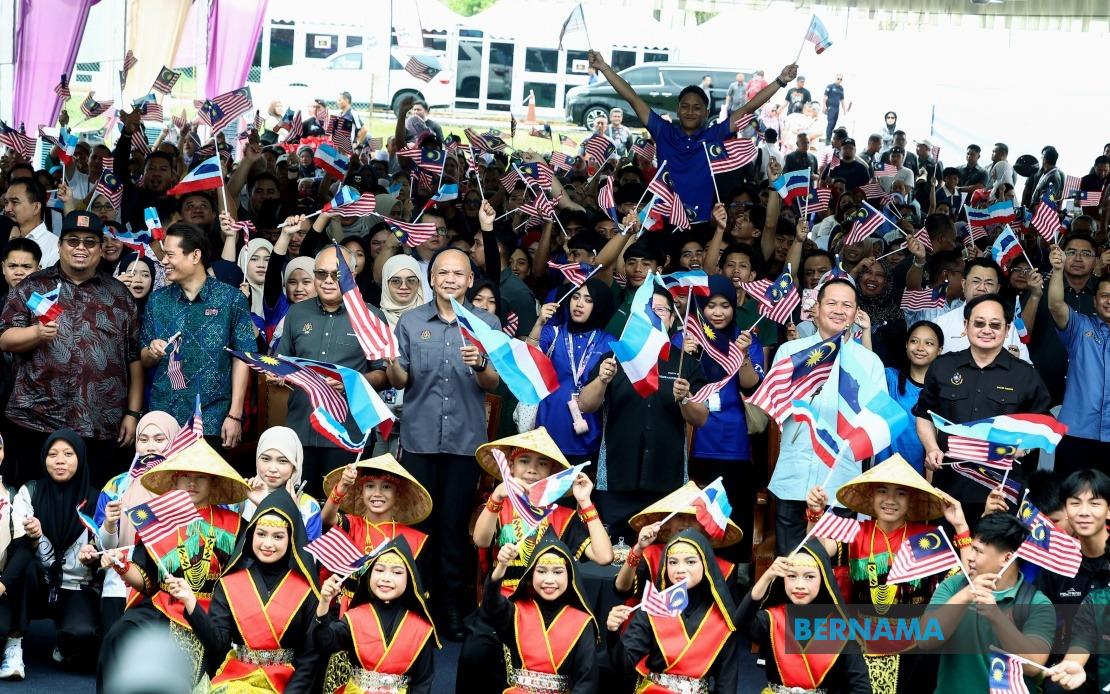
Malaysia is taking a structured approach to boosting its domestic manufacturing sector through the establishment of a Cabinet Committee dedicated to promoting locally-made products and curbing reliance on imports. Domestic Trade and Cost of Living Minister Datuk Armizan Mohd Ali announced the development at the Jom Malaysia Festival in Sandakan on July 25, signalling the government's commitment to a coordinated national strategy for product promotion across multiple economic fronts.
The decision, which received Cabinet approval on July 15, represents a significant institutional response to the challenge of building a more self-sufficient economy. By creating a dedicated cross-ministerial body, the government acknowledges that promoting local products cannot be achieved in isolation by a single ministry. Instead, the initiative requires aligned efforts across agriculture, entrepreneurship, commodities, and economic planning—domains traditionally managed by different portfolios. This structural approach aims to eliminate the silos that often hinder coordinated policy implementation in Malaysia's government machinery.
Deputy Prime Minister and Minister of Energy Transition and Water Transformation Datuk Seri Fadillah Yusof will chair the committee, underlining the initiative's high-level political priority. The selection of Fadillah, who oversees critical energy and water sectors alongside broader economic considerations, suggests the government views local product promotion as integral to national development strategy rather than merely a trade issue. The Ministry of Domestic Trade and Cost of Living will function as the secretariat, ensuring KPDN maintains operational control over the agenda while coordinating input from partner agencies.
The committee's membership will draw from numerous stakeholder ministries, including the Ministry of Agriculture and Food Security, the Ministry of Entrepreneur Development and Cooperatives, and the Ministry of Plantation and Commodities. The Ministry of Economy will also participate, anchoring the committee's work within the government's broader macroeconomic framework and policy direction. This expansive membership structure reflects the government's recognition that local product competitiveness spans multiple sectors—from agricultural goods and processed foods to manufactured items and value-added services.
Armizan outlined four foundational pillars underlying the Jom Malaysia initiative, which the Cabinet Committee will help strengthen. These pillars—a national movement, a whole-of-nation approach, product inclusivity, and market expansion—provide conceptual scaffolding for how the government intends to reposition Malaysia's domestic products in both local and international markets. The first pillar emphasises cultural and behavioural shift, encouraging Malaysians to prioritise home-grown goods. The second acknowledges that successful product promotion demands participation from federal and state governments, private sector stakeholders, and civil society. Product inclusivity ensures that the initiative extends beyond large corporations to encompass small and medium enterprises, cooperatives, and emerging entrepreneurs. Market expansion recognises that domestic product sales alone cannot sustain growth; export markets must be cultivated and developed.
The timing of this institutional development coincides with the Jom Malaysia Festival in Sandakan, a three-day event organised through federal-state collaboration. The festival aggregates more than 100 local entrepreneurs and industry participants, creating concentrated opportunities for networking, business development, and direct consumer engagement. By staging such events alongside policy announcements, the government demonstrates tangible commitment to its promotional agenda while providing practical platforms for producers to access markets and establish commercial relationships.
For Malaysian businesses, the establishment of this Cabinet Committee signals enhanced governmental support for domestic product initiatives. Small and medium enterprises, in particular, may benefit from improved coordination among relevant ministries when seeking regulatory support, market access assistance, or export promotion services. Previously, businesses navigating different ministerial jurisdictions often encountered fragmented guidance and duplicative requirements; centralised coordination should streamline this landscape. The committee's focus on reducing import dependence also suggests the government may implement complementary policies—potentially including procurement preferences, tariff adjustments, or subsidy mechanisms—that create more favourable conditions for local producers.
From a regional economic perspective, Malaysia's emphasis on local product promotion reflects broader Southeast Asian trends. Across the region, governments increasingly recognise the economic multiplier effects of domestic production—jobs creation, value retention within national economies, and reduced vulnerability to supply chain disruptions demonstrated sharply during the COVID-19 pandemic. By establishing this committee, Malaysia positions itself alongside peers in Thailand, Vietnam, and Indonesia, which have similarly prioritised local manufacturing and agricultural development through coordinated governmental approaches.
The committee's establishment also addresses structural challenges in Malaysia's economy. The country has historically maintained significant trade deficits and import dependency, particularly in raw materials and intermediate goods. While some import reliance reflects rational economic specialisation, over-reliance on foreign suppliers constrains economic sovereignty and exposes Malaysia to external price shocks and supply volatility. Through systematic promotion of domestic capabilities, the government aims to identify and develop latent productive capacity that could substitute for imports while creating employment and retaining value domestically.
Armizan's announcement that KPDN would immediately refine the committee's terms of reference and schedule inaugural meetings indicates the government expects rapid operationalisation. The ministry's confidence in the initiative's potential to strengthen Jom Malaysia suggests the Cabinet Committee will function not as an advisory body but as an active policy-making forum capable of directing resources and implementing coordinated programmes. The committees' establishment timeline—moving from Cabinet approval in mid-July to operational status by late July—reflects governmental urgency around local product promotion.
Looking forward, the committee's effectiveness will depend on inter-ministerial cooperation and sustained political commitment. Malaysian government history includes numerous cross-ministerial initiatives that faltered due to competing departmental priorities and resource constraints. The committee's high-level chairmanship under the Deputy Prime Minister should facilitate prioritisation and resource allocation, but success ultimately requires ministries to subordinate sectoral interests to shared objectives. If this coordination materialises, Malaysia could significantly accelerate domestic product development and market penetration—outcomes with substantial implications for employment, trade balance, and long-term economic resilience across Southeast Asia's third-largest economy.

