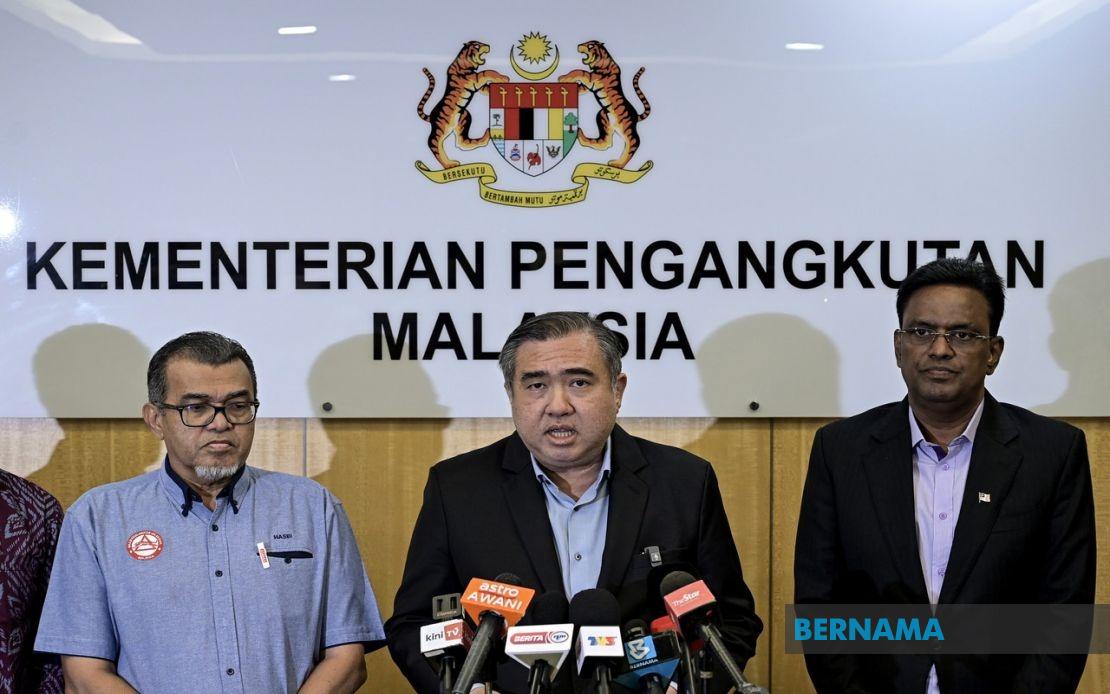
Malaysia's Cabinet has taken a significant step toward strengthening victim protections in road safety legislation by endorsing amendments to the Road Transport Act 1987. In its Wednesday meeting in Putrajaya, the Cabinet signalled in-principle approval for reforms that would grant courts the authority to mandate financial compensation for accident victims or their surviving family members as part of the sentencing framework for road offences. Transport Minister Anthony Loke unveiled the proposal at a press conference, framing the initiative as part of a broader overhaul aimed at making those responsible for traffic violations meaningfully accountable for the consequences of their actions.
The proposed amendments represent a meaningful shift in Malaysia's approach to road justice. Currently, compensation mechanisms largely depend on insurance claims or civil litigation—pathways that can be lengthy, uncertain, and inaccessible to many victims. By embedding court-ordered compensation into the criminal sentencing framework, the government seeks to ensure that victims receive redress more reliably and swiftly. The reform is designed to cover a wide spectrum of road offences, ranging from driving under the influence of alcohol or drugs to reckless driving and other serious traffic violations. This comprehensive scope underscores the Transport Ministry's intention to address not only the most egregious breaches but also the spectrum of dangerous behaviours that result in injury or death on Malaysia's roads.
A crucial feature of the proposal is that compensation determinations will remain judicial rather than administrative. Rather than applying fixed scales or formulae, individual judges will assess compensation on a case-by-case basis, taking into account the severity of the offence, the extent of injuries sustained or loss of life, the documented losses experienced by victims and their families, and the offender's financial capacity. This approach mirrors established practice in many Commonwealth jurisdictions and reflects recognition that road accidents create vastly different harms and impose different burdens on families. The flexibility built into the mechanism acknowledges that a fatal collision involving a breadwinner requires different consideration than a non-fatal injury to a student or retiree.
Loke emphasised that the compensation framework will function as an additional layer of accountability, not as a substitute for existing penalties. Offenders will continue to face imprisonment, financial fines, and driving disqualification under current law. The compensation requirement thus amplifies the consequences of road offences without displacing traditional punitive measures. This layered approach reflects growing international recognition that effective deterrence often requires multiple reinforcing mechanisms rather than reliance on a single penalty type. The psychological and economic impact of being required to compensate victims may prove particularly potent in changing behaviour, as offenders confront directly the human cost of their actions.
The Transport Ministry has acknowledged that several operational and definitional challenges require resolution before the amendments can be finalised and presented to Parliament. Officials must determine which categories of offences will trigger the compensation requirement, establish consistent standards for classifying injuries as serious, and create mechanisms to address situations in which offenders lack the financial means to pay ordered compensation. These are not trivial issues; mishandling them could lead to unenforceable judgments, unequal treatment across cases, or excessive hardship on offenders unable to work due to imprisonment. The ministry's commitment to consulting with multiple stakeholders—including insurance companies, law enforcement agencies, and other government bodies—reflects an understanding that the policy's success depends on workable implementation frameworks.
The insurance industry's role in this ecosystem merits particular attention for Malaysian readers. The proposed amendments are explicitly designed not to undermine existing insurance mechanisms; victims retain full rights to pursue insurance claims and launch civil suits through conventional legal channels. Rather, the government appears to view court-ordered compensation as a supplementary avenue that provides additional relief when insurance coverage proves inadequate or when claims processes stall. This positioning should satisfy insurers' concerns while extending protections to accident victims. However, the interaction between criminal compensation orders and insurance payouts will require careful calibration to prevent double recovery or gaps in coverage.
The timeline for implementation reflects measured deliberation. The Transport Ministry aims to complete the drafting and stakeholder engagement processes and present the bill to Parliament by the end-of-year parliamentary session. However, this target is explicitly conditional on finishing preparatory work and securing review by a Parliamentary Special Select Committee. Loke also signalled his intention to propose that a dedicated special committee examine the bill in detail, a gesture toward building cross-party consensus and ensuring the reforms reflect broad legislative agreement. This approach is significant because it signals that the government views road safety reforms as a matter of national importance that transcends party politics—a framing that can lend the legislation greater legitimacy and durability.
For Malaysian road users and families affected by traffic accidents, the reforms carry genuine implications. Road fatalities remain a persistent tragedy in Malaysia, with accidents imposing severe economic and emotional burdens on households. Formal evidence from compensation orders could strengthen the incentives for safer driving behaviour, particularly among high-risk groups. The prospect of owing substantial compensation to victims might prove more psychologically impactful than abstract fines or disqualification periods, particularly for repeat offenders. Additionally, by formalising compensation within the criminal framework, the proposals could reduce the burden on victims' families of initiating separate civil actions—a process that typically demands resources, legal expertise, and emotional resilience already depleted by tragedy.
The amendments will apply only to offences committed after the legislation takes effect, reflecting the constitutional principle that penal laws cannot operate retrospectively. This limitation, while legally sound, means that thousands of victims of road accidents committed before the law's passage will remain outside its scope. Nevertheless, the prospective application creates the foundation for a long-term cultural shift in how road offences are prosecuted and how accountability is framed. Once the framework becomes operational, subsequent offenders will face clear notice that their actions, if they cause injury or death, will trigger not only traditional penalties but also direct financial obligations to victims.
The broader regional context also warrants consideration. Several Southeast Asian nations have experimented with victim compensation mechanisms in criminal law, though approaches vary considerably. Malaysia's proposed framework, with its emphasis on judicial discretion and case-by-case assessment, sits somewhere between rigid formulaic approaches and entirely discretionary systems. As the proposal develops through the consultation and drafting phases, policymakers should monitor experiences in comparable jurisdictions to identify potential pitfalls and best practices. The success or failure of this model could influence how other ASEAN nations approach victim protection in road safety frameworks.
Stakeholder engagement will prove pivotal in the coming months. Insurance companies will scrutinise how compensation orders interact with policy limits and exclusions. Law enforcement agencies will assess whether the reforms create practical complications in charging and prosecution. Courts will need clarity on evidentiary standards and assessment methodologies. Civil society organisations representing accident victims and road safety advocates will scrutinise whether the reforms adequately protect vulnerable users. The Transport Ministry's willingness to conduct extensive consultations before finalising the bill suggests recognition that durable policy requires buy-in from affected parties. The success of the compensation mechanism ultimately depends not only on sound design but on the willingness of multiple stakeholders to implement it fairly and consistently.

