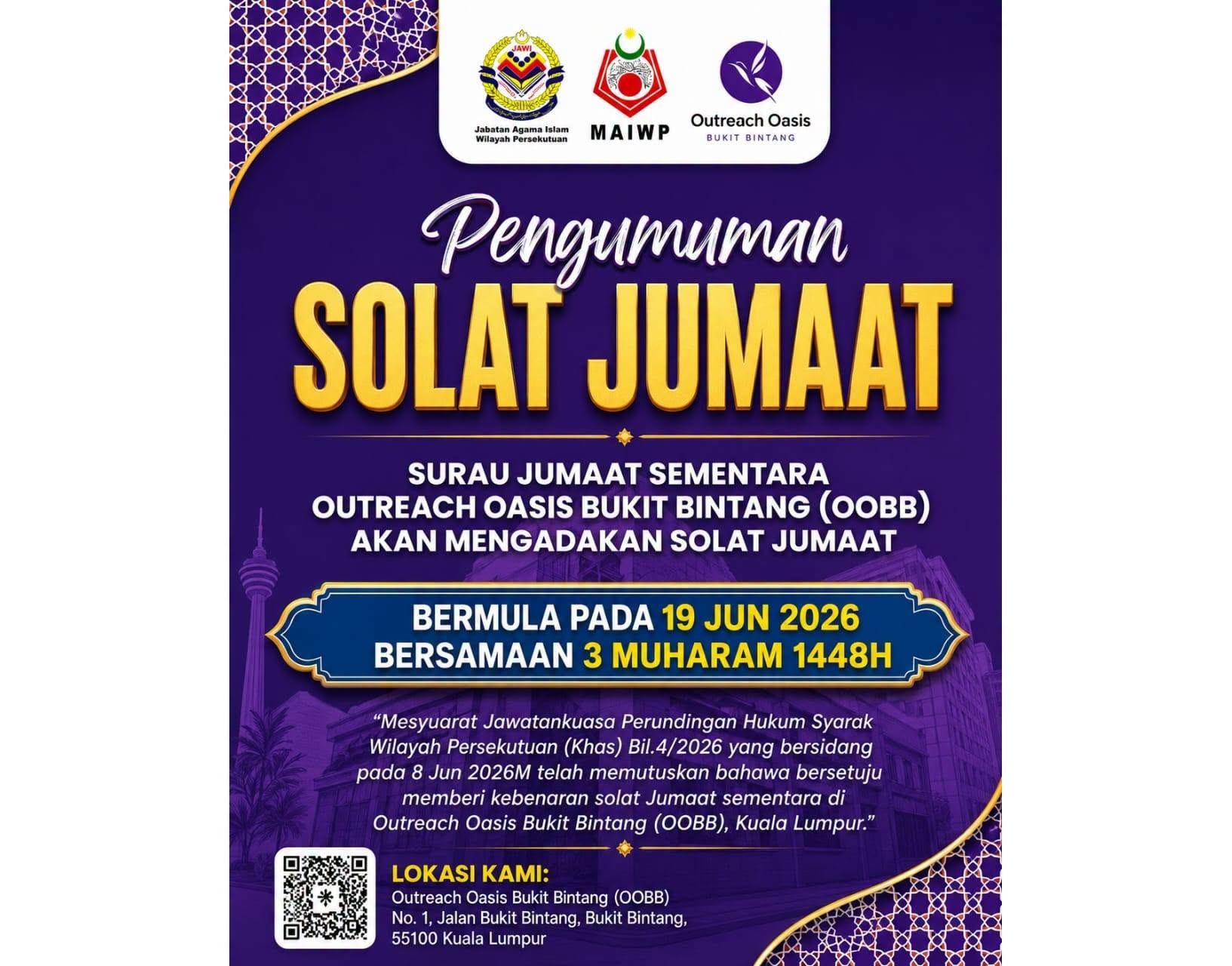
Muslims working and shopping in Kuala Lumpur's vibrant Bukit Bintang district now have a dedicated venue to fulfil their Friday prayer obligations, as the Bukit Bintang Outreach Oasis opens its doors to worshippers from June 19 onwards. The development comes after special approval was granted by the Ministry in the Prime Minister's Department (Religious Affairs), marking a significant convenience for the estimated thousands of Muslims navigating the busy commercial hub daily.
Dr. Zulkifli Hassan, the minister overseeing religious affairs, announced the initiative through social media, emphasising that the current arrangement is provisional in nature. The temporary facility will remain operational until the government completes construction of a dedicated Friday surau at the location, a project that has been in development to address the longstanding need for prayer facilities in one of Malaysia's most visited commercial precincts.
The opening of prayer facilities in Bukit Bintang reflects a broader government strategy to integrate Islamic worship infrastructure within major commercial and tourist zones across the country. Previously, Muslims in the area faced practical challenges when attempting to fulfil their Friday prayer obligations, often requiring them to travel considerable distances or coordinate with surrounding facilities. The new arrangement eliminates these logistical pressures, particularly for office workers, shoppers, and visitors whose schedules centre on the district.
The temporary facility at Bukit Bintang Outreach Oasis addresses a gap that has existed for years in one of Southeast Asia's most prominent shopping destinations. The district attracts millions of visitors annually, including international tourists and Malaysian workers, many of whom are Muslim. The absence of accessible prayer facilities had created an inconvenience that contradicted Malaysia's positioning as an Islamic nation and a Muslim-friendly destination.
Dr. Zulkifli's invitation for the broader community to participate and support Friday prayers at the new venue carries symbolic weight beyond mere logistics. His framing of attendance as an expression of solidarity and Islamic eminence suggests the government views this facility as a statement about the role of Islam within Malaysia's commercial and secular spaces. The minister's language emphasises that worshippers need no longer rush between locations or navigate crowded routes to access this fundamental religious practice.
The permanent surau currently under construction will eventually replace the temporary arrangement at the Outreach Oasis. Government authorities have prioritised designing a comfortable and welcoming space that accommodates the anticipated volume of Friday worshippers while maintaining architectural and functional standards consistent with other major Islamic facilities in urban Malaysia. The phased approach allows the government to serve immediate community needs while completing a more comprehensive long-term infrastructure solution.
For Kuala Lumpur's Muslim workforce, particularly those employed in Bukit Bintang's corporate towers and retail establishments, the development resolves a recurring challenge to religious observance. Many employees previously faced difficulty balancing work schedules with Friday prayer timings, often requiring special arrangements with employers or missing congregational prayers entirely. The on-site facility eliminates such conflicts, allowing seamless integration of religious practice within the working week.
The initiative also carries implications for Malaysia's tourism positioning and its relationship with Muslim-majority nations. International visitors from Islamic countries frequently appreciate and expect accommodation for prayer practices in commercial hubs. The provision of facilities in Bukit Bintang demonstrates Malaysia's commitment to serving Muslim travellers' needs, potentially enhancing the country's appeal within Muslim tourism markets and reinforcing its identity as a global Islamic finance and business centre.
Beyond immediate convenience, the Bukit Bintang facility reflects evolving attitudes within Malaysian urban planning regarding the integration of religious infrastructure within secular commercial zones. Rather than relegating Islamic practices to peripheral locations, the government's approach embeds them within the heart of economic activity, normalising religious observance as integral to Malaysian public life rather than separate from it.
The temporary arrangement's success may influence future development of prayer facilities in other major commercial districts across Malaysia. Property developers and urban planners increasingly recognise that Muslim-friendly infrastructure, including accessible prayer spaces, represents a practical amenity comparable to other facilities like cafeterias or rest areas. This Bukit Bintang initiative demonstrates government commitment to facilitating such provisions, potentially setting precedent for similar projects in expanding commercial precincts nationwide.
Community participation in the new facility carries the additional dimension of visible religious practice within Malaysia's most cosmopolitan and internationally-scrutinised urban space. The gathering of worshippers for congregational Friday prayers in Bukit Bintang, broadcast and observed by both domestic and international audiences, reinforces Islamic identity within spaces traditionally associated with commerce and consumption. This visibility represents a form of cultural assertion that integrates rather than separates religious and economic dimensions of Malaysian urban life.

