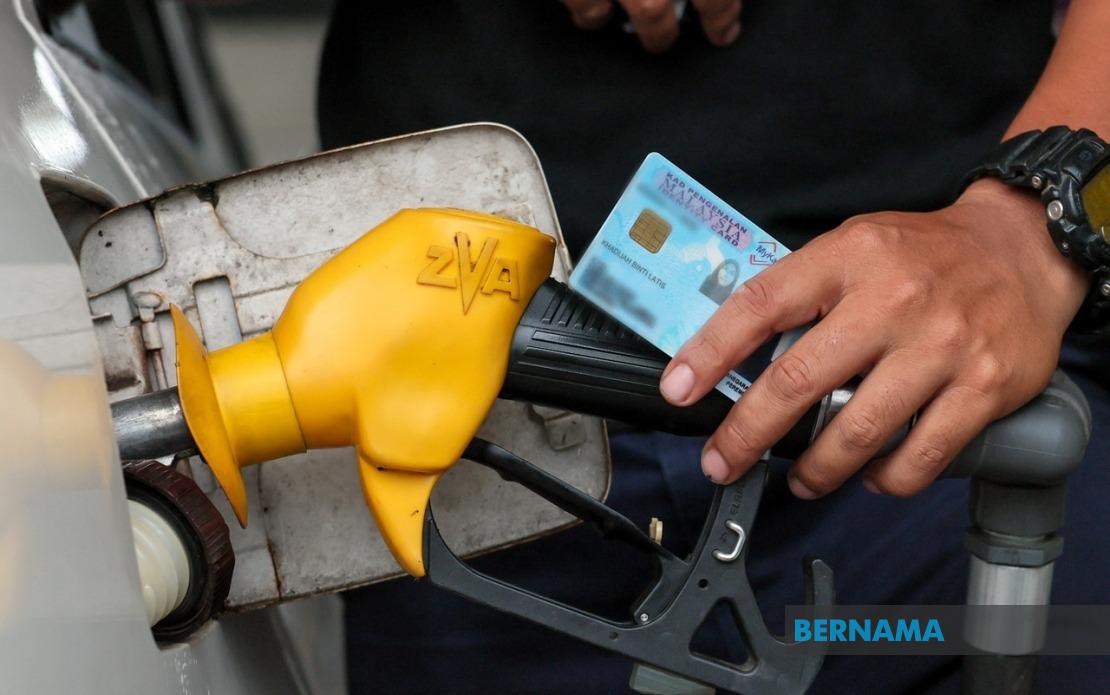
Malaysia's government has moved to ease the financial strain on ordinary citizens and small business operators by expanding its targeted fuel subsidy scheme, announced during the National Day address at Putrajaya International Convention Centre yesterday. Prime Minister Datuk Seri Anwar Ibrahim revealed that the BUDI MADANI programme would increase the baseline eligibility quota for RON95 petrol from 200 litres to 300 litres per month, while simultaneously raising the diesel allocation from 300 litres to 400 litres. The changes took effect immediately, marking a significant reversal of earlier budget constraints that had prompted public concern about transportation affordability across the nation.
The restoration of fuel quotas addresses mounting anxiety among wage earners and transport-dependent workers, who have watched fuel prices fluctuate within the global commodities market. For many Malaysians, the monthly fuel allocation represents a direct and measurable impact on disposable income. The announcement resonates particularly strongly in a context where inflation has pressured household budgets and operating costs for micro-enterprises that rely on vehicle transportation. This move signals the government's recognition that the original quota levels no longer adequately reflect the transport patterns and economic realities of contemporary Malaysia.
Young professionals commuting across metropolitan areas have expressed particular appreciation for the expanded RON95 allocation. Furzani Ahmad, a 24-year-old private sector employee, noted that his daily commute of approximately 30 kilometres to the workplace consumes fuel at a rate that the previous 200-litre monthly quota could barely accommodate. With the increase to 300 litres, his monthly fuel expenses now settle within a predictable range, freeing financial resources for other essential household expenditures such as utilities, groceries, and healthcare. This observation underscores a critical point: the adequacy of fuel assistance depends not on urban-centric assumptions but on the geographical realities of where people live relative to employment centres.
Darwisy Khairudin, aged 23, faces a similar but slightly different transportation scenario. While his base commute spans 20 to 25 kilometres daily, unexpected work assignments occasionally require longer journeys, creating uncertainty about whether the monthly allocation will prove sufficient. The restoration to 300 litres removes this monthly anxiety, allowing him to plan household finances with greater confidence. This dynamic reveals how the BUDI MADANI programme functions as more than mere subsidy mechanism; it operates as a stabilising force for wage earners whose income levels and geographic circumstances make them acutely sensitive to fuel cost volatility.
Small business operators operating in logistics and fresh produce distribution experience particularly acute vulnerabilities to fluctuating transport costs. Abdul Manan, a 63-year-old fruit vendor, relies on diesel-powered vehicles to transport supplies from distant agricultural markets to his retail location. The operational cost structure of such businesses means that fuel expenses directly determine profit margins and, by extension, the retail prices he must charge customers. The increase from 300 to 400 litres in the diesel quota provides meaningful relief to his working capital position. Without such subsidies, he would face the difficult choice between absorbing fuel costs through reduced profitability or passing them to consumers through higher fruit prices—a decision that could ultimately price his products beyond the reach of price-sensitive shoppers in his neighbourhood.
The BUDI MADANI initiative represents a policy approach fundamentally different from universal fuel subsidies. Rather than subsidising all domestic fuel consumption regardless of user circumstances, the programme implements means-tested eligibility criteria and individualized purchase quotas. This targeted approach aims to concentrate government subsidy spending on citizens and small businesses genuinely requiring assistance, thereby achieving greater fiscal efficiency than blanket subsidies while still providing meaningful relief to vulnerable segments of society. For Malaysia, where government fiscal balance has emerged as a persistent policy concern, such targeted mechanisms offer a pathway to maintain social welfare commitments while managing budget constraints.
The geographic dimension of the fuel quota increase carries particular significance for Malaysian readers. Unlike densely-packed city centres where public transportation alternatives exist, much of Malaysia's landscape comprises suburban and rural areas where private vehicles remain the only practical transportation option. Commuters in Selangor, Johor, and Sabah often face journeys that exceed 40 kilometres daily, making adequate fuel allocation essential rather than discretionary. The 50-litre increase in the RON95 quota acknowledges this transportation reality and demonstrates governmental understanding that fuel assistance must account for Malaysia's dispersed settlement patterns and limited public transit coverage outside major metropolitan regions.
For the broader Southeast Asian context, Malaysia's approach to fuel subsidy targeting offers a regional case study. Neighbouring countries including Indonesia have struggled with the fiscal burden of universal fuel subsidies while simultaneously failing to reach truly disadvantaged populations. Thailand and the Philippines have experimented with targeted schemes with mixed results. Malaysia's BUDI MADANI programme, despite ongoing refinements and occasional quota adjustments, represents a more systematically designed approach to subsidising essential transportation services in a manner that balances fiscal sustainability with social protection objectives.
The business community's reception to the expanded diesel quota reflects recognition that transport-dependent sectors require predictable operational cost structures to maintain pricing stability and competitive positioning. When fuel costs fluctuate wildly without compensating subsidies, small enterprises cannot absorb the volatility through operational efficiency gains alone. Suppliers, retailers, and logistics operators all benefit when government assistance stabilises their fuel expenditure at predictable levels, allowing them to focus competitive efforts on service quality and customer relationships rather than scrambling to adjust prices weekly based on commodity market movements.
Looking forward, the restored quotas signal a policy shift toward prioritising cost-of-living relief for ordinary Malaysians. The government's willingness to expand subsidy allocations despite fiscal constraints suggests recognition that transportation accessibility has become a political and social priority. This approach carries implications for other assistance programmes potentially under review. If BUDI MADANI quotas can expand, similar logic might support adjustments to electricity subsidies, water pricing, or food assistance for vulnerable populations. The precedent established through fuel quota restoration may influence broader discussions about the appropriate level and targeting of social assistance in Malaysia's post-pandemic economic environment.
The immediate economic impact of the quota increase will likely manifest most visibly in household budget calculations and small business operating statements. For commuters earning modest incomes, the additional 100 litres of RON95 translates into perhaps RM 150-180 in monthly fuel cost relief, depending on prevailing prices and consumption patterns. For transport-dependent businesses, the 100-litre diesel increase provides working capital relief that permits either improved profit margins or more competitive pricing. These individual-level impacts, aggregated across millions of Malaysians, constitute measurable improvements in cost-of-living conditions precisely when inflationary pressures have constrained real wages and purchasing power across the economy.

