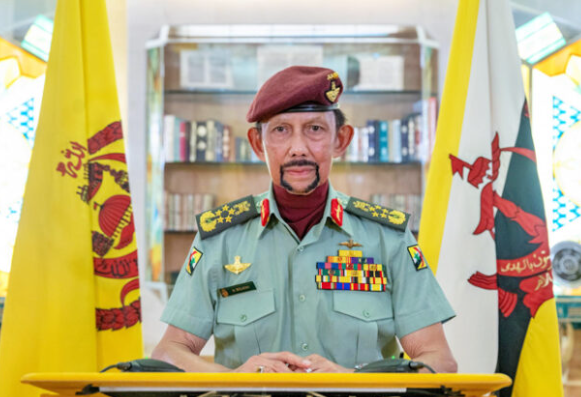
Brunei's Sultan Hassanal Bolkiah has delivered a thought-provoking message to his nation as it enters the Islamic New Year 1448 Hijrah, urging sustained dedication to progress across both economic and spiritual dimensions. In his address, the Sultan articulated a vision that transcends merely celebrating the calendar milestone, positioning the new year instead as an opportunity to deepen resolve and recommit to long-term national objectives that require continuous investment and focus.
The Sultan's central thesis centres on a duality of development that defines modern nationhood. Material advancement—encompassing economic growth and infrastructure expansion—must advance alongside spiritual cultivation through education, religious knowledge and dakwah activities. This framing reflects a distinctly Southeast Asian Islamic perspective, one where faith and pragmatic governance work in tandem rather than opposition. For Malaysia and other Muslim-majority nations in the region, this articulation provides a model for how rulers navigate the demands of contemporary statehood without abandoning religious identity or values that undergird national cohesion.
What distinguishes the Sultan's remarks is his explicit rejection of the notion that New Year celebrations should prompt a sudden shift in behaviour or priorities. Rather, he contends that annual milestones serve best as moments for reflection and reaffirmation of existing commitments. This philosophy suggests that genuine progress emerges not from sporadic bursts of enthusiasm but from sustained, deliberate effort woven into institutional practice and personal discipline. Such messaging carries particular resonance in Malaysian contexts, where recurring calls for national transformation often lack follow-through without foundational changes in mindset and institutional culture.
The Sultan acknowledged the turbulent global environment, noting that conflict and warfare continue to inflict suffering across multiple regions without distinction between combatants and civilians. His framing positions Brunei's relative stability as something worthy of gratitude rather than complacency—a delicate balance between appreciating present circumstances and remaining alert to emerging threats. This nuanced approach avoids both triumphalism and fatalism, instead grounding national security in both material defences and spiritual fortification achieved through collective prayer and religious practice.
Brunei's peaceful status, the Sultan suggested, flows partly from a culture of spiritual devotion—prayer, remembrance of Allah, and Quranic recitation embedded in daily life. This assertion warrants examination, particularly for Malaysian policymakers observing how religious practice correlates with social stability. While causality cannot be assumed, the Sultan's emphasis on spiritual discipline as foundational to national wellbeing offers an alternative to purely secular governance paradigms, suggesting that religious engagement may strengthen rather than hinder state stability.
Crime emerged as the Sultan's primary concern, with particular emphasis on drug-related offences, theft, and other criminal activities that damage national reputation and contradict Islamic teachings. This focus reflects a widespread challenge across Southeast Asia, where drug trafficking networks exploit geographic vulnerabilities and create social instability. By linking criminal behaviour directly to religious principles and national shame, the Sultan frames law enforcement not merely as administrative necessity but as moral imperative rooted in faith—a framing that may resonate more powerfully with citizens than purely legalistic justifications.
The Sultan's directive to security and religious authorities to work collaboratively in combating crime acknowledges that enforcement alone proves insufficient. He called specifically for strengthened religious education and dakwah initiatives to cultivate societal rejection of drugs and criminality from within communities. This preventative approach aligns with emerging global best practices in countering drug abuse, which increasingly emphasise community resilience and cultural values alongside police action. For Malaysia, which faces similar drug-related pressures, the Sultan's emphasis on religious education as preventative infrastructure offers potential policy insights.
Importantly, the Sultan framed crime prevention as a shared national responsibility rather than solely the burden of state agencies. This collective framing empowers citizens to participate in safeguarding their communities while avoiding the pitfall of heavy-handed surveillance states. In Malaysia, where concerns about governmental overreach occasionally arise, such rhetoric emphasising voluntary collective action rather than compulsion may offer a constructive model for public cooperation with law enforcement objectives.
The Sultan's closing emphasis on vigilance without negligence or complacency presents a philosophical stance applicable beyond Brunei's borders. This formulation avoids both paranoia and apathy, instead counselling a steady, prayerful alertness as the appropriate posture toward ongoing challenges. For Malaysia and the broader region, grappling with terrorism, transnational crime, and internal social divisions, this middle path between anxiety and indifference may offer valuable psychological and strategic grounding.
Finally, the Sultan's invocation of divine blessing and protection through prayer suggests that spiritual fortification constitutes a legitimate—indeed necessary—component of national security strategy alongside conventional measures. While Western policy circles often exclude religious language from security frameworks, the Sultan's address illustrates how religiously-grounded societies legitimately integrate faith into governance discourse. For Malaysia's multi-religious context, this raises important questions about how Islamic principles informing state action can be articulated in ways respecting plural beliefs while maintaining coherent national identity and purpose.

