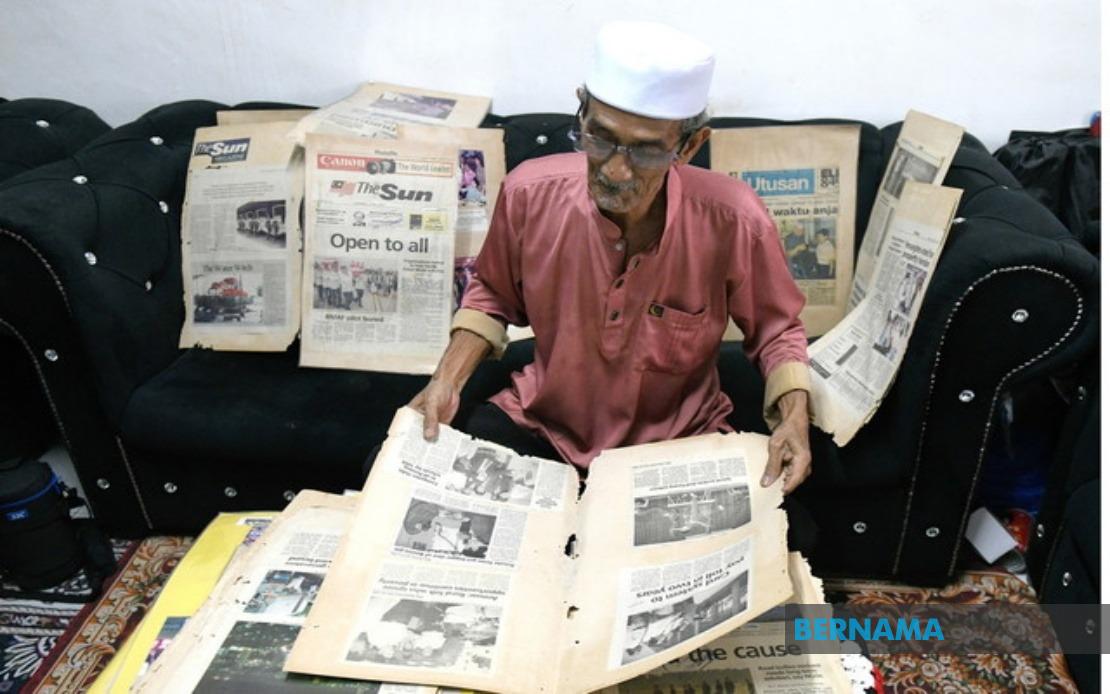
For more than thirty years, Azmi Sapiei has been behind the camera documenting Malaysia's unfolding story—from historic political moments to courtroom dramas. Yet some of his most vivid memories involve not triumph, but hardship. The 64-year-old recalls being kicked and spat upon by a court suspect around 2001, an incident that tested both his physical resilience and professional commitment while covering a legal proceeding as a photographer for The Sun newspaper. Such confrontations, he reflects, are simply occupational hazards for those who record the nation's news at ground level.
Azmi's career trajectory reflects the evolution of Malaysian media itself. Beginning in the mid-1980s, he initially worked in factory settings before recognizing his passion for photography. After relocating to Kuala Lumpur to pursue this interest more seriously, he freelanced with various agencies and women's magazines, honing his technical skills and visual instincts. His breakthrough came in 1993 when he joined Bernama, Malaysia's national news agency, as a staff photographer—a position that would become his professional foundation. The appointment marked a turning point, providing him with the institutional training and exposure that would define his decades-long engagement with journalism.
During his nearly three years at Bernama, Azmi gained access to some of Malaysia's most significant historical moments. In July 1994, he secured exclusive photographs of Shamsiah Fakeh, a former Malayan Communist Party member returning to Malaysia from China after decades abroad. The assignment, which took him to her nephew's residence in Gombak, required both timing and resourcefulness. Azmi and his accompanying journalist managed to gain early entry to the location before authorities cordoned off the area, positioning them perfectly to capture images that would dominate national newspaper front pages the following day. The incident reveals how photojournalism in the pre-digital era demanded not just technical proficiency but also strategic thinking and persistence.
The transition from film to digital media transformed how journalists worked, but Azmi's recollection of his Bernama days emphasizes the discipline demanded by the analogue era. Shooting exclusively on film meant photographers could not preview their images in real time; instead, they had to develop intuition about composition, lighting, and timing. On the Shamsiah assignment, Azmi exposed three rolls of film—a decision that initially drew criticism from his editor, who questioned why so much film had been used. Yet when the photographs were developed and processed, their quality and news value justified the expense. This early lesson—that abundance of raw material could yield exceptional results—shaped his approach to visual journalism throughout his career.
Azmi's professional journey extended beyond still photography into television broadcasting. He later worked as a cameraman for Bernama TV and eventually joined Radio Televisyen Malaysia's Penang operations in 2003, serving part-time until his retirement in mid-2020. His transition to television work introduced him to significantly more demanding physical conditions. The equipment of that era—particularly the Betacam cameras that weighed approximately twelve kilogrammes—required substantial upper body strength and endurance. Azmi describes these devices as 'junk iron,' a colloquial reference to their heft and unwieldiness. Cameramen covering fast-moving news events had to maintain stability while carrying such weight, a challenge that distinguished broadcast journalism from still photography.
Throughout his career, Azmi witnessed the profession's gradual professionalization and the increasing expectations placed on visual journalists. The work demanded not merely technical competence but also mental fortitude. Confrontations with suspects, exposure to sensitive or traumatic scenes, and the pressure to capture decisive moments under challenging conditions all tested cameramen and photographers psychologically. Yet Bernama, in Azmi's assessment, served as an institutional 'school' that cultivated such resilience while emphasizing the fundamental journalistic values of accuracy and news judgment. The agency's emphasis on these principles shaped generations of visual journalists who understood that their role extended beyond mere image capture to the broader mission of truthful reporting.
Azmi's professional recognition came in 2006 when he received the Penang State Media Award in the visual electronic media category—an acknowledgment of his sustained contribution to broadcast journalism. This honor, while validating his decades of dedication, represented only a portion of his larger legacy. More significantly, Azmi's work established a foundation upon which younger journalists could build. His expertise in visual storytelling, his understanding of how images convey meaning, and his commitment to accuracy became lessons transmitted to the next generation.
That transmission became literal when Azmi's second son, Muhammad Syafiq, now 30, began following in his footsteps. Syafiq's interest in cinematography emerged organically during childhood, sparked by observing his father bringing broadcast equipment home and attending assignments. After completing his secondary education in 2016, Syafiq began accompanying his father to coverage locations, transitioning to hands-on camera operation a year later. Now employed by Media Prima Television Network, Syafiq continues the family's engagement with Malaysian broadcast journalism. In describing his father's influence, Syafiq emphasizes that Azmi served not merely as a parent but as a mentor and instructor, teaching technical competencies including filming methods, visual composition, and the discipline required when working under deadline pressure.
The intergenerational dimension of this story illuminates broader questions about journalism's future in Malaysia. As the profession navigates digital transformation, automation, and changing audience preferences, the transmission of institutional knowledge from experienced practitioners to emerging journalists becomes increasingly valuable. Azmi's journey from factory work to award-winning cameraman demonstrates that journalism, while technically demanding, remains accessible to those with determination and aptitude. His willingness to absorb criticism, adapt to new technologies, and maintain professional standards across three decades provides a model for younger journalists entering an industry facing unprecedented disruption.
Azmi's reflection on his career also underscores the often-invisible sacrifices that photojournalists and cameramen make. The physical assaults, the heavy equipment, the long hours, and the emotional labor of witnessing difficult events rarely receive public acknowledgment. Yet these experiences constitute the professional reality for those committed to visual reporting. Azmi's candor about being kicked and spat upon—rather than concealing such incidents—normalizes the occupational hazards that come with documenting breaking news and contentious events. His persistence despite such treatment speaks to a deep commitment to the journalistic mission.
As Malaysia's media landscape continues evolving, the legacies of practitioners like Azmi Sapiei offer important perspective. His generation worked through transformative technological changes—from film cameras to digital devices, from Betacams to modern broadcasting equipment—while maintaining consistent standards of accuracy and news judgment. The profession he entered in the mid-1980s as a camera enthusiast became his life's work, shaping not only how Malaysia's stories were told but also how future journalists would approach their craft. That Muhammad Syafiq now carries forward this tradition, equipped with both his father's technical knowledge and his own digital-native perspective, suggests that Malaysian journalism retains practitioners willing to endure its challenges for the sake of truthful reporting.