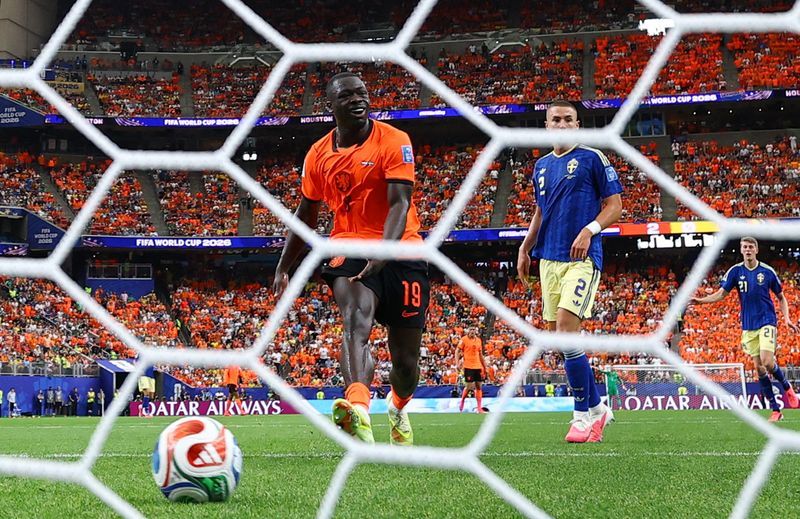
Ronald Koeman's tactical gamble paid dividends as the Netherlands dismantled Sweden 5-1 on Saturday, a commanding display that vindicated the Dutch coach's decision to deploy Brian Brobbey in the lead attacking role. The 24-year-old's double in the opening 17 minutes set the tone for a rout that lifted the Netherlands to the top of their group, offering Koeman redemption after his substitution choices drew criticism during the previous match. The turnaround—from scrutiny over the 2-2 draw with Japan in Dallas to widespread acclaim following the emphatic Swedish victory—exemplifies football's mercurial nature, where a manager's reputation can swing dramatically within days.
Brobbey's performance against Sweden was particularly significant given his status as something of a peripheral figure within the Dutch squad. Previously sidelined during the 2026 World Cup qualifiers, he had been absent from international football for over a year before receiving a recall in March. His journey back to prominence coincides with a season at English Premier League side Sunderland that has fundamentally reshaped his technical and physical capacities. Speaking at the Dutch training camp earlier in the tournament, Brobbey articulated the transformation his game has undergone, stressing that his development extends well beyond the physical duels that once defined his play.
The striker's evolution represents a calculated solution to a pressing challenge facing the Dutch national team. Memphis Depay, the nation's record international goalscorer, has been unavailable due to an extended injury absence, creating an urgent need to identify and develop a worthy successor. Brobbey's emergence as a viable candidate fills a gap that has increasingly concerned Koeman's coaching staff. The younger striker's sharp finishing and improved movement demonstrated at Sunderland provide qualities that the recovering Depay has yet to fully rediscover since his injury troubles.
During his recent media engagement at the Dutch camp, Brobbey outlined the nuanced improvements in his striking craft. Beyond simply contesting physical battles with opposing defenders—an attribute he has long possessed—he emphasised gains in intelligent positioning and deeper movements. His ability to make penetrating runs from deeper positions and identify pockets of space represents a more sophisticated understanding of the striker's role in modern football. These refined skills translate into greater reliability when service arrives from the Netherlands' creative players, a crucial attribute given the quality of support available from the flanks and midfield.
The Dutch attack possesses considerable creative potential with Cody Gakpo operating on the left wing and Denzel Dumfries providing overlapping support from right-back. Recent addition Crysencio Summerville adds further depth to attacking options. With these creative forces in place, the primary requirement is a centre-forward capable of converting the opportunities these players generate. Brobbey's clinical finishing against Sweden—striking twice in rapid succession—demonstrated that he possesses the composure and timing required to capitalise on such supply.
Koeman's selection of Brobbey represented a calculated departure from established patterns. Overlooking more familiar options and placing faith in a player only recently recalled to the squad required conviction, particularly following the previous match's tactical difficulties. However, the scale of the victory and Brobbey's individual contribution vindicated the coach's judgment comprehensively. The contest provided ideal circumstances to assess a striker's credentials, with ample possession and attacking opportunities allowing clear evaluation of both finishing ability and overall contribution to team play.
The competitive intensity surrounding the forward position reflects broader strategic considerations within the Dutch setup. Depay's record goalscoring achievement and proven tournament experience carry considerable weight, yet physical sharpness and consistency in conversion represent areas where the veteran has struggled following his rehabilitation from injury. Brobbey's energy and precision offer a contrasting profile that may prove valuable across a tournament that demands both technical excellence and physical resilience. The choice between maintaining faith in an established international scorer and embracing an in-form emerging talent encapsulates a strategic dilemma many national teams face when managing transitions.
For Malaysian and Southeast Asian observers, Brobbey's emergence underscores broader trends in European football regarding the circulation of talent. His season in the English Premier League provided development opportunities that accelerated his progress, reflecting how exposure to competitive top-flight environments shapes players' technical and tactical maturity. The Netherlands' ability to identify and integrate emerging talent effectively contributes to their consistent competitiveness on the international stage.
Looking ahead, Brobbey faces the challenge of consolidating his position through continued strong performances. A single impressive match, however convincing, does not guarantee long-term selection, particularly in competitive tournament contexts. However, the foundation he established against Sweden provides genuine grounds for optimism regarding his capacity to establish himself as the Netherlands' primary striker. Whether he fully inherits Depay's mantle will ultimately depend on his ability to deliver consistently across multiple fixtures and opposition types at the tournament's later stages.

