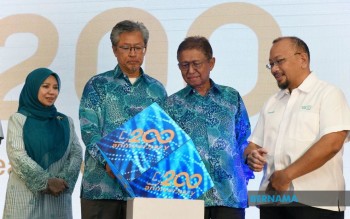
Boustead Holdings Bhd is charting an ambitious growth trajectory that would more than double its revenue to RM30 billion within the next five years, marking a significant strategic pivot for the century-old conglomerate. The plan represents a fundamental reorientation of the company's operations away from its historical roots in agricultural commerce towards modern defence manufacturing and real estate development, alongside continued commercial services operations. The expansion roadmap reflects broader government ambitions to strengthen Malaysia's domestic defence capabilities and reduce reliance on foreign suppliers for critical military equipment and systems.
During the soft launch of Boustead's bicentennial journey celebrations in George Town, group managing director Datuk Dr Ahmad Sabirin Arshad outlined how the company would navigate this transformation from its origins as a coconut trader and warehousing operator. The restructuring programme, he explained, has been shaped by guidance from major shareholders and the Defence Ministry, particularly following the launch of the National Defence Industry Policy in January. This policy framework provides the overarching vision that Boustead will help execute through its three core business pillars: defence, property development, and commercial services.
A cornerstone of Boustead's defence strategy involves building a robust ecosystem of local vendors that would support the manufacturing of advanced military equipment. The company intends to develop approximately 400 vendors across the defence supply chain, effectively creating an entirely new industrial sector that promises substantial wealth generation for Malaysia. This vendor development initiative transcends simple procurement arrangements; it represents a deliberate effort to cultivate sophisticated manufacturing capabilities throughout the country that could sustain Malaysia's defence independence for decades. By fostering this network of smaller and medium-sized enterprises, Boustead aims to distribute the benefits of defence spending across multiple regions and business communities.
Central to this ambition is achieving a minimum of 30 per cent local content in defence industry products by 2030. This target reflects international best practices in defence industrial policy, where countries seek to balance technological capability development with economic benefit capture. Achieving this benchmark would require significant investment in research and development, technical training, and manufacturing infrastructure. It also signals Malaysia's commitment to gradually reducing its dependence on imported military systems and building sovereign manufacturing capacity for items ranging from small weapons to complex systems.
Boustead has been entrusted with leadership responsibility for four major national defence projects that will anchor this industrial development effort. These initiatives encompass satellite development, which speaks to Malaysia's growing interest in space-based surveillance and communications capabilities; rolling chassis production for armoured vehicles, a critical component in ground force modernisation; light weapons manufacturing to support military arsenals; and development of the Combat Management System, a sophisticated software and hardware integration that forms the operational backbone of modern naval and command operations. The scale of these projects underscores how thoroughly Malaysia intends to advance its defence industrial base.
Beyond defence manufacturing, Boustead is spearheading the Batu Cantonment strategic development project in collaboration with the Armed Forces Fund Board. This initiative involves the relocation of nine military camps currently occupying prime real estate in Kuala Lumpur, transforming the vacated land into a modern commercial and mixed-use hub. The project exemplifies how defence policy and urban development intersect in Malaysia's long-term planning. By consolidating military installations and redeveloping surplus land, the government simultaneously modernises defence facilities whilst generating significant commercial value through property development that will ultimately benefit military personnel and retirees whose interests the Armed Forces Fund Board represents.
Chairman General (Retired) Tan Sri Abdul Aziz Zainal emphasised that the transformation programme, whilst ambitious, must be executed with unwavering accountability and sound governance principles. He stressed that Boustead carries a special responsibility to deliver optimal returns to stakeholders, particularly the members and contributors of the Malaysian Armed Forces whose funds are invested in the company. This governance commitment is particularly significant given Boustead's historical role and the expectations that accompany directing military pension and welfare funds. The emphasis on accountability reflects lessons learned across Southeast Asia regarding the importance of transparent management in defence-related enterprises.
Boustead's strategy for achieving its defence objectives involves forging strategic partnerships with reputable international technology providers. Rather than attempting to develop all capabilities in-house, the company will leverage its partnerships to secure technology transfer agreements that meaningfully accelerate Malaysia's learning curve in advanced defence manufacturing. The selection of credible international partners is critical; poor partnership choices could compromise both technology transfer effectiveness and national security considerations. By negotiating transfer arrangements aligned with the 30 per cent local content target, Boustead seeks to ensure that international knowledge becomes genuinely embedded within Malaysian institutions and workforce rather than remaining dependent on foreign expertise.
The defence industry development programme carries significant implications for Malaysia's regional position and security independence. A robust domestic defence manufacturing capacity enhances Malaysia's ability to respond to emerging security challenges without waiting for international supplier approval or delivery timelines. This capability is particularly relevant given evolving regional security dynamics and the importance of maintaining credible deterrence. Furthermore, the export potential of Malaysian-manufactured defence products, once production reaches scale and quality standards, could contribute meaningfully to the country's export revenues and engineering sector development.
Beyond defence manufacturing, Boustead continues strengthening its tourism and insurance subsidiaries to provide balanced portfolio growth. Whilst these sectors may appear less strategic than defence, they generate cash flow and leverage existing expertise whilst the company scales up capital-intensive defence manufacturing operations. The insurance operations are particularly relevant given that defence contractors typically require substantial professional indemnity and liability coverage. Tourism operations similarly benefit from the company's existing hospitality infrastructure and brand recognition, providing stability during the transition period.
Boustead's transformation underscores Malaysia's determination to enhance self-reliance in critical defence sectors whilst creating industrial capabilities that generate sustainable economic benefits. The five-year timeline to reach RM30 billion revenue is aggressive but appears grounded in concrete government support through defence procurement commitments and strategic project allocations. Success will depend on effectively executing the vendor development programme, securing high-quality international partnerships, and maintaining disciplined financial management throughout this expansion. For Malaysian businesses monitoring government industrial policy, Boustead's evolution offers insights into where policy emphasis is directing capital and opportunity in coming years.

