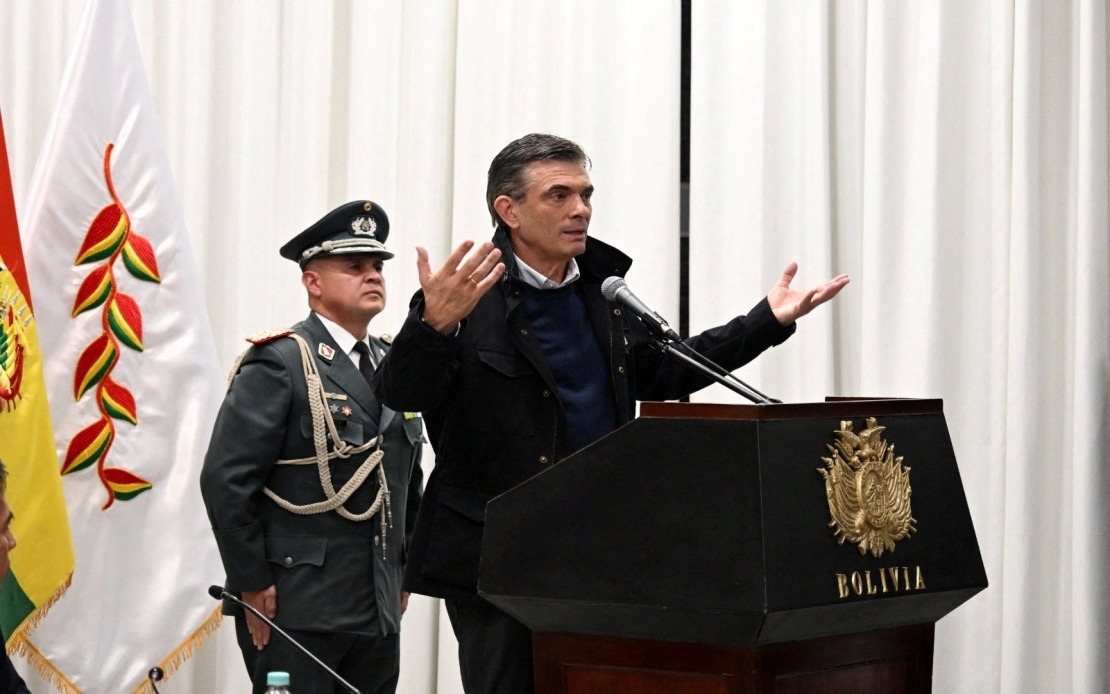
Bolivia faces a deepening political and economic crisis after President Rodrigo Paz declared a state of emergency on Saturday in response to weeks of escalating civil unrest. The declaration comes as labour unions and farming groups have orchestrated extensive road blockades across the country, demanding the president's resignation while protesting the rising cost of living and broader economic hardship affecting ordinary Bolivians. The confrontation represents one of the most significant challenges to Paz's administration, with the blockades having persisted for approximately 50 days and showing no signs of immediate resolution.
The grievances driving the protests reflect mounting economic pressures that have become increasingly difficult for households across Bolivia to manage. Workers and farmers have joined forces in what has become a coordinated political movement, using blockades as their primary leverage to pressure the government into policy changes or executive resignation. The coalition of unions and agricultural organisations indicates that discontent spans multiple sectors of Bolivian society, from urban workers to rural communities dependent on agricultural commerce. This broad-based opposition suggests the crisis runs deeper than isolated grievances and may reflect systemic economic management failures under the current administration.
In his televised address announcing the emergency measures, Paz directly acknowledged the humanitarian toll that the blockades have inflicted on the general population. He emphasised that ordinary citizens have become trapped in an untenable situation where their fundamental needs—access to employment, education, healthcare, and basic food supplies—remain compromised by the ongoing civil action. The president's characterisation of Bolivians as "hostages" reveals the stark polarisation between the government's perspective and the protesters' demands, with each side claiming legitimacy for their position. For Paz, the blockades represent an illegitimate interference with constitutional governance; for the unions and farmers, they represent a necessary escalation to force governmental attention to their economic concerns.
The humanitarian consequences of the 50-day blockade have become increasingly severe and measurable. Shortages of food, fuel, and essential medicines have rippled across various regions, disrupting normal economic functioning and threatening public health. These supply disruptions create cascading problems: without adequate fuel supplies, transportation networks deteriorate, exacerbating food shortages; without medical supplies, hospitals and clinics face operational constraints. The extended duration of the blockades means that these shortages are no longer temporary inconveniences but constitute an emerging humanitarian challenge that could worsen without resolution. Small businesses dependent on regular supply chains face insolvency, workers in transport and logistics sectors lose income, and vulnerable populations including children and the elderly face heightened risks from medicine shortages.
The state of emergency declaration represents a significant escalation in governmental response, as it provides legal authority for military deployment across Bolivia's territory. Under normal constitutional circumstances, such extensive military mobilisation would require parliamentary approval or face strict limitations; the emergency declaration circumvents these safeguards and grants the executive substantial discretionary power. This shift introduces new tensions into the crisis, as previous experience in Latin American states demonstrates that military involvement in civilian disputes often intensifies confrontation rather than resolving underlying grievances. The government's decision to pursue this avenue suggests that negotiated settlement attempts may have been exhausted or deemed impractical, shifting the conflict toward a more coercive resolution framework.
The timing and context of Bolivia's emergency reflect broader regional patterns of political instability and economic stress affecting South America. Multiple Andean nations have experienced similar cycles of protests, government repression, and constitutional crises over the past five years. Bolivia's particular vulnerability stems from its economic dependence on commodity exports, including natural gas and minerals, sectors vulnerable to international price fluctuations beyond governmental control. When global commodity prices decline, Bolivian government revenues contract, constraining public spending and social services while simultaneously reducing employment in export industries. This structural economic vulnerability creates recurring political instability when external economic shocks occur, establishing cycles of crisis and governmental response that have become characteristic of the region.
For Southeast Asian observers, Bolivia's crisis offers important lessons about the fragility of social contracts when economic pressures accumulate. Malaysia's own history includes episodes of labour unrest and regional discontent rooted in economic grievance, though the mechanisms of resolution have differed from Bolivia's pathway. The Bolivian case demonstrates how inadequate economic policy responses can allow discontent to crystallise into organised political movements capable of imposing significant costs on the broader economy. When government communication fails and legitimate grievances are dismissed rather than addressed substantively, civil society organisations may resort to disruptive tactics that ultimately harm the economically vulnerable populations they nominally represent, creating tragic dynamics where everyone suffers from prolonged confrontation.
The international dimensions of Bolivia's emergency may also shape its trajectory and resolution. Democratic nations typically express concern when governments declare states of emergency that concentrate executive power, particularly when such declarations follow civil protests rather than external security threats. Regional organisations and bilateral diplomatic partners may apply pressure on Paz to pursue negotiated settlement over military escalation. Conversely, some international actors may support strong governmental action against what they characterise as unlawful blockade activity. These competing international pressures could either constrain Paz's options or, alternatively, provide him diplomatic cover for military action by portraying it as necessary crisis management rather than political repression.
The path forward for Bolivia remains uncertain and contingent on factors including the government's military strategy, the protesters' willingness to sustain blockades under military pressure, and whether any negotiating framework can address the underlying economic grievances. Successful resolution likely requires movement on multiple fronts simultaneously: the government would need to present credible economic reforms addressing inflation and living costs; the protesters would need assurance that their voice influenced policy; and both sides would need to find exit ramps from confrontation that allow each to claim partial victory. Without such multi-dimensional progress, Bolivia faces the prospect of prolonged crisis that continues harming ordinary citizens while fundamental disagreements between government and civil society remain unresolved, a pattern that has proven tragically common across the region.