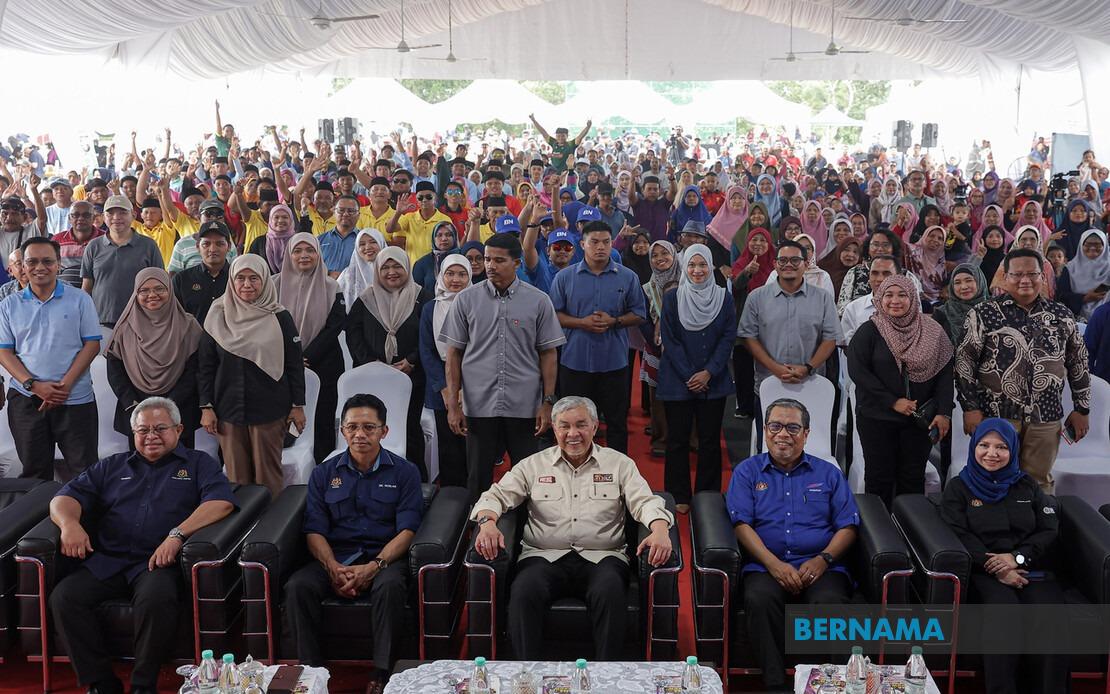
Malaysia's political terrain continues to shift unpredictably, prompting established coalitions to rethink their approach to electoral competition. Barisan Nasional chairman Datuk Seri Dr Ahmad Zahid Hamidi has indicated that the two largest political blocs in the country must develop fresh strategies and realign their forces to maintain stability in an increasingly fluid environment. Speaking in Jempol, he outlined how his coalition is adapting to contemporary political realities that have fundamentally altered the assumptions underlying traditional power structures.
The most tangible expression of this strategic recalibration is the understanding reached between Barisan Nasional and Perikatan Nasional for the 16th Negeri Sembilan state election. Rather than presenting this as a formal merger or binding agreement, Ahmad Zahid characterised it as a pragmatic arrangement designed to minimise the electoral complications that arise when multiple parties contest the same seats. Vote-splitting has emerged as a serious concern for both coalitions, particularly in marginal constituencies where a divided opposition or divided ruling parties can inadvertently hand victory to an unexpected winner. This understanding represents an attempt to sidestep such scenarios through coordinated seat allocation.
The Negeri Sembilan arrangement functions essentially as a pilot project, allowing both coalitions to assess whether such cooperation produces tangible benefits before committing to broader strategies. Ahmad Zahid explicitly stated that the leadership will evaluate the results following the August 1 polling day before determining whether to replicate the model in Melaka or scale it nationally. This measured approach reflects the political caution required when negotiating between parties with distinct ideological positions and competing interests, even when they share certain objectives.
Crucially, Ahmad Zahid was careful to distinguish this understanding from a formal political coalition. He stressed that no binding agreement exists between Barisan Nasional and Perikatan Nasional, emphasising instead that the arrangement represents a mutual understanding focused solely on preventing overlapping contests. This distinction carries significant weight in Malaysian politics, where formal coalitions trigger constitutional implications, resource-sharing arrangements, and potential conflicts with constituent parties. By limiting the arrangement to seat-level coordination, both coalitions preserve their independence while securing practical benefits.
The timing of this understanding is particularly significant given the proximity of major electoral contests. Early voting for Negeri Sembilan is scheduled for July 28, with the main polling day set for August 1. This compressed timeline means that campaign strategies must be finalised swiftly, and any confusion over seat allocations could prove damaging. The arrangement therefore serves an immediate operational purpose while simultaneously testing the viability of a broader strategic shift. For Malaysian voters in Negeri Sembilan, this means they will witness firsthand whether such coordination enhances or complicates their electoral choices.
From a broader perspective, the initiative reflects how Malaysian politics has evolved since the 2018 and 2022 general elections. The traditional two-coalition framework has become less stable as realignments occur based on personality politics, regional considerations, and shifting voter preferences. Barisan Nasional's relative decline from its dominant historical position, combined with the fragmentation within Pakatan Harapan and the rise of Perikatan Nasional as a significant force, has created conditions where old certainties no longer apply. Both major blocs now face incentives to cooperate tactically even when they remain competitors strategically.
The implications for general election politics are particularly noteworthy. Ahmad Zahid's reference to GE16 suggests that federal-level strategy will depend substantially on how the Negeri Sembilan and subsequent state elections perform under this new arrangement. Should the coordination prove successful in translating votes into seats efficiently, both coalitions may expand the model. Conversely, if it generates complications or creates complications for constituent parties, it may be abandoned in favour of traditional head-to-head competition. This experimental approach allows political leaders to gather evidence before committing to major strategic shifts at the national level.
For opposition parties and independents, such arrangements introduce new uncertainties. Vote-splitting dynamics that previously disadvantaged one side might shift if major coalitions coordinate strategically. Voters accustomed to clear binary choices between large coalitions may find themselves navigating more complex scenarios where seat allocation reflects backroom negotiations rather than open contestation. The implications for democratic choice and accountability merit careful observation as these arrangements evolve.
Regionally, Malaysia's experience with coalition flexibility and realignment offers lessons relevant to other Southeast Asian democracies grappling with fragmented party systems and unstable governing coalitions. The ability of established political forces to adapt through pragmatic understanding, even when maintaining formal independence, demonstrates a model of political flexibility that differs from either rigid two-coalition systems or fully fluid non-aligned competition.
As Negeri Sembilan voters prepare to cast their ballots, they are essentially participating in a broader experiment about how Malaysia's political future might be structured. The results will influence not just Melaka's subsequent election but potentially the shape of national politics in the years leading to GE16. Ahmad Zahid's emphasis on assessing performance before expanding the arrangement suggests that both Barisan Nasional and Perikatan Nasional recognise they are navigating unfamiliar territory, requiring careful testing before committing to systemic change. How Malaysian politics ultimately reconfigures itself will depend substantially on lessons drawn from these coming state elections.

