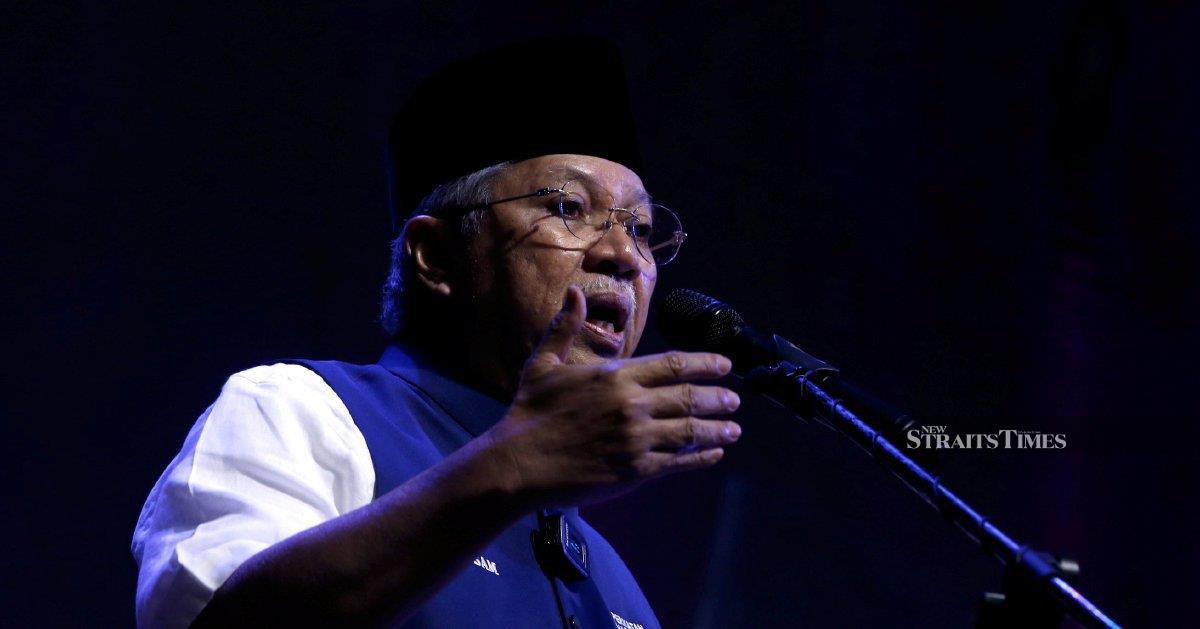
Political leaders in Bersatu are being cautioned to maintain measured responses and avoid making precipitate declarations regarding recent turns of events within the Perikatan Nasional alliance, as the coalition continues to manage a series of internal disputes.
The call for restraint reflects deepening apprehension about the durability of the three-party opposition grouping, which has faced repeated challenges since its formal establishment. Perikatan Nasional, comprising Bersatu, PAS, and Hamim—along with various allied independent parliamentarians—was positioned as a credible counterweight to the ruling Pakatan Harapan government. However, friction between component parties has repeatedly tested the coalition's cohesion, with disagreements over strategy, resource allocation, and political direction creating fault lines that observers have watched with keen interest.
For Bersatu specifically, the current predicament presents a delicate balancing act. As the coalition's largest party by parliamentary representation following recent defections and political realignments, Bersatu occupies a pivotal position within PN's architecture. Yet this centrality also places the party in a vulnerable position, as its actions during volatile moments can either stabilise or further destabilise the entire grouping. The counsel to remain silent and thoughtful rather than respond impulsively to provocations or developments suggests party leadership recognises the fragility of current arrangements.
The tensions plaguing PN reflect broader structural challenges inherent in opposition coalitions operating without the binding force of ministerial office or government resources. Unlike the ruling coalition, which benefits from the patronage machinery and bureaucratic apparatus of government, opposition alliances must rely on ideological alignment and personal relationships—commodities that have proven increasingly difficult to maintain given competing electoral interests and divergent party philosophies within PN. The combination of hardline Islamist politics embodied by PAS and Bersatu's more pragmatic centrism has created persistent friction points.
Such internal disharmony carries significant implications for Malaysian politics writ large. A fracturing Perikatan Nasional would dramatically reshape the competitive landscape, potentially reducing the effectiveness of parliamentary scrutiny and enabling a more consolidated Pakatan Harapan government. Conversely, a renewed and unified opposition could provide voters with a more credible alternative narrative and constrain executive overreach. The stakes therefore extend well beyond intra-coalition politics into questions about democratic accountability and government legitimacy.
From a Southeast Asian perspective, Malaysia's political volatility during this period also influences regional security cooperation and economic policymaking. Coalition instability can slow decision-making on critical infrastructure projects, trade negotiations, and security arrangements. International partners monitoring Malaysia's political health often use coalition stability as a barometer for governance effectiveness and policy continuity—considerations that matter as the nation navigates complex relationships with neighbouring countries and major powers.
The specific advice circulating within Bersatu emphasises the importance of allowing current disputes to resolve through established party and coalition mechanisms rather than through public recriminations and media warfare. This approach reflects lessons learned from previous occasions when public disputes between PN component parties spiralled into damaging factional confrontations that weakened all sides. Senior party figures are evidently mindful that precipitous statements can harden positions and foreclose opportunities for negotiated settlement.
Bersatu's distinctive position within the opposition constellation adds another layer of complexity. The party contains diverse factions with divergent views about the optimal opposition strategy, ranging from those advocating for cooperation with specific Pakatan Harapan components to hardliners favouring maximum confrontation. Managing this internal diversity while simultaneously navigating coalition politics requires considerable diplomatic skill and discipline—hence the emphasis on calm and circumspection.
Historically, Malaysian opposition coalitions have struggled with sustainability, a pattern tracing back to the original Barisan Alternatif in the late 1990s through various subsequent iterations. The current Perikatan Nasional represents the most serious attempt at opposition consolidation in recent years, yet its trajectory suggests that merely combining parties with complementary geographical or demographic bases proves insufficient for long-term stability. Genuine coalitions require constant cultivation, trust-building, and a shared vision extending beyond simple anti-incumbent sentiment.
The message being transmitted to Bersatu members appears designed to accomplish several objectives simultaneously: reassure coalition partners of Bersatu's commitment to collective arrangements, signal to the broader public that PN remains fundamentally intact despite recent complications, and create space for behind-the-scenes negotiation without the interference of public positioning. Whether this measured approach succeeds depends substantially on whether the underlying issues generating tension can be genuinely addressed or merely papered over temporarily.
As Malaysia's political ecosystem continues its ongoing recalibration, the ability of opposition actors to maintain cohesion while pursuing legitimate interests represents a critical determinant of democratic competition's health. The counsel to Bersatu thus extends beyond this particular moment, reflecting recognition that opposition politics itself—and therefore democratic accountability—requires institutional discipline and strategic patience from all participants.

