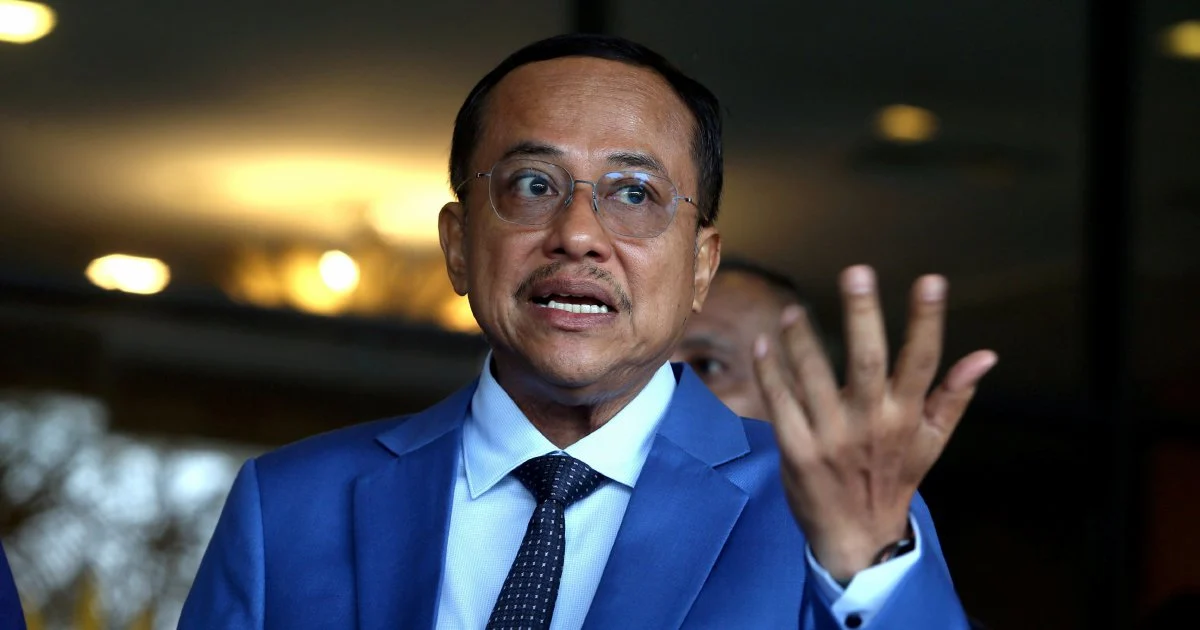
The unity challenge facing Perikatan Nasional deepened on Tuesday as internal tensions boiled over, with a senior Bersatu figure delivering a pointed rebuke to the coalition's leadership structure. Datuk Tun Faisal Ismail Aziz, serving as Bersatu's information chief, has levelled accusations that Datuk Seri Dr Ahmad Samsuri Mokhtar has abandoned his duties as PN chairman, choosing instead to prioritise his role within Pas, the coalition's largest component party.
The friction underscores growing frustration within Bersatu, which alongside Pas and Perikatan Selangor forms the three-pillar structure of the Perikatan Nasional bloc. Faisal's intervention signals that smaller coalition partners are finding the current governance arrangement untenable, particularly when major decisions appear to be made unilaterally rather than through consensus-building mechanisms. The timing of this public criticism carries significance, arriving amid broader questions about how PN intends to function as a cohesive political force heading into coming electoral cycles.
The distinction Faisal has drawn between Samsuri's respective roles carries real meaning within Malaysia's coalition politics. As PN chairman, Samsuri theoretically carries responsibility for balancing the interests of multiple parties and ensuring that major developments are managed transparently across the alliance. By contrast, his position within Pas's internal hierarchy relates specifically to advancing that single party's agenda. When the two roles conflict—or when one eclipses the other—coalition integrity suffers.
This situation illustrates a persistent vulnerability in Malaysian coalition structures, where individual party leaders often retain competing loyalties that can paralyse collective decision-making. The Perikatan Nasional alliance has already navigated significant challenges since its formation, and continued drift at the leadership level threatens to amplify internal divisions. For observers tracking PN's trajectory, the current deterioration suggests that the coalition lacks sufficient institutional mechanisms to prevent individual party chiefs from dominating proceedings.
Bersatu's willingness to voice these complaints publicly marks an escalation in internal PN dynamics. Rather than managing disagreements behind closed doors, the party is now signalling its discontent to the broader political audience, which may indicate that behind-the-scenes attempts at resolution have failed. This approach carries risks; whilst it demonstrates that Bersatu refuses to be sidelined, it also risks further fracturing a coalition that opposition forces would happily exploit through targeted poaching of MPs or defections.
The broader context of this dispute involves fundamental questions about how PN operates as a political entity. Unlike Barisan Nasional, which evolved formal institutional structures over decades, Perikatan Nasional remains relatively novel in Malaysian politics. Its three-party composition creates theoretical advantages in terms of representation and ideological diversity, but also introduces structural complications when consensus-building falters. Without clear protocols for conflict resolution or mechanisms to arbitrate between competing party interests, the alliance becomes vulnerable to the kind of leadership vacuum Faisal is now describing.
Pas, as the coalition's dominant force by both parliamentary strength and grassroots organisation, naturally wields disproportionate influence within PN. This reality, whilst politically understandable, has created tensions with smaller partners who fear marginalisation. Bersatu's complaints reflect anxiety that decision-making is concentrating within Pas structures rather than flowing through coalition-wide channels. Whether Samsuri simply lacks the authority to impose coalition discipline, or whether he has deliberately allowed Pas interests to take precedence, remains unclear from public statements.
The implications of this rupture extend beyond internal PN management. Malaysia's broader political landscape depends partly on coalition stability to maintain predictable electoral dynamics. A destabilised PN creates openings for realignment, with MPs from Bersatu or other PN members potentially exploring options elsewhere. Such fluid conditions benefit Anwar Ibrahim's Pakatan Harapan government in the short term, as it reduces the coherence of the primary opposition alliance. However, protracted instability on the opposition benches also complicates Malaysia's overall political maturity, as it suggests that major coalitions struggle to maintain institutional integrity.
Faisal's criticism also touches on questions of accountability within coalition leadership. Coalition chairmen typically serve as custodians of institutional interests above partisan attachments. When a coalition chief allows one member party to dominate proceedings, other members reasonably question whether the coalition retains any meaningful function. Bersatu appears to be signalling that PN risks becoming merely a convenient framework for Pas, rather than a genuine partnership among equals.
Moving forward, the Samsuri-led PN leadership faces a choice: either reassert coalition governance mechanisms and demonstrate that all partners have genuine voice in major decisions, or accept that the alliance is fragmenting. Any resolution will likely require structural clarification about how PN makes decisions, how disputes between members are arbitrated, and how power is distributed among the three parties. Without such reforms, similar tensions will surely resurface whenever major political developments require coordinated action.
For Malaysian political analysts, this moment reveals the fragility of recent coalition arrangements. The Perikatan Nasional bloc formed partly as a rejection of certain Barisan Nasional approaches, yet it appears to be replicating some of the same dysfunctional dynamics that plague mature coalitions when dominant partners marginalise smaller members. How PN's leadership responds to Bersatu's public criticism will significantly shape the bloc's viability as a coherent political force through the remainder of this parliamentary term.