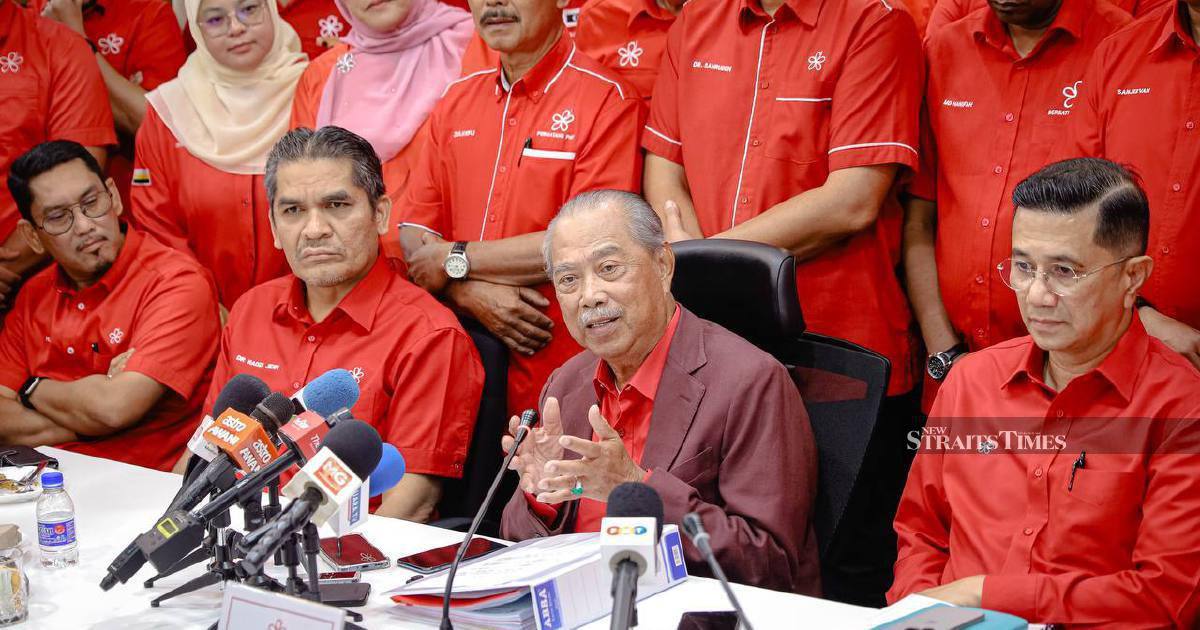
Parti Pribumi Bersatu Malaysia has signalled it stands ready to contest Johor state elections against Pas if coordinated seat arrangements between the two parties break down and they end up competing for the same constituencies. The declaration from party president Tan Sri Muhyiddin Yassin underscores the fragility of coalition arrangements ahead of potential state-level electoral contests, even as both parties nominally operate within the broader Perikatan Nasional alliance framework.
The statement reflects mounting tensions within the Perikatan alliance over seat distribution mechanisms and electoral strategy in Johor, a crucial state where competition for legislative seats carries significant implications for the bloc's overall political standing. Bersatu's readiness to go head-to-head with Pas suggests the party hierarchy is unwilling to accept unfavourable seat allocations that might marginalise its presence in the state, signalling a shift toward more assertive positioning ahead of potential elections.
Johor represents particularly contested political terrain within Perikatan Nasional, given the state's economic significance and the electoral weight it carries in national political calculations. The presence of multiple parties vying for influence within the alliance structure has long created friction over how available legislative seats should be distributed fairly among coalition members. Bersatu's stance indicates the party is prepared to prioritise its own electoral interests over maintaining alliance cohesion if negotiations over seat allocations prove unsatisfactory.
Muhyiddin's comments arrive at a moment when Perikatan Nasional itself faces questions about its long-term viability as a unified political force. The alliance has experienced considerable strain in recent years, with internal disagreements over strategy and resource allocation creating visible fractures. By publicly declaring its readiness to contest against Pas, Bersatu appears to be establishing negotiating parameters and signalling that it cannot be taken for granted when seat allocations are determined.
The prospect of direct electoral competition between Bersatu and Pas in Johor would represent a significant setback for Perikatan Nasional's unity narrative. Both parties have positioned themselves as integral components of the alliance, yet the inability to reach mutually acceptable seat-sharing arrangements would expose fundamental incompatibilities in their respective electoral ambitions. For Malaysian voters and political observers, such internal conflicts often prove more revealing about alliance dynamics than formal statements of collaboration.
Bersatu's electoral performance in Johor has varied considerably across recent contests, and the party faces pressure to maintain and expand its footprint in a state where it has historically held limited influence compared to other coalition partners. The party's willingness to countenance direct competition suggests its leadership believes that contesting more seats independently might yield better electoral outcomes than accepting restrictions imposed through alliance negotiations. This calculation reflects broader mathematical realities of vote-splitting and constituency demographics across Johor.
Pas, conversely, has established itself as a significant political force across Johor through years of organisational investment and religious mobilisation strategies. The party commands considerable grassroots support in many constituencies, giving it advantages in seat allocation discussions within any alliance framework. Bersatu's assertion that it is prepared to contest directly represents a deliberate challenge to any assumptions that Pas should receive preferential treatment in seat negotiations.
For the Perikatan Nasional alliance overall, such public declarations of readiness to contest against fellow coalition members create complications for maintaining the unified front that the bloc requires to pose a serious electoral challenge to other political combinations operating in Malaysia. The alliance's effectiveness depends partly on projecting an image of cohesion and agreed-upon strategy, making open discussions about potential intra-alliance electoral conflicts damaging to broader coalition interests.
The timing of Muhyiddin's statement carries implications for ongoing political discussions at the federal level, where Perikatan Nasional continues to navigate complex relationships with other political players. Any erosion of unity within the alliance weakens its negotiating position in national politics and potentially strengthens rival coalitions seeking to expand their own support bases. Malaysian political dynamics have repeatedly demonstrated that seemingly state-level disputes over seat allocation frequently ripple outward to influence national-level calculations and coalition arrangements.
Looking ahead, the actual outcome in Johor will likely depend on whether party leadership can negotiate acceptable compromises on seat distribution or whether the tensions highlighted by Muhyiddin's statement ultimately explode into open electoral competition. The period between now and any eventual state election will prove crucial for determining whether Perikatan Nasional can resolve internal contradictions or whether the alliance's organisational structures prove too weak to contain rivalries between member parties seeking to maximise their individual electoral returns.