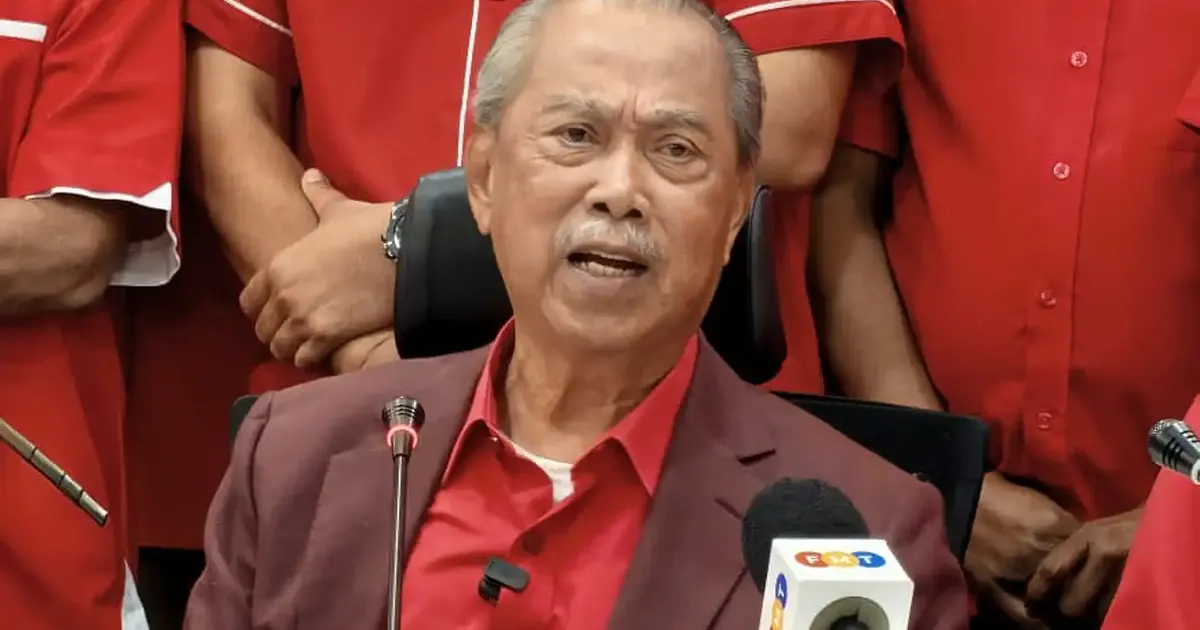
Bersatu has declared itself prepared to confront rival coalition partner PAS across all political and electoral fronts, according to statements from the party's leader Muhyiddin Yassin. The former prime minister's combative stance underscores deepening tensions within Perikatan Nasional, the opposition alliance that has governed Malaysia at the federal level since 2020. Muhyiddin's remarks signal that Bersatu intends to break ranks with its longtime ally on contested issues and mobilise its organisational resources to challenge PAS's political dominance in key regions.
The escalating rhetoric between Bersatu and PAS reflects underlying structural strains within the PN coalition, which has held together despite significant policy disagreements and competing leadership ambitions. As the two largest components of the opposition coalition, both parties harbour overlapping support bases and competing territorial claims across Malaysia's political geography. Muhyiddin's willingness to openly discuss confrontation with PAS suggests that coalition unity—already tested by disputes over Islamic governance frameworks and regional power distribution—faces serious testing ahead of critical electoral contests.
Bersatu has committed to presenting candidates under the Perikatan Nasional banner for the forthcoming elections in Johor and Negeri Sembilan, two states where political alignments remain in flux. This strategic positioning allows the party to maintain its formal coalition identity while signalling to voters and party members that it will aggressively pursue seats regardless of PAS preferences or existing power-sharing arrangements. The move carries significant implications for how PN presents itself to the electorate and whether the coalition can maintain unified messaging across multiple campaigns simultaneously.
Johor, Malaysia's second-largest state by population and a traditional stronghold of established political forces, represents crucial electoral terrain for any opposition coalition seeking to expand influence on the peninsula. The state's complex demographic composition and established political networks mean that electoral success requires careful navigation of urban-rural divisions and community-specific concerns. Bersatu's decision to contest there under PN colours indicates confidence in its ability to appeal to Johor voters while distinguishing its platform from PAS's Islamic-focused messaging, which may resonate differently across the state's diverse constituencies.
Negeri Sembilan, though smaller in electoral weight, holds symbolic importance as a swing state where political fortunes can shift rapidly based on localised issues and grassroots sentiment. The state's relatively cohesive electorate and tight-knit communities mean that personal relationships and trust-based politics often determine electoral outcomes more than broad ideological appeals. Bersatu's participation in these contests signals confidence that its organisational presence and political brand can generate support independent of PAS endorsements or coalition coordination.
Muhyiddin's framing of the impending contest as a multi-front struggle reveals the complexity of opposition politics in Malaysia, where parties must simultaneously maintain coalition discipline, pursue independent electoral interests, and manage the expectations of party members and supporters. The tension between these objectives has long characterised PN dynamics, forcing leaders to balance coalition loyalty with party self-interest. By explicitly stating willingness to fight PAS, Muhyiddin addresses internal Bersatu constituencies who worry that merger or absorption into a PAS-dominated coalition would dilute party identity and reduce opportunities for party members to secure political office.
The timing of Muhyiddin's declaration reflects broader questions about whether PN intends to function as a genuine coalition with negotiated seat allocations or as a loose confederation where constituent parties compete more or less freely within agreed geographic boundaries. This ambiguity has characterised PN's evolution since its formation, with different party leaders maintaining distinct interpretations of coalition obligations and constraints. Clarifying these fundamentals has become increasingly urgent as multiple state elections loom and both major components weigh electoral viability against coalition preservation.
For Malaysian voters and observers, these developments signal that opposition politics remains sufficiently fragmented and contested that coalition partners cannot take unity for granted. The willingness of significant opposition figures to openly discuss confrontation with allies suggests that personal and organisational rivalries continue to outweigh shared policy platforms or unified opposition strategy. This intra-coalition competition may ultimately benefit ruling coalition parties by dividing opposition resources and messaging, though it also keeps opposition coalitions energised through internal contestation that prevents complacency.
Bersatu's positioning reflects its historical identity as a party built around strong individual leadership rather than entrenched institutional structures or deep grassroots organisation. This characteristic has enabled rapid adaptation to changing political circumstances but has also created vulnerability to leadership disputes and coalition fractures. Muhyiddin's willingness to confront PAS directly positions him as a decisive coalition leader unwilling to subordinate party interests to broader alliance structures, potentially appealing to Bersatu members seeking protection of party autonomy and leadership prerogatives. The strategy also addresses perceptions among some party members that Bersatu has been overshadowed by PAS within PN structures, a concern that could threaten party cohesion if left unaddressed.
These electoral contests will provide crucial testing ground for whether Malaysian opposition coalitions can achieve sufficient unity to offer credible alternative governments while maintaining internal diversity. The Johor and Negeri Sembilan elections will reveal whether PN can present coordinated campaigns despite significant intra-coalition tensions, or whether competitive dynamics between Bersatu and PAS dominate campaign messaging and local political narratives. Success for either outcome will carry implications extending beyond these specific elections, potentially shaping opposition coalition structures and competitive dynamics heading toward a potential federal general election.