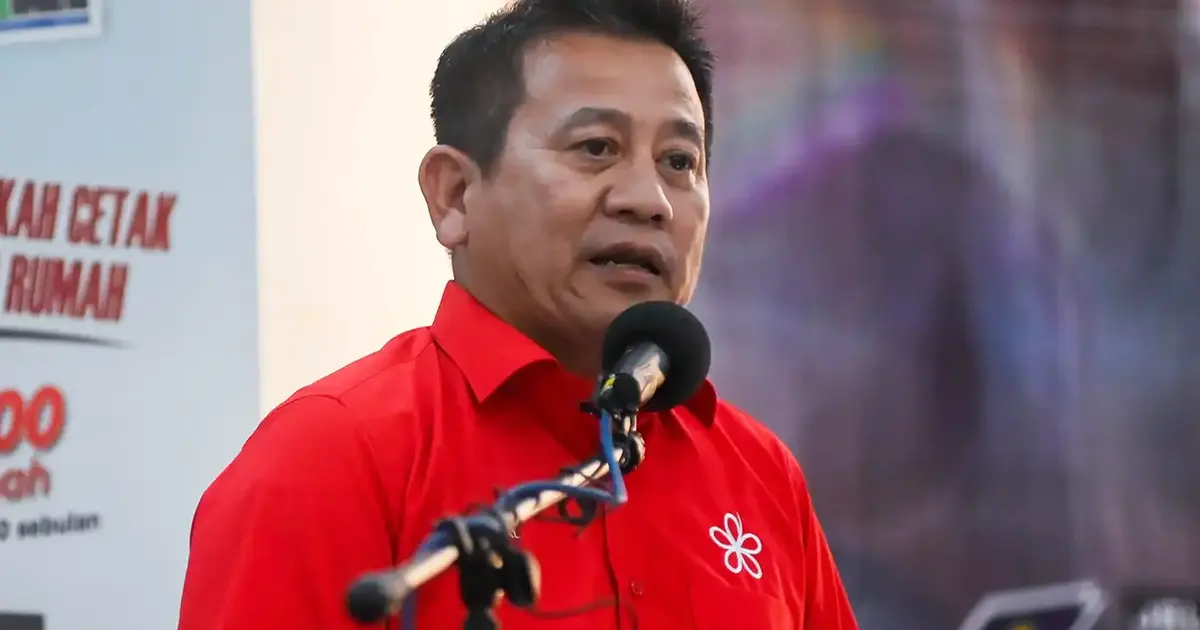
Tensions within Malaysia's ruling Perikatan Nasional coalition have surfaced anew, with Bersatu's information chief Tun Faisal Ismail Aziz publicly accusing PAS of leveraging organisational changes to consolidate its dominance within the alliance. The charge underscores deepening friction between the coalition's major Muslim-majority parties and raises critical questions about the long-term cohesion of the federal government's support base.
Tun Faisal's assertion that PAS is displaying an increasingly authoritarian posture marks an unusual moment of candour from a senior ruling-coalition figure. Rather than the diplomatic silence typically maintained in public discourse, the Bersatu official has chosen to articulate concerns about power dynamics that rank-and-file members may harbour but senior leaders rarely voice openly. This departure from convention suggests internal disagreements have reached a threshold where maintaining the facade of unity has become untenable for at least some party stalwarts.
The restructuring exercise referenced in Tun Faisal's complaint appears to have triggered wider anxieties about institutional design within Perikatan Nasional. Coalition structures are rarely neutral; the allocation of key positions, decision-making authority, and portfolio distribution invariably reflects—and reinforces—the balance of power between constituent parties. Any reshuffle thus becomes a theatre in which partners jostle for influence and attempt to lock in advantages for future negotiations.
PAS's position within Malaysian politics has evolved substantially over recent decades. Once considered a regional force concentrated in northeastern peninsular Malaysia, the party has progressively expanded its presence and ambitions following its entry into federal coalitions. The Islamist party's ability to capture votes across diverse constituencies and its organisational discipline have transformed it into a heavyweight that smaller partners must accommodate. For a party like Bersatu, which entered Perikatan Nasional as a relative newcomer with a smaller parliamentary footprint, navigating this asymmetry poses genuine strategic challenges.
Bersatu's own political trajectory adds context to this dispute. The party was founded by Muhyiddin Yassin in 2016 and rose to prominence as a splinter from the then-dominant United Malays National Organisation. Its entry into the Perikatan Nasional coalition in 2020 marked a tactical realignment that helped topple the previous Pakatan Harapan government. However, Bersatu remains vulnerable to marginalisation within coalitions where more established or larger parties dominate, a vulnerability that accumulated tensions may be bringing to the surface.
The specifics of how PAS might be consolidating control merit examination. Coalition dynamics typically involve competition over ministerial portfolios, positions within joint decision-making bodies, and influence over policy direction. If PAS has secured a disproportionate share of ministries, senior party officials in crucial roles, or leverage over contentious policy decisions, smaller partners like Bersatu would understandably grow restless. The appearance that procedural changes entrench such advantages rather than distribute them equitably would naturally provoke complaint.
For Malaysian observers, this development carries broader implications. Perikatan Nasional's stability has been questioned repeatedly since it assumed government following the November 2022 election. Multiple defections, parliamentary calculations that have sometimes appeared precarious, and periodic accusations of backroom manoeuvring have kept the coalition's durability under scrutiny. Public expressions of grievance by major coalition members amplify these concerns and signal to opposition parties that the ruling arrangement remains fragile.
The tensions between Bersatu and PAS also reflect deeper ideological and strategic differences that coalition membership has masked rather than resolved. Bersatu positions itself as a multiethnic alternative within Malay-Muslim politics, whilst PAS projects itself as the authentic voice of Islamic governance and Malay-Muslim interests. These competing visions create natural friction; any organisational arrangement that appears to favour PAS's vision at Bersatu's expense will provoke pushback grounded in more than mere calculations of ministerial position.
Regional politics across Southeast Asia demonstrates that coalitions built primarily on short-term convenience rather than shared ideology or institutional alignment tend to suffer internal friction. Malaysia's experience with the Perikatan Nasional arrangement follows this pattern. Without mechanisms to distribute power transparently or resolve disputes impartially, coalitions rely on the strength of interpersonal relationships and the perceived benefits of maintaining unity. As those relationships strain or benefits appear unequally distributed, such arrangements become vulnerable to breakdown.
Tun Faisal's public comments may also represent a negotiating position. By raising concerns about PAS dominance, Bersatu's leadership signals to coalition partners and observers that the party will not passively accept marginalisation. This stakes a claim for greater voice in future decision-making and signals that party members have limits to their tolerance for perceived unfair treatment. Whether this triggers genuine organisational reform or merely produces soothing rhetoric remains to be observed.
The immediate question is whether these accusations will prompt substantive discussion among coalition partners or whether they will be dismissed as posturing. Coalition survival often depends on leaders' willingness to accommodate grievances before they metastasise into ruptures. Should Perikatan Nasional's architects address Bersatu's concerns transparently—through mechanisms that distribute influence more equitably or create forums for meaningful dispute resolution—the coalition might stabilise. Conversely, should concerns fester unaddressed, the public airing of tensions may presage deeper realignments in Malaysian federal politics.