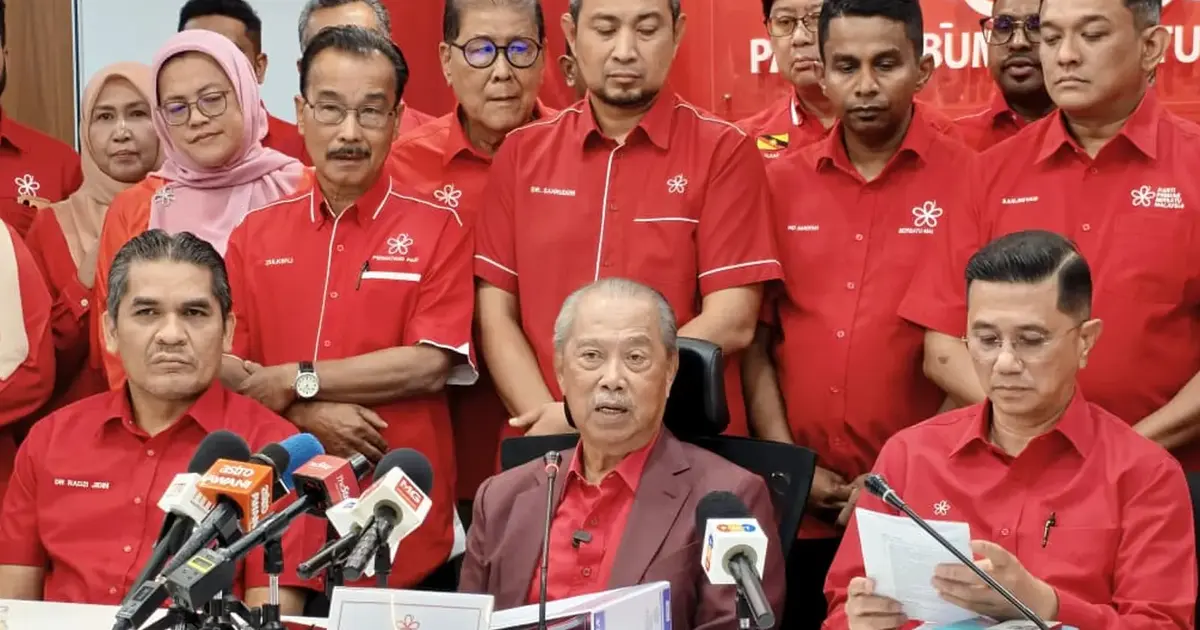
Bersatu president Muhyiddin Yassin has reaffirmed his party's commitment to remain a member of the Perikatan Nasional coalition, signalling stability within the opposition alliance at a time when Malaysian politics continues to experience significant shifts. The decision reflects Bersatu's assessment that the coalition maintains meaningful public support and represents a viable political force in the country's competitive electoral landscape.
Muhyiddin's statement comes as Perikatan Nasional continues to consolidate its position following the 2023 general election, where the alliance emerged as a significant challenger to the ruling unity government. The coalition, which includes PAS and various other components, has been working to strengthen its organizational structure and expand its appeal across different demographic and geographic segments of the Malaysian electorate.
The rationale presented by the Bersatu leader underscores how coalition politics in Malaysia increasingly depends on maintaining public perception and electoral viability. By anchoring Bersatu's continued participation to what he characterizes as general public acceptance, Muhyiddin is essentially arguing that the coalition remains a credible alternative government in the minds of voters. This framing proves significant because it suggests that internal party deliberations are informed by external feedback rather than purely factional considerations.
Bersatu's trajectory within opposition politics has been notable over the past several years. The party, which broke away from UMNO in 2016 and subsequently led the Pakatan Harapan government from 2020 to 2021, has undergone substantial repositioning. After the collapse of its government and the subsequent realignment, Bersatu's decision to anchor itself within Perikatan Nasional represents a deliberate strategic choice to build influence within a defined coalition framework rather than pursuing a centrist positioning.
For Southeast Asian observers, Bersatu's commitment to Perikatan Nasional illustrates the persistent challenges of coalition building in Westminster-influenced systems where parties must balance ideological coherence with electoral pragmatism. The coalition structure itself brings together parties with distinct constituencies and policy priorities, making sustained unity a continuous negotiation rather than an automatic outcome.
The public acceptance criterion cited by Muhyiddin warrants closer examination. In Malaysian politics, voter perception of a coalition's viability frequently shifts based on government performance, economic conditions, and the evolution of political narratives. A coalition maintaining public acceptance does not necessarily guarantee electoral success, but it does suggest that the grouping has not collapsed into irrelevance or internal dysfunction. For Bersatu specifically, being part of a coalition with visible public presence likely offers greater strategic opportunities than operating as an independent entity.
Bersatu's staying power within Perikatan Nasional also reflects the party's membership composition and leadership interests. Having committed to the coalition, departing would necessitate explanations that could undermine party unity and expose internal divisions. Muhyiddin's preemptive reaffirmation therefore serves to consolidate party discipline and signal to members that the coalition strategy remains the governing framework for political action.
The statement also carries implications for other coalition partners, particularly PAS, which exercises considerable influence within Perikatan Nasional. Bersatu's public recommitment provides reassurance to PAS that the alliance structure remains intact, facilitating continued coordination on policy and electoral strategy. Such assurances prove essential in multi-party coalitions where any perceived weakness by one member can trigger broader uncertainty.
Regionally, Malaysia's coalition dynamics reflect broader Southeast Asian patterns where opposition movements must navigate between unity and autonomy. The region has witnessed numerous coalition fractures where participating parties have exited due to ideological disagreements, personal rivalries, or perceived electoral disadvantages. Bersatu's choice to remain steadfast within Perikatan Nasional therefore positions it differently from some regional opposition movements that have experienced destabilization through internal departures.
The timing of Muhyiddin's statement also merits consideration. Clear affirmations of coalition commitment typically occur either in response to external speculation about potential exits or as part of internal party management efforts. In Malaysia's media environment, such statements frequently serve dual purposes: they address public discourse while simultaneously reinforcing organizational discipline among party members and supporters.
Looking forward, Bersatu's continued participation in Perikatan Nasional will likely depend on whether the coalition can maintain or enhance its public acceptance. Electoral performance in state-level contests and by-elections will provide crucial indicators of whether the coalition's public standing remains resilient. Should the coalition's prospects diminish significantly, Bersatu's leaders would face mounting pressure to reassess their strategic positioning, despite current commitments.
The opposition coalition framework that includes Bersatu continues to represent an important counterweight to the government, providing voters with a defined alternative power structure. In this context, Muhyiddin's reaffirmation of Bersatu's coalition commitment serves not only party interests but also contributes to Malaysia's multi-polar political landscape, where competitive alternatives remain available to the electorate.

