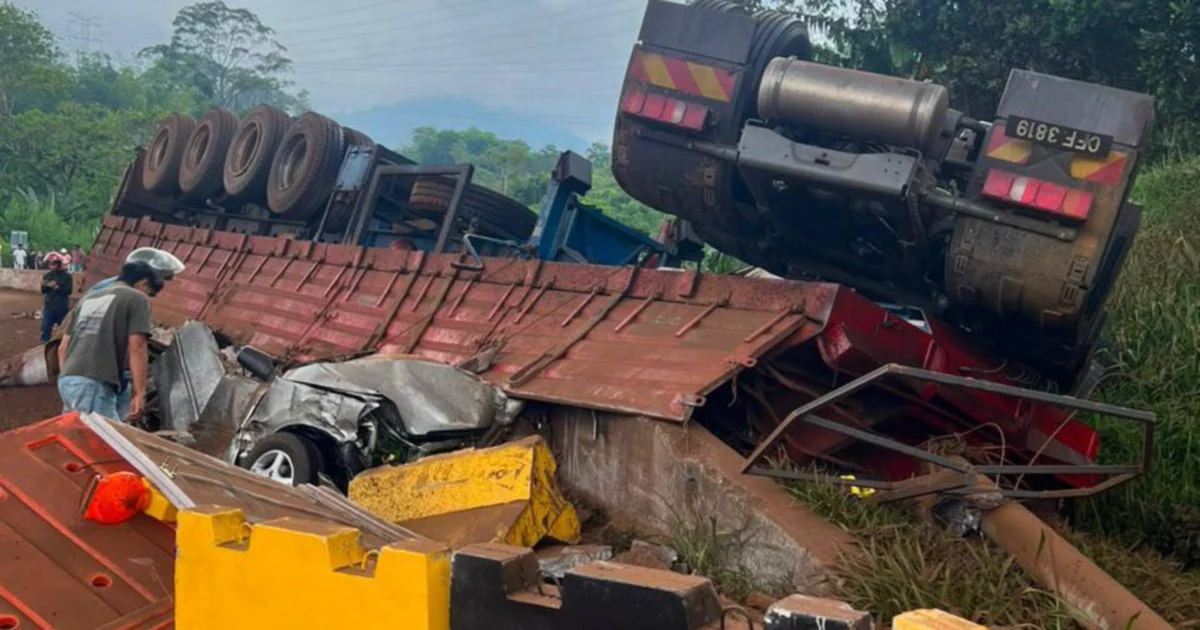
The heavy vehicle driver at the centre of a catastrophic collision on the Karak Expressway that claimed four lives has been granted police bail and released pending the conclusion of ongoing investigations. The incident, which occurred in Bentong on June 14, claimed multiple lives and has attracted significant attention given the severity of the outcome and the major transport corridor involved.
This development marks a significant juncture in the investigation into one of the peninsula's recent fatal highway accidents. The decision to release the driver on bail reflects standard investigative procedure in Malaysia's criminal justice system, where suspects are often granted conditional release whilst police compile evidence and conduct interviews. The bail conditions typically require the accused to report regularly to investigating officers and refrain from leaving the jurisdiction without permission.
The Karak Expressway remains one of Malaysia's busiest and most economically vital transport routes, connecting the Klang Valley to the east coast and serving as a crucial artery for commercial and passenger traffic. Accidents on this corridor garner heightened scrutiny due to the volume of large vehicles, including trailers and heavy goods vehicles that traverse it daily. The fatality rate on expressways has been an ongoing concern for the Road Transport Department and police authorities, with speed, driver fatigue, and mechanical failure frequently cited as contributing factors.
Fatal multi-vehicle incidents involving trailers often trigger comprehensive investigations into multiple aspects—including the driver's hours of work compliance, vehicle maintenance records, road conditions at the time of the incident, and the actions of other motorists involved. Malaysian traffic regulations impose strict requirements on heavy vehicle operators regarding rest periods and maximum driving hours, though enforcement remains inconsistent across the country. The police bail granted here allows investigators to pursue these lines of inquiry without detaining the suspect indefinitely.
The loss of four lives in a single incident underscores the inherent dangers present on Malaysia's highways, particularly when large vehicles are involved. Trailers, due to their mass and the difficulty in controlling them at high speeds or during emergency braking, present unique hazards that require specialised driving skills and heightened awareness from all road users. The corridor where this crash occurred has seen various accidents over the years, raising questions about whether additional safety infrastructure or enforcement measures might be warranted.
For Malaysian motorists and commercial transport operators, this incident serves as a stark reminder of the consequences of unsafe driving practices. Whether the investigation ultimately determines that excessive speed, mechanical failure, or driver inattention played a role, the outcome reinforces the importance of vehicle maintenance, adherence to traffic laws, and maintaining appropriate defensive driving habits, particularly in heavy traffic zones and during peak travel periods.
The investigation process in Malaysia typically involves multiple agencies, including the Royal Malaysia Police, the Road Transport Department, and sometimes the Malaysian Institute of Road Safety Research, each contributing their expertise. Reconstructing the sequence of events leading to the collision often requires examination of vehicle damage, skid marks, witness testimony, and increasingly, analysis of dashboard camera footage and vehicle telemetry data. These investigations can extend over several months before charges are formally filed.
The bail arrangement does not indicate guilt or innocence but rather reflects the status of the investigation at this stage. The driver remains presumed innocent until such time as sufficient evidence is gathered and a decision is made regarding formal charges. This procedural step is important for both the legal protection of the accused and for ensuring the integrity of the investigation itself, as prolonged detention can sometimes complicate fact-finding efforts.
For the families of those killed, this period of ongoing investigation often brings continued anguish as the judicial process unfolds incrementally. Malaysian law provides for civil remedies through road accident claims, and criminal charges may eventually be pursued depending on the investigating team's findings. The specific charges available could range from causing death by rash or negligent act to more serious offences depending on the circumstances established through investigation.
The implications of this case extend beyond the immediate parties involved. Highway safety in Malaysia remains a significant public health concern, with fatal accidents claiming thousands of lives annually. Incidents like this one tend to reignite public debate about enforcement of speed limits, mandatory rest periods for commercial drivers, and whether penalties for traffic violations sufficiently deter reckless behaviour. Authorities frequently cite the need for improved driver discipline and stricter adherence to safety protocols as essential to reducing the nation's road accident toll.
As the investigation continues, this bail decision allows the driver to return to some form of normalcy whilst remaining subject to police oversight. The eventual outcome—whether resulting in prosecution, acquittal, or other judicial resolution—will be closely watched by road safety advocates, commercial transport associations, and the public more broadly. Until charges are formally laid, the full details surrounding the collision remain part of the active police inquiry.

