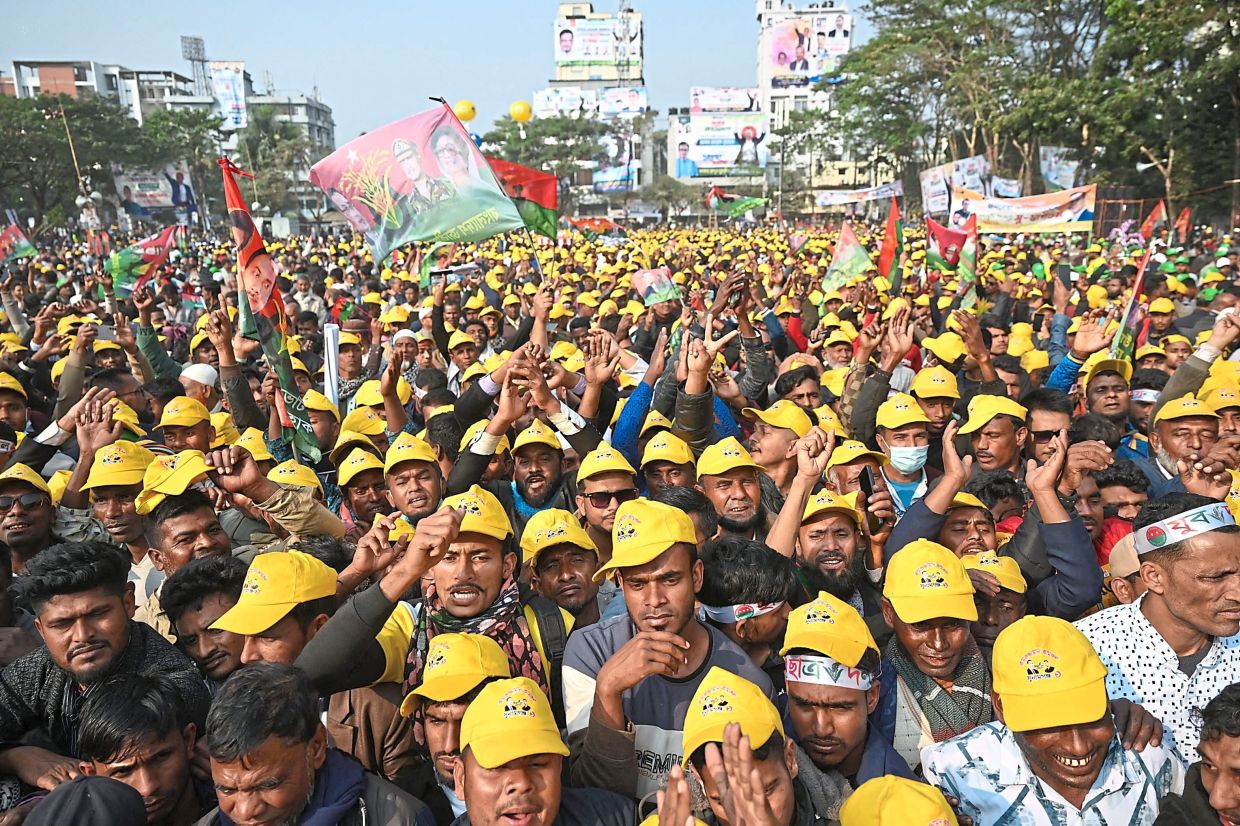
Bangladesh's parliament is preparing to elect Mirza Fakhrul Islam Alamgir as the nation's 23rd president on Thursday, marking another significant milestone in the country's political transition following the 2024 revolution. The 78-year-old, who serves as secretary general of the ruling Bangladesh Nationalist Party (BNP) and holds the local government portfolio, is widely expected to secure the five-year term with substantial parliamentary backing. His election represents a consolidation of power by Prime Minister Tarique Rahman's BNP, which dominated February's elections by a decisive margin—the first national polls held since the uprising that removed Sheikh Hasina from office.
Alamgir's path to the presidency has been marked by a mixture of humility and pragmatism. In a statement to reporters, he expressed surprise at the development, attributing his nomination to the party's confidence and divine providence. "I never thought that I would become the president -- it is the infinite grace of the party and almighty Allah," he remarked, while pledging to maintain close connections with ordinary citizens even in his elevated position. These carefully calibrated comments suggest awareness of the expectations surrounding a figurehead role during a delicate period of democratic reconstruction.
The presidential vote unfolds against a backdrop of dramatic political upheaval in Bangladesh over the past year. Mohammed Shahabuddin, Alamgir's predecessor, stepped down in July after citing health concerns—a departure that relieved mounting pressure from civil society and reform advocates who questioned his suitability for office. Shahabuddin, who was aligned with the deposed Hasina administration, had assumed the presidency in 2023 but found his position increasingly untenable following the revolutionary upheaval. His resignation effectively removed a symbolic link to the previous regime and created space for the new political order to assert itself through institutional channels.
The context surrounding this election extends beyond Bangladesh's borders and carries implications for regional stability and democratic legitimacy in South Asia. Sheikh Hasina, who orchestrated one of Asia's most draconian administrations before her ouster, currently resides in self-imposed exile in India. Her absence from Bangladesh is not merely physical—in November, she was convicted in absentia of crimes against humanity and sentenced to death, a judgment that underscores the severity of abuses documented during her tenure. International human rights organisations had meticulously catalogued systematic violations including extrajudicial killings of political opponents, dismantling of independent judiciary mechanisms, suppression of press freedoms, and manipulation of electoral processes to eliminate genuine competition.
Alamgir's ascent to the presidency carries particular significance given his own experience as a victim of political persecution under Hasina's rule. During the previous administration, he faced repeated arrest and was charged with numerous offences that he and observers contended were politically motivated rather than grounded in legitimate criminal wrongdoing. His resilience through these trials, combined with his role in maintaining the BNP's organisational cohesion during a period when party chief Khaleda Zia languished in incarceration and her son—current Prime Minister Rahman—was forced into exile, has established him as a figure of considerable symbolic importance within the party hierarchy.
The veteran politician's background reveals a career spanning multiple sectors and political environments. Born on January 26, 1948, Alamgir initially pursued academic interests, studying economics at Dhaka University where he simultaneously emerged as a prominent student activist. During the 1969 uprising against Pakistan's military dictatorship, he participated in the student movement that presaged the independence struggle which would culminate two years later. After completing his education, he transitioned into academia before eventually entering government service and electoral politics, accumulating ministerial experience in agriculture, aviation and tourism portfolios across his career.
The parliamentary vote itself will proceed under relatively straightforward procedures. Alamgir faces a single opposing candidate, Oli Ahmed, nominated by an eleven-party coalition led by Jamaat-e-Islami, the country's largest Islamist organisation. The voting is scheduled to commence around 2 p.m. local time, with the mathematical likelihood of Alamgir's victory reflecting the BNP's commanding parliamentary majority secured in February's elections. This outcome is essentially predetermined, raising questions about whether opposition participation in the vote serves primarily to maintain procedural legitimacy and the appearance of contested elections.
For Malaysia and other Southeast Asian democracies, the Bangladesh developments offer instructive lessons about the fragility of institutional safeguards and the importance of vigilant civil society oversight. The revolutionary upheaval that displaced Hasina demonstrated that sustained grassroots mobilisation can overturn even deeply entrenched authoritarian systems, yet the subsequent transition period reveals how quickly new elites can consolidate power through nominally democratic mechanisms. Alamgir's election as president, while symbolically representing continuity with the new order, also reflects the BNP's determination to occupy institutional commanding heights during a fluid political moment.
Alamgir's personal life reflects the qualities of stability and discretion that may serve him well in a largely ceremonial constitutional role. He is married to Rahat Ara Begum, a retired financial sector professional, and the couple has two daughters. This relatively low-profile family background contrasts with the dynastic politics that has long dominated Bengali political culture, though the BNP itself remains substantially organised around the Zia family legacy. His appointment represents both continuity and potential change—continuity in BNP dominance, but possibly a step toward broader-based leadership structures within the party.
The broader significance of Alamgir's presidential election lies in how it symbolises Bangladesh's transition from revolutionary rupture to institutional normalisation. The presidency, while ceremonial in constitutional terms, carries substantial symbolic weight in post-conflict societies attempting to rebuild faith in state institutions. Alamgir's background as both a victim of authoritarian abuse and a custodian of party discipline during exile periods positions him as a bridge figure between the revolutionary moment and the mundane processes of governance. Whether this transition can produce genuine institutional accountability and pluralistic democratic practice, rather than simply replacing one autocratic system with another version of patronage-based authoritarianism, will determine whether Bangladesh's 2024 revolution ultimately achieves its transformative potential.

