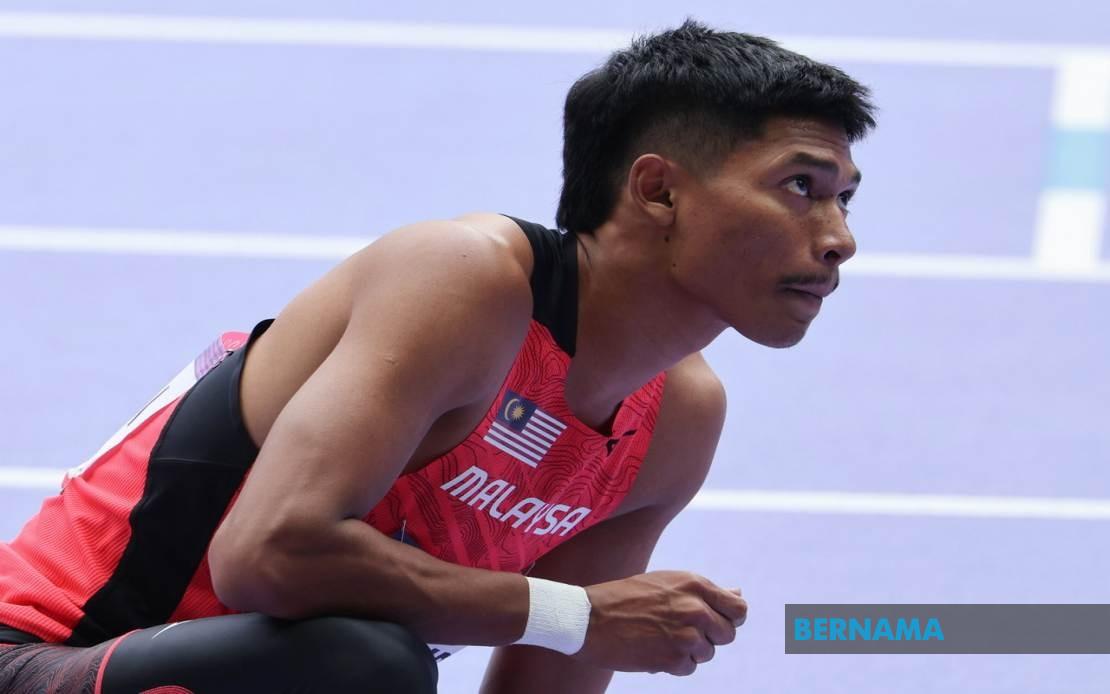
Muhammad Azeem Mohd Fahmi, Malaysia's national 100-metre record holder, has signalled his intention to establish his athletics base domestically after wrapping up his university education at Auburn University in the United States. The 22-year-old sprinter, who holds the national mark of 10.09 seconds, announced that he will forgo any immediate return to America in favour of deepening his roots in Malaysia during what represents a crucial transition phase in his career.
Azeem's decision reflects a broader shift in perspective following four years abroad, during which he pursued tertiary education while competing at the collegiate level. His deliberate choice to remain on home soil underscores the significance he places on familial connections and the support network that has proved instrumental throughout his athletic development. Speaking to reporters, he articulated a philosophy centred on gratitude and recognition of the people who have invested in his journey, viewing his return as an opportunity to reinvest in those relationships.
The sprinter's commitment to staying in Malaysia carries meaningful implications for domestic athletics. His presence provides motivation for younger aspiring track athletes and demonstrates that elite performance can be sustained within the country's sporting infrastructure. Additionally, his decision potentially strengthens the depth of Malaysia's sprint contingent at regional and international competitions, where representation has historically been competitive but inconsistent. The retention of home-grown talent with proven credentials at international university standards adds credibility to local athletic programmes.
Azeem's training framework moving forward represents a thoughtful hybrid approach that marries international expertise with domestic operational capacity. His American coach Ken Harnden, who mentored him during his Auburn years, will continue designing his training programmes from afar. This arrangement allows Malaysia to benefit from world-class coaching methodologies without requiring the athlete to relocate. Local coach Muhammad Amir Izwan Tan Abdullah will assume responsibility for day-to-day supervision and implementation, ensuring continuity and cultural familiarity while maintaining the technical standards Azeem has developed.
This coaching arrangement reflects growing sophistication in how Malaysian sports organisations can leverage global expertise while maintaining domestic infrastructure. Rather than viewing overseas-based coaching as an either-or proposition, the configuration Azeem will operate under suggests a more nuanced understanding of how to access elite training without sacrificing the advantages of familiarity and established relationships. Such models could potentially be replicated across other disciplines and younger athletes seeking to improve their competitive standing.
The sprinter's academic plans complement rather than compete with his athletic objectives. Azeem has articulated an intention to eventually pursue postgraduate studies, yet he has prudently recognised that the immediate period demands undivided attention to his competitive development. This measured approach acknowledges that elite athletes typically operate within narrow performance windows, and that maximising his current physical capacity should take precedence. His willingness to defer academic advancement temporarily demonstrates maturity in understanding career prioritisation, a quality that often distinguishes athletes who sustain high-level performance from those who plateau.
From a Southeast Asian perspective, Azeem's trajectory illustrates a growing pattern of regional athletes leveraging American university athletic systems for development before returning home with enhanced credentials. Auburn University, where he completed his degree, operates one of the United States' prominent track and field programmes, positioning Azeem within a global network of elite sprint development. His return to Malaysia with this pedigree elevates the profile of domestic athletics and potentially attracts younger competitors to pursue similar pathways, knowing that international development need not mean permanent departure.
The timing of Azeem's repatriation also carries significance for Malaysia's competitive calendar. The next several months represent critical preparation periods for regional championships and potential Olympic qualifying windows. His presence and availability for domestic competition immediately strengthens Malaysia's capacity to compete in sprint events where regional rivals, particularly from Thailand, Indonesia, and the Philippines, have shown competitive strength. His national record and international experience position him as a potential benchmark-setter for emerging sprinters.
Azeem's emotional connection to his support system—parents, siblings, coaches, and friends—mirrors sentiments expressed by many Malaysian athletes who undertake overseas education. The specific mention of family as a motivating force reflects cultural values that remain deeply rooted despite globalisation pressures. His articulation of these sentiments may resonate with other young Malaysian athletes contemplating international opportunities, potentially influencing their own decisions regarding return migration and long-term career bases.
Looking forward, Azeem's commitment to Malaysia-based training creates an interesting case study in athlete retention. Whether his performance trajectory improves, plateaus, or declines during this domestic-focused phase will carry implications for future athletes considering similar choices. Successful sustained improvement could validate the model; any regression might prompt questions about whether international competitive environments offer advantages that domestic training cannot replicate. The coming months will provide empirical evidence regarding the viability of his chosen approach.
The sprinter's announcement also reflects broader conversations within Malaysian sports management about talent retention and career pathway design. Creating conditions attractive enough for internationally-educated athletes to remain domestically requires investment in coaching quality, competitive opportunities, and support infrastructure. Azeem's willingness to base himself in Malaysia suggests that such conditions increasingly exist, or at minimum, that his personal circumstances and values outweigh any performance-related advantages of remaining abroad.

