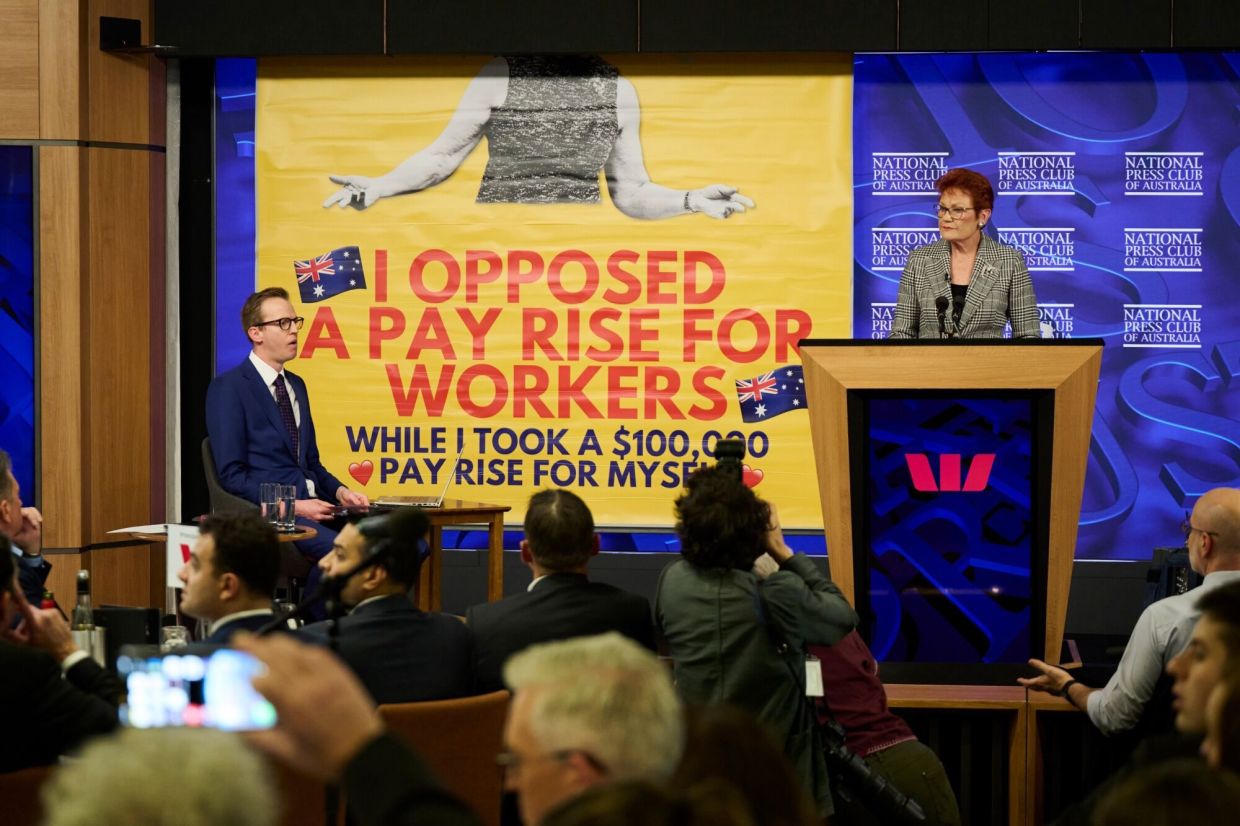
Pauline Hanson, leader of Australia's One Nation party, has launched a frontal assault on multiculturalism as a foundational policy, declaring that the country cannot sustain a multicultural society despite its racial diversity. Speaking at the National Press Club in Canberra on Wednesday, she positioned abandonment of multicultural frameworks as central to solving Australia's worsening housing affordability crisis, a concern increasingly dominating public discourse across the nation. The speech marked the first time in her three decades of political involvement that Hanson has addressed the prestigious venue, underscoring the significance she places on repositioning her party's message around economic grievances rather than cultural anxieties alone.
Hanson's articulation distinguishes between racial and cultural identity, arguing that while Australia must acknowledge its multiracial composition, citizens should operate within a singular cultural framework. Her formulation of "one cultural umbrella" represents a deliberate rhetorical repositioning that attempts to move beyond explicit racial arguments while maintaining essentialist claims about shared values and social cohesion. This framing aligns with similar populist movements across Western democracies that have repackaged restrictive immigration rhetoric around integration and social unity rather than ethnicity, making such positions appear more moderate to mainstream audiences while fundamentally maintaining restrictive policy objectives.
The One Nation leader tied immigration policy directly to Australia's housing crisis, a connection that resonates powerfully with voters facing skyrocketing property prices and rental costs. By attributing accommodation shortages to "extremely high levels of immigration," Hanson offers a straightforward narrative explanation for complex economic phenomena, appealing to voters frustrated by housing unaffordability. This approach exemplifies what political analysts call grievance-based populism, which identifies a discrete enemy responsible for widely felt economic pain, offering policy solutions that appear simple and decisive to voters seeking relief from genuine material pressures.
Hanson's proposal to "slash" migration levels includes targeting individuals from regions she characterises as "immersed in extremism like radical Islam," language that resurrects security-focused objections to immigration while maintaining her stated focus on cultural rather than racial criteria. This formulation conflates geography, religion, and extremism in ways that effectively target majority-Muslim regions and nations, demonstrating how cultural nationalism can function as a proxy for more explicitly exclusionary positions. For Malaysian observers, such rhetoric carries particular relevance given regional security concerns and the significant Malaysian diaspora in Australia, many of whom hail from Muslim-majority backgrounds.
One Nation's recent surge in opinion polling reflects broader shifts in Australian voter sentiment following the centre-right coalition's electoral collapse in May of the previous year. The party has capitalised on widespread economic dissatisfaction, with public confidence eroding amid resurgent inflation, rising interest rates, and elevated fuel costs exacerbated by geopolitical tensions in the Middle East. These material conditions create receptiveness to populist messaging that attributes economic dysfunction to immigration policy rather than structural economic factors or global forces beyond any government's direct control.
Prime Minister Anthony Albanese's Labor government has pursued conventional policy responses designed to provide immediate relief without fundamentally restructuring immigration frameworks. Temporary reductions in fuel excise duty and tax reform initiatives aimed at improving housing affordability represent targeted interventions that acknowledge public distress while maintaining commitment to broadly progressive immigration and multicultural policies. However, these measures have proven insufficient to arrest One Nation's political momentum, suggesting that economic anxiety has metastasised into deeper concerns about national identity and social change among significant voter cohorts.
Albanese has explicitly diagnosed the underlying political dynamics as a manifestation of "simplistic grievance based politics," attributing populist appeals to legitimate frustrations that conventional policy responses have failed to adequately address. His analysis suggests that voters turning toward One Nation are responding rationally to an economic system that increasingly fails to deliver security and opportunity, with populist messaging providing emotional validation alongside policy promises. This interpretation implies that dismissing One Nation supporters as prejudiced oversimplifies the material foundations undergirding their political choices, though it does not necessarily validate the policy prescriptions Hanson advocates.
The convergence of economic pressure and cultural anxiety presents particular challenges for multicultural societies across Southeast Asia and the Pacific region. Australia's experience demonstrates how housing crises and cost-of-living pressures can catalyse political movements that challenge longstanding commitments to immigration and cultural diversity. Malaysian policymakers navigating their own ethnic and religious pluralism may observe how economic dysfunction becomes channelled through identity politics, as voters seek explanatory frameworks that assign responsibility and promise solutions.
For Malaysia specifically, Australia's populist surge carries implications for bilateral relations and regional security cooperation. Hanson's emphasis on restricting immigration from Muslim-majority regions could affect Australian visa policies impacting Malaysian citizens and professionals, while her party's rise signals broader Western ambivalence toward Muslim integration that reverberates through diplomatic channels. Additionally, One Nation's ascendancy may embolden similarly positioned groups across the region while complicating Australia's positioning as a reliable multicultural democracy within the Indo-Pacific.
The fundamental tension Hanson's position exposes concerns whether mature democracies can manage simultaneous commitments to immigration, economic growth, and housing affordability while maintaining social cohesion around shared cultural norms. Her proposed solution—dramatic migration reduction and cultural assimilation—represents a particular answer to this dilemma, one that many societies have implicitly rejected. Yet the electoral support One Nation attracts suggests that alternatives offering genuine relief from housing unaffordability while sustaining immigration would require more comprehensive policy innovation than either major Australian party has yet proposed.

