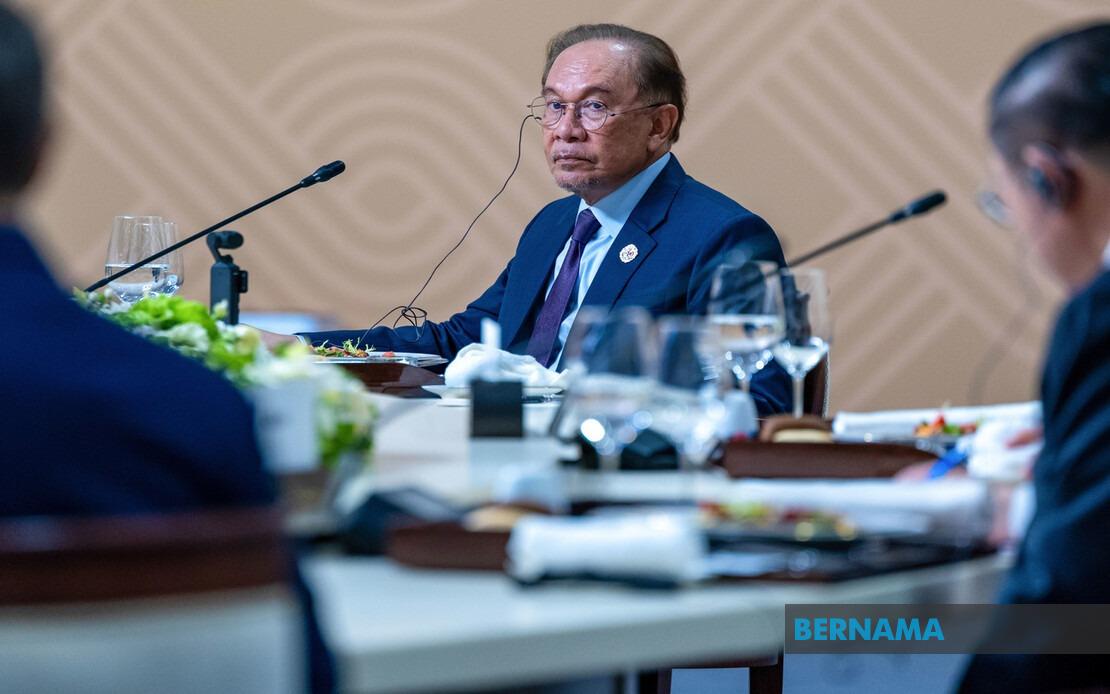
Prime Minister Datuk Seri Anwar Ibrahim has called for ASEAN and the Shanghai Cooperation Organisation to merge their capabilities in tackling cross-border crime and advancing energy cooperation, arguing that both challenges demand coordinated regional action rather than isolated national responses. Speaking during an ASEAN-Russia working lunch in Kazan on June 18, Anwar outlined how the two blocs could leverage their existing institutional foundations to achieve tangible results within realistic timeframes, moving beyond general statements of intent to concrete operational collaboration.
The two organisations already possess a substantive basis for expanded cooperation through their 2005 memorandum of understanding, which encompasses counter-terrorism initiatives, drug and narcotic enforcement, money laundering prevention, and various frameworks for economic, financial and energy partnership. Rather than negotiating new agreements, Anwar suggested the priority should be revitalising and deepening these existing channels by concentrating on specific domains where measurable breakthroughs are achievable. This pragmatic approach reflects growing recognition within ASEAN that formal structures alone deliver little unless backed by dedicated resources and political commitment to implementation.
The proliferation of digitally-enabled transnational crimes presents an increasingly urgent regional challenge that individual countries struggle to counter effectively. Online financial scams, illicit money flows and human trafficking networks routinely operate across multiple jurisdictions with speed and sophistication that outpace national law enforcement responses. By establishing systematic intelligence-sharing protocols and building reciprocal capacity-development programmes, ASEAN and SCO members could significantly enhance their ability to detect, investigate and prosecute these crimes. For Malaysia and other regional economies vulnerable to organised transnational crime, such cooperation directly impacts internal security, financial system integrity and protection of vulnerable populations.
Anwar, who also holds the Finance portfolio, emphasised the strategic value that SCO members bring to energy cooperation given their concentration of major production capacity and technological expertise. The organisation encompasses countries with substantial hydrocarbon reserves and advanced capabilities in energy infrastructure, renewable integration and grid management. This combination creates genuine opportunities for practical collaboration beyond the symbolic gestures that often characterise regional energy dialogues. Malaysia's own energy transition priorities—including liquefied natural gas capacity, renewable energy integration and grid stability improvements—align naturally with expertise available within the SCO framework.
Energy security cooperation should focus on concrete initiatives spanning multiple dimensions. Technology transfer arrangements for energy efficiency standards, joint planning on grid reliability during the transition to cleaner energy sources, and coordinated approaches to LNG market dynamics would address shared vulnerabilities. Knowledge exchange on safety protocols and system resilience proves particularly valuable given the interconnected nature of regional energy supplies and the potential for disruptions in one jurisdiction to cascade across borders. For Malaysia's manufacturing sector and growing electricity demand, access to SCO expertise in grid modernisation and renewable integration directly supports industrial competitiveness and long-term energy affordability.
The Prime Minister extended his cooperation framework to encompass the Eurasian Economic Union, highlighting how ASEAN and the EAEU possess adequate legal and institutional structures awaiting activation through sustained engagement. He stressed that commercial confidence between regional business communities remains underdeveloped despite these frameworks, reflecting insufficient direct interaction and limited familiarity with market opportunities. Expanding private sector participation in bilateral trade events, investment forums and business dialogues would help overcome information gaps that currently inhibit cross-regional commercial expansion. Small and medium enterprises particularly require targeted support to navigate regulatory requirements, access technologies and develop skills necessary for participation in larger regional markets.
Market access represents a critical constraint limiting ASEAN-EAEU trade potential, as many smaller firms lack resources to research tariff regimes, certification requirements and buyer networks in partner economies. Structured capacity-building programmes addressing technical standards compliance, export documentation procedures and supply chain integration would lower barriers to market entry. Similarly, technology transfer arrangements benefiting ASEAN companies seeking to upgrade production capabilities would strengthen their competitiveness in both regional and global markets. For Malaysia's small business sector, such initiatives could open significant market opportunities while simultaneously improving productivity and export quality.
Emerging technological and sectoral overlaps demand coordinated attention as ASEAN and EAEU interests converge in digital economy development, artificial intelligence governance, cybersecurity frameworks and food security resilience. These domains involve regulatory challenges and market opportunities that transcend individual national capacity, making regional collaboration essential. Digital economy cooperation might encompass standards harmonisation, fintech regulatory frameworks and e-commerce logistics coordination. Food security cooperation addresses both supply chain vulnerabilities exposed by geopolitical disruptions and longer-term agricultural sustainability challenges requiring knowledge-sharing on climate-resilient farming practices and supply diversification.
Cybersecurity cooperation carries particular significance given the mutual vulnerability of both ASEAN and EAEU members to state and non-state cyber threats. Establishing shared threat intelligence platforms, coordinated incident response protocols and capacity-building programmes would strengthen collective resilience while advancing individual national security objectives. This dimension of cooperation also supports digital economy development by building confidence in cross-border digital transactions and cloud services. Malaysian companies increasingly operate across regional markets through digital platforms, making cybersecurity assurance a prerequisite for further economic integration.
Anwar's emphasis on building actionable cooperation from existing frameworks rather than negotiating new agreements reflects diplomatic maturity and realistic assessment of regional political dynamics. Many regional organisations suffer from proliferation of agreements that gather dust while actual cooperation remains minimal. Concentrating resources on selected priority areas where mutual interest converges and expertise overlaps offers greater probability of sustained implementation. This approach also acknowledges capacity constraints within regional bureaucracies and development gaps between member states requiring differentiated support mechanisms. Malaysia's role as ASEAN chair and respected EAEU interlocutor positions it to facilitate such practical cooperation pathways, potentially strengthening its diplomatic influence while advancing genuine regional integration.
The Prime Minister's visit to Kazan for the ASEAN-Russia Commemorative Summit provided the platform for advancing this cooperation agenda directly with Russian leadership. Russia's role within both ASEAN dialogue frameworks and the broader SCO structure positions it as a key facilitator of enhanced regional coordination. By framing cooperation in terms of shared vulnerabilities and mutual interests rather than geopolitical competition, Anwar offered an approach emphasising pragmatism over ideological positioning—an appealing framework for diverse member states navigating complex international relationships. For Southeast Asia, deepening substantive cooperation on transnational crime, energy security and digital economy governance strengthens regional autonomy and stability independent of broader great power dynamics.

