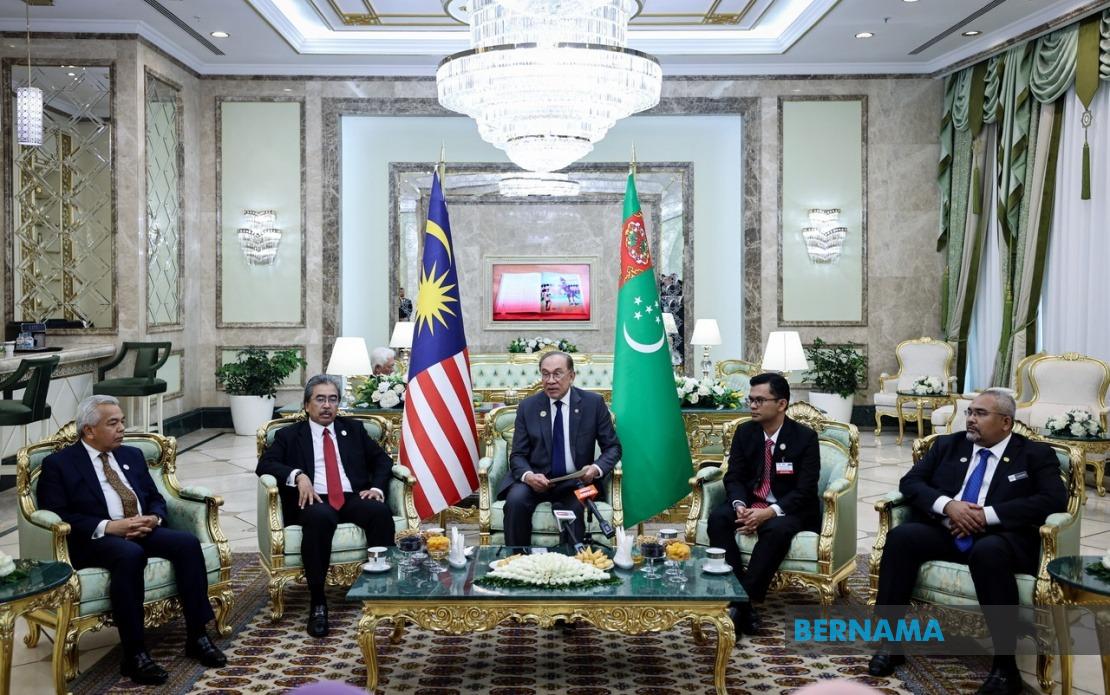
Prime Minister Datuk Seri Anwar Ibrahim has characterised his official working visit to Turkmenistan as a productive engagement that has yielded concrete results for Malaysia's diplomatic interests in Central Asia. The two-day visit, which commenced on June 18, represents a significant milestone in cementing friendly relations between the two nations and advancing strategic cooperation across multiple domains. Speaking from Kuala Lumpur on June 19, Anwar underscored how the mission successfully achieved its primary objectives while establishing the groundwork for enhanced ties moving forward.
The visit carried particular significance as Anwar's maiden official journey to the Central Asian nation since his appointment as Malaysia's 10th Prime Minister in November 2022, undertaken at the formal invitation of President Serdar Berdimuhamedov. This timing reflects Malaysia's deliberate effort to broaden its diplomatic footprint beyond traditional Southeast Asian partnerships and cultivate relationships with resource-rich nations that offer complementary economic opportunities. For a country heavily dependent on energy imports, establishing stronger connections with energy-producing nations holds strategic value in diversifying supply sources and securing long-term economic stability.
Energy cooperation emerged as a cornerstone theme throughout the engagement, with Anwar emphasising the substantial untapped potential in this sector that both nations can harness for mutual prosperity. Turkmenistan, blessed with abundant natural gas reserves and sitting at a crossroads of regional energy flows, represents an attractive partner for Malaysia's long-term energy security strategy. The dialogue between the two delegations evidently focused on identifying concrete mechanisms through which Malaysian entities, particularly PETRONAS, could deepen involvement in Turkmenistan's hydrocarbon sector. Such partnerships would complement Malaysia's existing energy portfolio and provide alternative revenue streams while positioning local expertise in international markets.
The delegation accompanying Anwar was deliberately composed to maximise the visit's commercial and investment dimensions. Minister of Investment, Trade and Industry Datuk Seri Johari Abdul Ghani and Minister of Economy Akmal Nasrullah Mohd Nasir travelled alongside the Prime Minister, signalling Malaysia's intent to translate diplomatic warmth into tangible business arrangements. The presence of PETRONAS officials underscored the national oil and gas company's pivotal role in executing any collaborative ventures that might emerge from these high-level discussions. Such multi-ministerial delegations typically indicate that host nations and Malaysian leadership have ambitious plans for expanding the relationship beyond ceremonial exchanges.
Anwar's acknowledgement of the warm reception extended by President Berdimuhamedov and Turkmenistan's government apparatus reflects the cordial atmosphere in which negotiations transpired. Diplomatic courtesy in such statements serves multiple purposes: it reinforces personal rapport between leaders, signals respect for the host nation's hospitality, and establishes positive momentum for future interactions. The Prime Minister's specific commendation of the Malaysian Embassy in Ashgabat, security personnel, and media contingents demonstrates awareness that successful high-level visits depend on meticulous coordination across multiple institutional layers. For Malaysian readers, such attention to operational details highlights the professionalism expected in representing national interests abroad.
The characterisation of this engagement as opening a new chapter in bilateral cooperation suggests that previous relations, while cordial, may have lacked the intensity or strategic focus that Malaysia now wishes to introduce. Central Asian nations have historically attracted less attention from Southeast Asian governments compared to traditional partners in the Middle East or Europe. Anwar's personal visit signals a deliberate recalibration of Malaysia's foreign policy compass, recognising that Central Asia's geopolitical importance and resource wealth warrant closer engagement. This repositioning aligns with Malaysia's broader strategy of maintaining strategic autonomy by diversifying partnerships rather than concentrating relationships in any single region.
The visit's emphasis on mutual interest areas beyond energy suggests that Malaysian policymakers recognise opportunities for broader collaboration. While energy naturally dominates initial discussions with resource-rich nations, sustainable partnerships typically evolve to encompass trade, investment, technology transfer, educational exchanges, and cultural cooperation. Turkmenistan's position along the historic Silk Road routes and its emergence as a potential transit hub for regional commerce creates additional dimensions for Malaysia to explore. For businesses seeking expansion opportunities into Central Asian markets, stronger governmental relationships facilitate market entry and reduce transactional uncertainties.
From a Southeast Asian perspective, Malaysia's strengthened ties with Turkmenistan contribute to a broader regional narrative of enhanced ASEAN engagement with Central Asia. As ASEAN members pursue individual foreign policy objectives, collective diplomatic initiatives become more effective when backed by strong bilateral relationships. Malaysia's proactive outreach demonstrates how smaller regional powers can leverage diplomatic activity to amplify their influence in global affairs. The visit also reflects recognition that energy security challenges facing Southeast Asia require solutions extending beyond the region itself.
Anwar's explicit gratitude to the ministry teams and support personnel who facilitated the visit underscores the often-overlooked infrastructure required for successful diplomacy. The Malaysian Embassy in Ashgabat, typically operating with modest resources given Turkmenistan's distance from Malaysia's traditional spheres of activity, receives substantial credit for preparation work. Such acknowledgement helps maintain morale within the diplomatic service and reinforces the importance of overseas missions in advancing national interests. For Malaysian officials posted in Central Asia, Anwar's commendation validates their efforts in elevating Malaysia's profile in regions where Malaysian presence has traditionally been minimal.
Looking forward, the substantive outcomes from this visit will likely materialise gradually through follow-up negotiations between technical teams and commercial entities. High-level diplomatic visits establish frameworks and political will; the actual translation into binding agreements, joint ventures, and operational cooperation requires sustained engagement by mid-level officials and business practitioners. Malaysian investors and companies interested in Central Asian opportunities should monitor developments emerging from this visit, as government-to-government agreements typically precede private sector activities. The visit's timing also carries implications for Malaysia's positioning during the broader geopolitical shifts reshaping Central Asia's external relationships.