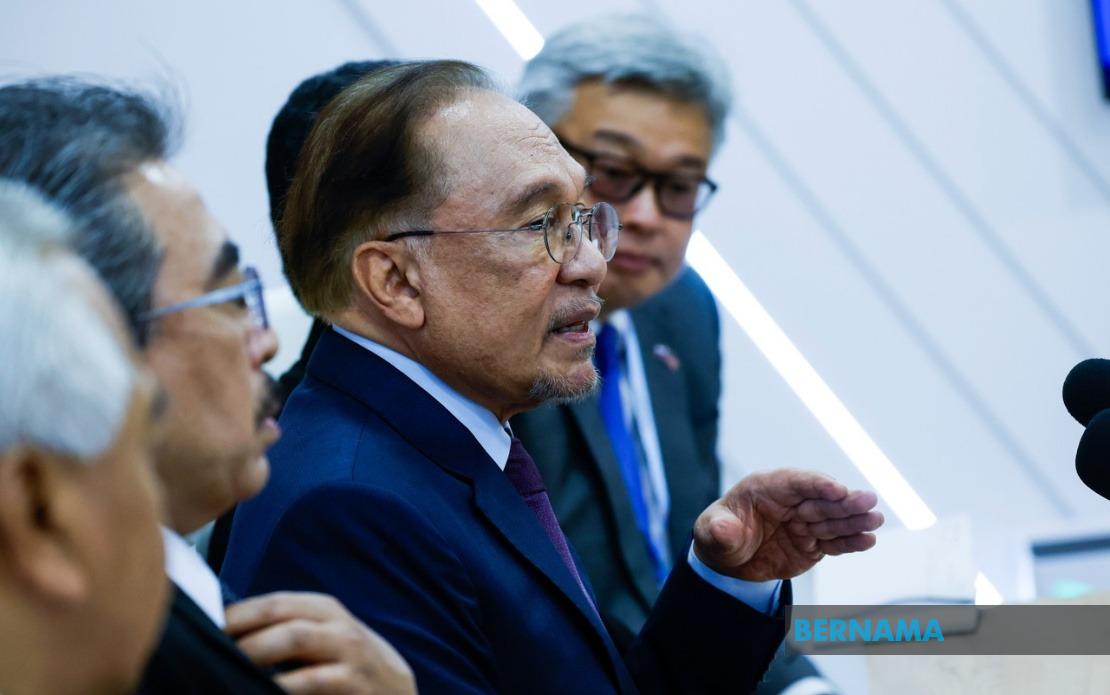
Prime Minister Datuk Seri Anwar Ibrahim concluded a strategically significant visit to Kazan by announcing a breakthrough in Malaysia-Russia energy relations, with both nations committing to establish long-term supply frameworks across multiple sectors including energy security, trade, investment, and technology. The two-day working visit to the 35th ASEAN-Russia Commemorative Summit has positioned energy cooperation as the cornerstone of deepened bilateral engagement, departing from traditional annual or seasonal renewal arrangements that have long characterised resource agreements in the region.
The most consequential outcome from the mission involves Russia's formal undertaking to guarantee Malaysia's petrol, oil, and gas requirements through extended contractual arrangements. During the closing media briefing, Anwar emphasised that such long-term agreements provide greater stability and predictability compared to conventional renewal cycles, addressing a critical vulnerability in Malaysia's energy supply chain. The framework has progressed significantly beyond preliminary discussions, with draft agreements already circulated among relevant parties and foundational principles endorsed by both governments.
According to Anwar's statements, the implementation phase is substantially advanced, with company representatives already present in Kazan to review the finer details. The Malaysian delegation intends to accelerate the finalisation process upon returning home, with signing ceremonies anticipated in the near term. This momentum reflects the seriousness with which both capitals view energy cooperation as a cornerstone of their strategic partnership, particularly given Russia's substantial hydrocarbon resources and Malaysia's growing demand for secure, diversified sourcing.
The energy partnership gains additional significance within the context of Malaysia's broader strategy to insulate itself from volatile global markets. Geopolitical tensions, supply chain fragmentation, and erratic pricing have created structural uncertainty in energy markets, prompting Malaysian policymakers to seek partnerships with stable, reliable suppliers capable of fulfilling long-term commitments. Russia, despite international sanctions and regional tensions, possesses the production capacity and commercial motivation to meet these requirements, making the arrangement mutually beneficial.
Beyond energy, Anwar advocated for a more assertive Malaysian approach to economic engagement with Russia and other emerging markets, cautioning against excessive caution in international commercial dealings. His remarks signal a recalibration of Malaysia's foreign economic policy, suggesting frustration with overly conservative postures that may constrain opportunities for growth and diversification. This intellectual repositioning carries implications for how Malaysia manages relationships with other non-traditional partners, particularly those facing sanctions or diplomatic isolation from Western nations.
The Prime Minister specifically called for expedited implementation of visa-free travel and establishment of direct airline routes between Malaysia and Russia, viewing such infrastructure improvements as essential enablers of tourism growth and interpersonal connectivity. These initiatives would complement the energy framework by creating additional avenues for commercial, cultural, and educational exchanges, broadening the relationship beyond the commodity sector. The absence of direct flights currently limits tourism potential and complicates business travel, representing a practical impediment to relationship deepening.
At the regional level, Anwar welcomed ASEAN's finalisation of a Strategic Programme on Trade and Investment Cooperation with Russia spanning 2026 to 2035, characterising it as a transformative platform for the next phase of collective economic engagement. This multilateral framework demonstrates that Malaysia's bilateral energy breakthrough occurs within a broader context of ASEAN-Russia rapprochement, suggesting that Moscow views Southeast Asia as an important counterweight to Western economic pressure. ASEAN-Russia trade reached US$18.1 billion in 2024, while Russian direct investment in ASEAN totalled approximately RM367.90 million, indicating the relationship remains modest by global standards but carries strategic significance.
Malaysia's position within this ASEAN-Russia dynamic reflects its status as the bloc's most economically advanced nation and a crucial energy consumer. As Russia's ninth-largest European trading partner in 2025, Malaysia exchanged RM8.72 billion in bilateral commerce, with Malaysian electrical, electronic, and machinery exports offset by substantial petroleum product and mineral imports. The energy asymmetry in this trade relationship underscores Malaysia's vulnerability and explains the urgency with which policymakers pursue long-term supply agreements.
During his Kazan visit, Anwar also met with Rustam Minnikhanov, the President of the Republic of Tatarstan, one of Russia's most significant oil-producing regions. This subnational engagement reflects an increasingly sophisticated approach to Russian energy diplomacy, recognising that regional leaders control substantial resources and decision-making authority. Discussions encompassed downstream oil and gas activities, refining, and petrochemicals production, sectors where Malaysia possesses technical expertise and downstream integration capabilities that could create joint venture opportunities.
Anwar articulated an expansive vision for Malaysia-ASEAN-Russia cooperation encompassing cybersecurity, agricultural development, artificial intelligence, scientific research, and higher education. These sectors represent areas where Malaysia and other ASEAN nations face skill gaps or technological lags that Russian expertise could address, potentially offsetting concerns about overdependence on energy transactions. Such diversification of cooperation reduces vulnerability to commodity price fluctuations and creates multiple constituencies supporting the partnership.
The broader Central Asian trajectory of Anwar's diplomatic mission cannot be overlooked. Following Kazan, the Prime Minister proceeded to Turkmenistan for a separate two-day official visit, signalling that energy diversification rather than reliance on any single supplier remains Malaysia's strategic objective. Turkmenistan, another major hydrocarbon exporter, represents a complementary avenue for securing energy supplies, and the sequential visits suggest a coordinated campaign to lock in long-term commitments from multiple Central Asian sources before potential market tightening or geopolitical developments limit Malaysia's negotiating position.
Anwar's remarks regarding a potential United States-Iran peace agreement merit attention, as such developments could reshape energy markets by potentially increasing Iranian export capacity and altering regional supply dynamics. His hopeful commentary suggests Malaysian policymakers monitor such developments carefully, recognising that sustainable resolution of West Asian tensions could create additional energy sourcing options and reduce long-term price volatility. The Prime Minister's optimism contrasts with the underlying anxiety motivating the Central Asian energy-seeking mission, indicating awareness that global energy security remains fragile and contested.
The Kazan visit, accompanied by Investment, Trade and Industry Minister Datuk Seri Johari Abdul Ghani and Economy Minister Akmal Nasrullah Mohd Nasir, represents a whole-of-government commitment to energy security strategy. The ministerial composition indicates that energy cooperation intersects with broader trade, investment, and industrial policy objectives, suggesting the Malaysian government views this partnership as pivotal to its economic development agenda. The timing and high-level participation underscore recognition that energy security fundamentally underpins economic stability and manufacturing competitiveness in an increasingly uncertain global environment.

