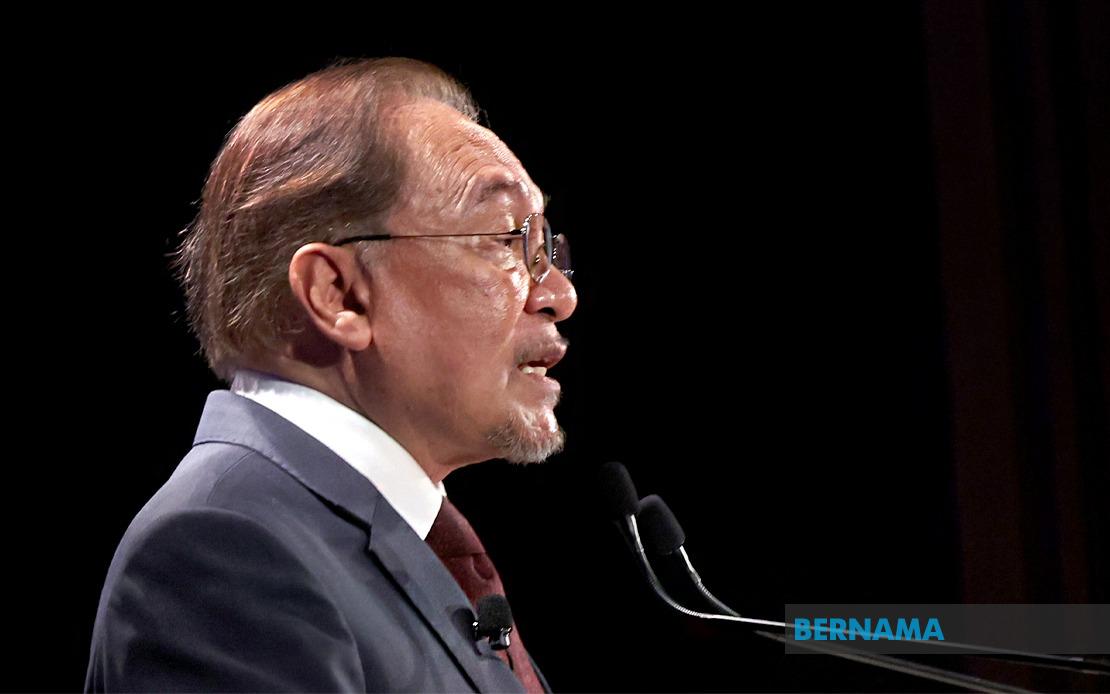
Prime Minister Datuk Seri Anwar Ibrahim's final day in Turkmenistan is packed with diplomatic engagements aimed at strengthening Malaysia's strategic position in Central Asia, a region increasingly important for Malaysia's diversified economic partnerships. The schedule demonstrates Kuala Lumpur's commitment to moving beyond traditional Southeast Asian alliances and establishing deeper connections with resource-rich nations along the Caspian rim.
The morning will commence with formal proceedings at the Presidential Palace, where President Serdar Berdimuhamedov will host a welcoming ceremony for the Malaysian premier. This ceremonial opener is followed by an intimate four-eye meeting between both leaders, a customary diplomatic protocol that signals the significance of bilateral relations and allows for candid discussion of sensitive matters. The private encounter typically sets the tone for subsequent official deliberations and enables leaders to establish personal rapport before engaging in broader discussions.
The formal bilateral meeting that follows will see both governments exchange a comprehensive joint statement alongside multiple agreements spanning critical sectors. Beyond the symbolic value of such ceremonies, Malaysia and Turkmenistan are expected to execute an Air Services Agreement, which carries significant implications for regional connectivity and opens pathways for enhanced commercial aviation between the two nations. Additionally, foreign affairs institutes from both countries will formalize a memorandum of understanding, laying groundwork for sustained diplomatic dialogue and institutional knowledge-sharing.
Trade and investment feature prominently in the agenda, reflecting Malaysia's strategic interest in Central Asian markets. The discussions are slated to encompass hydrocarbon cooperation—a particularly vital area given Turkmenistan's substantial natural gas reserves and Petronas's longstanding operational presence. The Malaysian state-owned petroleum giant has accumulated investments of RM52.73 billion in Turkmenistan since 1996, making it a flagship example of successful Malaysian enterprise in the region. Beyond energy, both delegations will explore expanded cooperation in agriculture, commodities, tourism, education, digital infrastructure, and scientific research.
Geopolitical considerations will also feature in conversations between Anwar and Berdimuhamedov. Turkmenistan occupies a delicate geopolitical position, bordered by Kazakhstan and Uzbekistan to the north, Afghanistan to the southeast, Iran to the south and southwest, and the Caspian Sea to the west. Malaysia's perspective on regional developments in both ASEAN and Central Asia will be valuable to Turkmenistan, which maintains a formal policy of permanent neutrality. These bilateral exchanges about international affairs demonstrate how regional groupings increasingly engage across geographical boundaries to share strategic insights.
The ceremonial dimension continues with a presidential luncheon at the Palace, followed by Anwar performing Friday prayers at the Turkmenbashi Ruhy Mosque. This personal observance reflects Malaysia's Islamic credentials and provides an opportunity for cultural connection with the predominantly Muslim nation. Turkmenistan, despite its post-Soviet context, maintains Islamic heritage and traditions, and such gestures of religious observance by visiting dignitaries underscore shared civilizational bonds.
The Malaysia-Turkmenistan Forum, to be jointly inaugurated by both leaders at the Chamber of Commerce and Industry of Turkmenistan, represents an effort to mobilize private sector engagement between the two nations. Such forums provide platforms for business delegations to identify partnership opportunities, negotiate contracts, and establish networks that outlast individual government administrations. The timing of this forum during an official state visit amplifies its significance and demonstrates government backing for commercial ventures.
Trade statistics underscore the growth trajectory of bilateral relations. In 2025, Turkmenistan ranked as Malaysia's fourth-largest trading partner among Central Asian nations, with total bilateral trade reaching RM75.80 million. Malaysian exports accounted for RM75.50 million of this figure, representing a notable 9 per cent increase year-on-year. While these figures remain modest compared to Malaysia's trade with larger economies, the growth rate signals expanding economic integration and successful market penetration by Malaysian businesses in Central Asia.
Ashgabat itself, known internationally as the White Marble City, serves as a compelling backdrop for high-level diplomacy. The Turkmen capital holds the Guinness World Record for the highest concentration of white marble-clad buildings, featuring over 500 structures adorned in white marble. This distinctive architectural aesthetic, complemented by extensive gold-leaf detailing and expansive, immaculately maintained avenues, creates an imposing yet elegant setting for state functions. The city's monumental architecture reflects Turkmenistan's development ambitions and provides a tangible symbol of the nation's prosperity derived from energy resources.
Anwar's delegation includes ministerial representation that underscores the multifaceted nature of the visit. Minister of Investment, Trade and Industry Datuk Seri Johari Abdul Ghani and Minister of Economy Akmal Nasrullah Mohd Nasir accompany the prime minister, their presence signaling that substantive economic discussions will occur alongside political engagement. This composition ensures that trade facilitation, regulatory alignment, and sectoral cooperation receive appropriate attention at governmental level.
The signing of an MoU between the Academy of Sciences Malaysia and the Academy of Sciences of Turkmenistan opens channels for research collaboration, technology transfer, and scholarly exchange. Similarly, transport-focused agreements between Malaysia's Ministry of Transport and Turkmenistan's State Service will address logistical cooperation and potentially facilitate smoother connectivity for goods movement and personnel mobility. These institutional arrangements create enduring frameworks for cooperation that persist beyond individual diplomatic visits.
Energy sector documents exchanged during the visit reinforce Petronas's centrality to bilateral relations. Turkmenistan possesses some of the world's largest natural gas reserves, and sustained cooperation in this domain remains economically vital for both parties. The exchange of oil and gas-related documents signals continued investment flows and operational continuity for Malaysian energy enterprises in Central Asian hydrocarbon development.
Anwar's concluding press conference with Malaysian media will frame the visit's outcomes for domestic audiences and provide Malaysian stakeholders with clarity regarding diplomatic achievements and economic opportunities. This communication step ensures that business communities, investors, and civil society understand the strategic direction of Malaysia-Turkmenistan relations and can capitalize on newly created openings. The comprehensive nature of this final day exemplifies how modern state visits serve simultaneously as diplomatic theater, institutional bridge-building, and practical business facilitation mechanisms.

